Syrian President Pledges Guarantee of Kurdish Rights in Call With President Barzani
Syrian President al-Sharaa told President Barzani Kurds are indigenous and promised equal rights. Barzani supported a state of partnership and urged coordination.
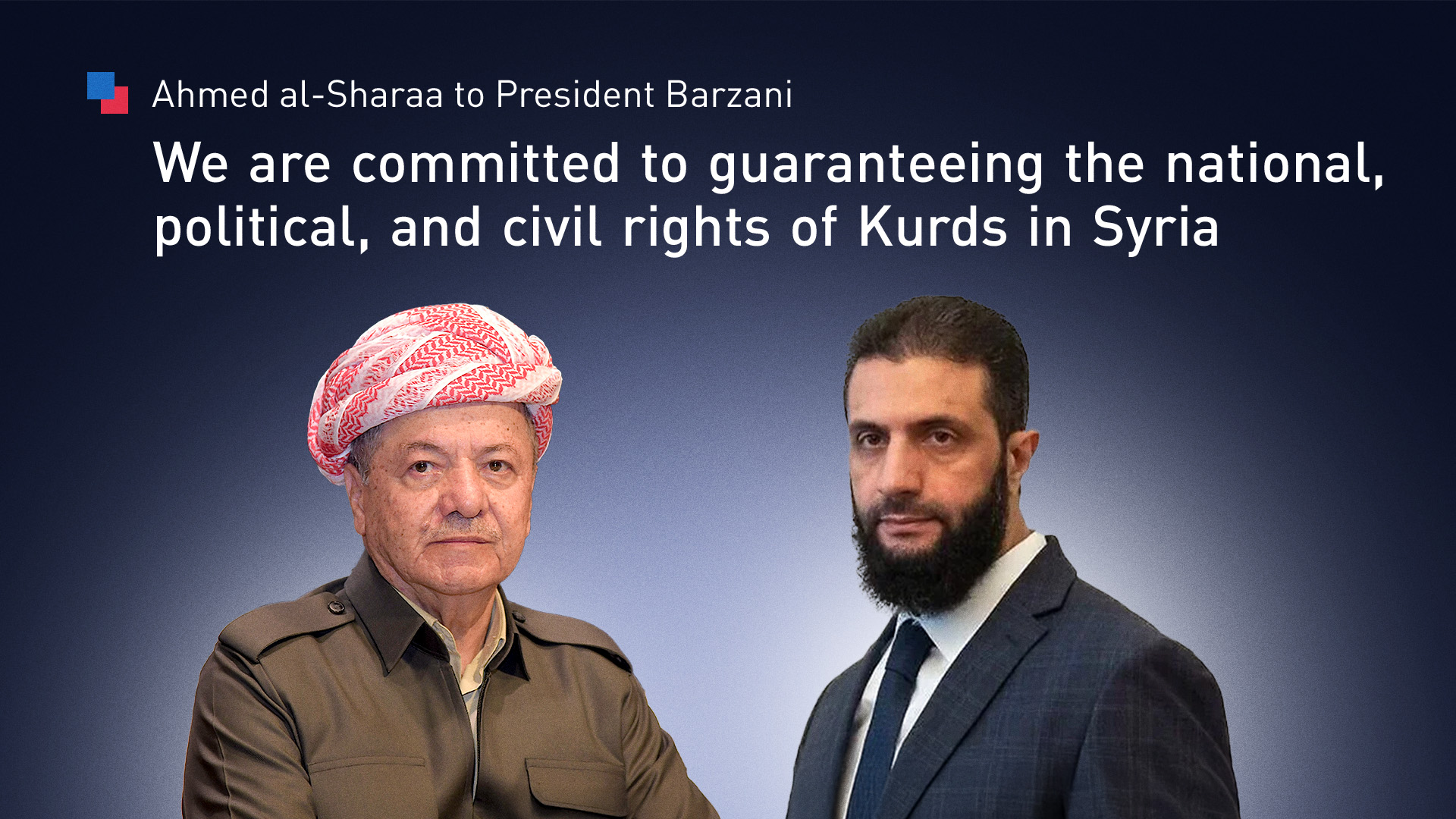
ERBIL (Kurdistan24) — Syrian President Ahmed al-Sharaa initiated a telephone call with President Barzani on Friday, during which the Syrian leader affirmed the status of Kurds as an indigenous component of the nation and pledged to fully guarantee their political and civil rights without discrimination.
The conversation between the two leaders focused on the latest political developments within Syria as well as broader changes affecting the region.
According to the readout of the call, both sides placed significant emphasis on the importance of maintaining stability and fostering joint coordination between the parties.
A central theme of the discussion was the status of the Kurdish population within the Syrian state.
President al-Sharaa reiterated a specific recognition of the Kurds, describing them as an "indigenous and main component" of the Syrian people. He provided assurances regarding the state's posture toward this demographic, emphasizing the "full commitment" of the Syrian state to guaranteeing their rights.
President al-Sharaa specified that this commitment extends to all national, political, and civil rights.
He further clarified that these guarantees would apply to the Kurds alongside all other components of Syrian society, ensuring they are treated equally and without discrimination.
In response to these assurances, President Barzani expressed his appreciation for President al-Sharaa’s perspective.
During the exchange, President Barzani announced his support for the "will and aspirations" of the Syrian people.
He articulated a vision for building a state that encompasses all parties and components, ensuring they function as partners in governance.
The discussion concluded with a focus on future engagement. President Barzani emphasized the necessity of continued consultation and coordination between the two sides.
He identified these measures as essential for the sake of observing the interests of all sides involved and for the preservation of social peace.