155,000 Displaced as Fighting Escalates in Aleppo’s Kurdish Neighborhoods
The Autonomous Administration’s Health Authority says attacks on Kurdish areas and medical facilities amount to war crimes, urging the UN, WHO, Red Cross, and key international actors to take urgent action to halt "indiscriminate bombardment."
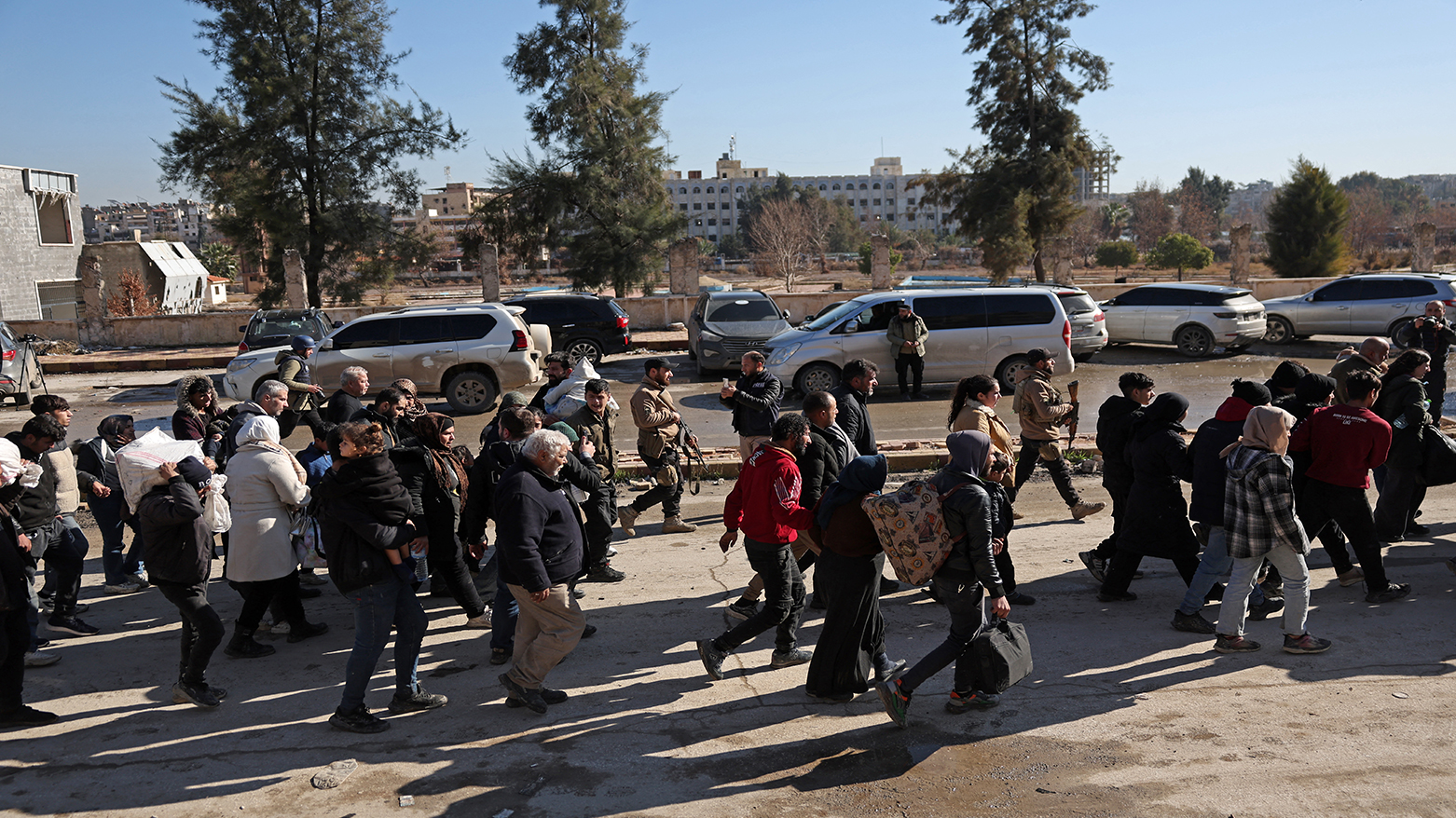
ERBIL (Kurdistan24) — More than 155,000 residents have been displaced from the Kurdish-majority neighborhoods of Sheikh Maqsud and Ashrafiyeh in northern Aleppo following days of intense clashes between Aleppo’s Internal Security Forces and the Syrian Arab Army, the city’s governor announced on Saturday.
Speaking at a press conference on Saturday, Aleppo Governor Azam Gharib said the ongoing confrontations have forced nearly 155,000 people to flee their homes, seeking refuge in surrounding neighborhoods and villages across the Aleppo countryside. The displacement follows violent fighting that erupted earlier this week in the two districts, home primarily to Kurdish civilians.
According to local officials, clashes began last Tuesday and quickly escalated into large-scale military operations. For five consecutive days, Syrian government forces, acting under orders attributed to Ahmad al-Sharaa, have carried out sustained assaults on Sheikh Maqsud and Ashrafiyeh, employing heavy weaponry, tanks, and artillery.
Authorities say the bombardment has taken a heavy toll on civilians. At least 23 civilians have been killed, and 98 others wounded as a result of what officials described as indiscriminate shelling of densely populated residential areas. The neighborhoods have effectively become open battlefields, raising serious concerns about civilian protection.
The Autonomous Administration’s Health Authority for North and East Syria strongly condemned the attacks, warning that the shelling of Kurdish neighborhoods and the deliberate targeting of medical teams and facilities constitute war crimes. In a statement issued Saturday, the authority called on the United Nations and the international community to break their silence and uphold their legal and moral responsibilities.
“The UN Security Council, the World Health Organization, the International Committee of the Red Cross, and influential states involved in the Syrian file must take urgent and effective measures to halt these acts of war and put an end to the systematic and indiscriminate bombardment,” the statement said.
The Health Authority noted that for five straight days, Sheikh Maqsud and Ashrafiyeh—both densely populated with civilians—have been subjected to heavy weapons fire, posing a grave threat to the lives of tens of thousands of residents.
It described the situation as a clear violation of international humanitarian law governing the protection of civilians during armed conflict.
In one of the most serious allegations, the authority said Khalid Fajr Hospital in Sheikh Maqsoud was deliberately struck four times. According to the statement, the repeated attacks at different intervals constitute irrefutable evidence that the hospital was intentionally targeted in an effort to render it inoperable. Several healthcare workers were reportedly killed or injured while carrying out their humanitarian duties.
“These acts amount to full-fledged war crimes under the Geneva Conventions and their additional protocols, which explicitly guarantee the protection of medical facilities and health workers during hostilities,” the Health Authority said.
Amid the violence, Syrian state television reported on Saturday that authorities had begun transferring Kurdish fighters from Sheikh Maqsud to northeastern Syria following what it described as their surrender.
The broadcaster said fighters from the Syrian Democratic Forces (SDF) who surrendered at Yassin Hospital were transported by bus to the city of Tabaqa under the supervision of the Interior Ministry.
An AFP correspondent confirmed seeing at least four buses carrying fighters depart Sheikh Maqsoud, escorted by security forces.
The developments mark one of the most severe escalations in Aleppo in recent years, underscoring the fragility of security arrangements in the city and deepening humanitarian concerns over mass displacement, civilian casualties, and alleged violations of international law.