Jordan Conducts Rare Airstrikes on ISIS Targets in Syria
Action marks an uncommon use of force by Amman, a traditionally neutral and stabilizing actor in Middle East security.
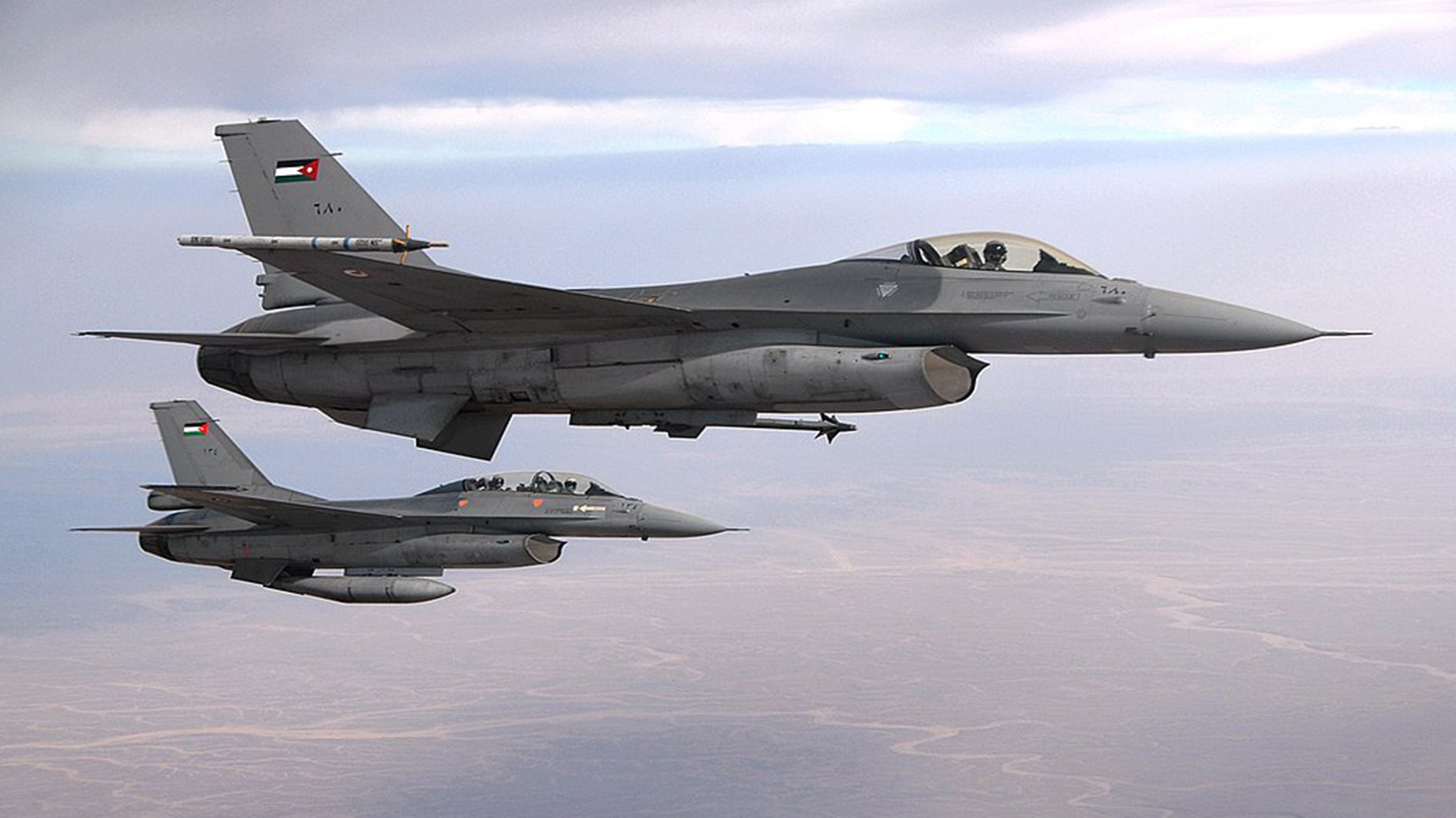
ERBIL (Kurdistan24) — Jordan’s air force carried out airstrikes against Islamic State (ISIS) targets inside Syria over the weekend as part of a U.S.-led military operation, the Jordanian military said on Sunday, in a rare and notable departure from the kingdom’s long-standing reputation for restraint and political neutrality.
In a statement, the Jordanian Armed Forces said the strikes were conducted on Saturday and were “coordinated with partners within the framework of the international coalition,” adding that the operation aimed to “neutralize the capabilities of terrorist groups and prevent them from reorganizing.”
Last month, the Jordanian air force conducted a series of airstrikes targeting drug smuggling networks in southern Syria. The Jordanian Armed Forces said the strikes hit “several factories and facilities used by arms and drug traffickers as bases for launching their operations toward Jordanian territory,” adding that the operations were carried out “in coordination with regional partners.”
Jordan has been a key member of the U.S.-led international coalition against ISIS since its formation in 2014, contributing intelligence, logistical support, training, and limited air operations, while largely avoiding high-profile or escalatory military actions.
The kingdom’s strategic value has long rested on its stability, professionalism, and careful balancing in a region marked by protracted conflicts and competing power blocs.
Historically, Amman has positioned itself as a moderating force in Middle Eastern security equations, maintaining working relations with Western allies, neighboring Arab states, and international institutions while avoiding entanglement in regional rivalries. This approach has allowed Jordan to serve as a diplomatic bridge and a reliable security partner without projecting itself as an aggressive military actor.
Against this backdrop, Jordan’s direct participation in airstrikes inside Syria is widely seen as exceptional. Analysts note that the decision reflects not a shift in Jordan’s broader foreign policy doctrine, but a narrowly defined security calculation tied to counterterrorism and border defense.
Jordan shares a long and sensitive frontier with southern Syria, an area that has experienced persistent instability, smuggling networks, and sporadic ISIS activity. Jordanian officials have repeatedly warned that extremist groups exploiting ungoverned spaces in Syria pose a direct threat to the kingdom’s internal security.
By joining the latest operation, Jordan appears to be signaling that it will act decisively when its national security or regional stability is at risk, even while maintaining its broader posture of neutrality and de-escalation.
The strikes also underscore Jordan’s continued commitment to the international coalition at a time when ISIS, though territorially defeated, remains capable of mounting attacks and regrouping in remote areas of Syria. Coalition officials have increasingly emphasized the need for sustained pressure to prevent the group from reconstituting operational networks.
Jordan’s participation adds regional legitimacy to the operation and highlights the role of trusted Arab partners in counterterrorism efforts, rather than relying solely on Western military power.
While Amman is unlikely to expand its military footprint or abandon its cautious diplomacy, the weekend’s strikes demonstrate that Jordan’s neutrality does not equate to passivity—particularly when confronted with threats that could undermine its security or the fragile balance of the region.