Trump Calls Himself ‘Acting President of Venezuela’ in Truth Social Post
Trump claims title of "Acting President of Venezuela" online following Maduro's capture, while coordinating with interim leader Rodriguez and cutting off oil to Cuba.
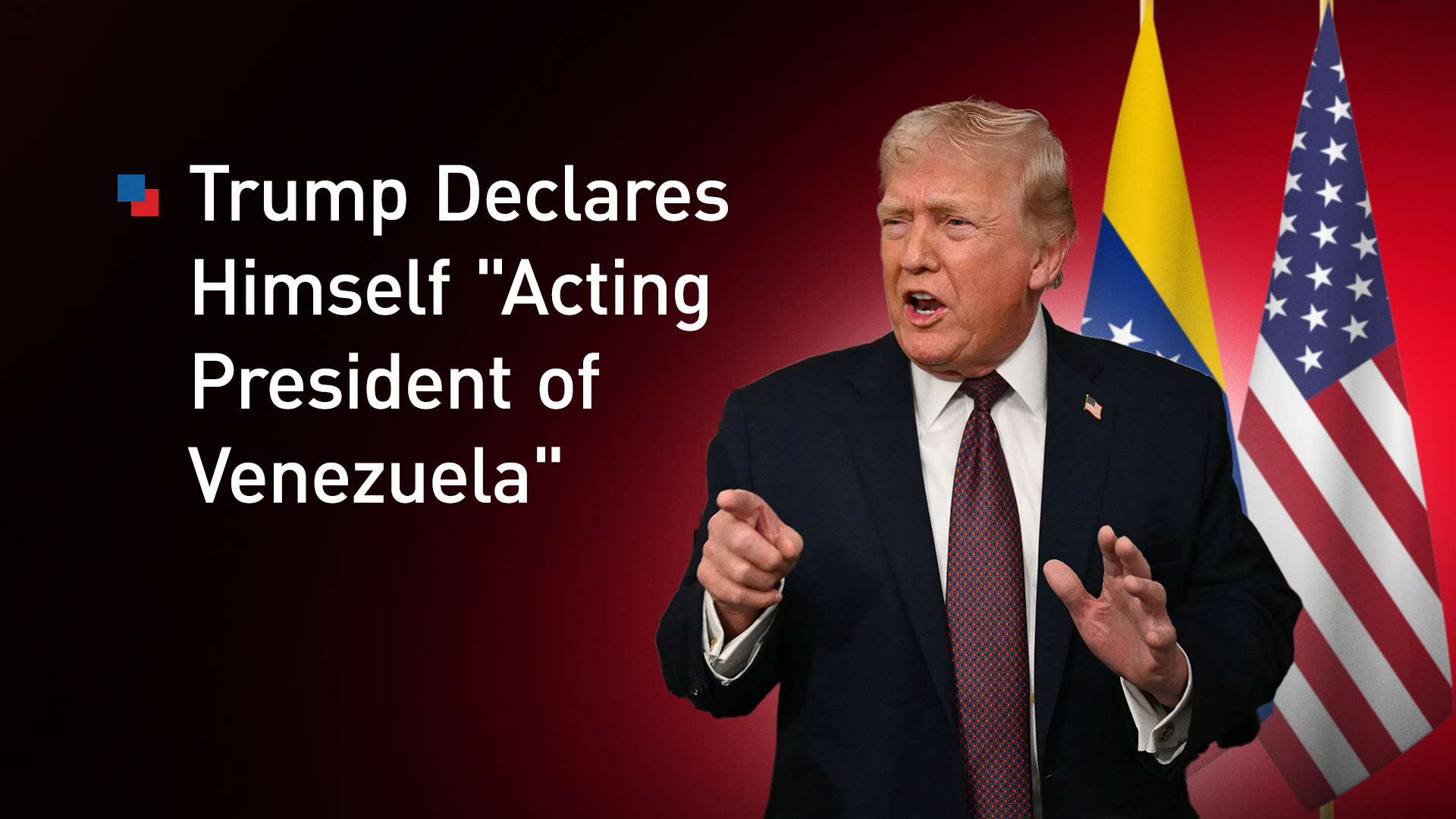
ERBIL (Kurdistan24) – U.S. President Donald Trump asserted direct administrative authority over Venezuela on Sunday, posting an image of himself as the "Acting President" of the South American nation on his social media platform, Truth Social.
The declaration comes just days after a U.S. military operation resulted in the capture of Venezuelan President Nicolás Maduro, signaling an unprecedented level of American involvement in the governance of the oil-rich country during its transitional period.
The social media post, which identified Trump as the acting leader of Venezuela as of January 2026, reinforces previous statements from the White House regarding the extent of Washington's control following the events of Jan. 3.
On that date, U.S. forces executed a military operation that seized Maduro and his wife, Cilia Flores, transporting them to New York to face trial on drug and weapons-related charges.
According to reports from the Anadolu Agency, President Trump stated that his administration intends to "run" Venezuela and manage its vast oil assets during the current transition.
This assertion of authority coincides with what Trump has described as a "de facto control" of the country, enforced in part by a U.S. naval blockade designed to monitor and control the nation's vital oil exports.
Cooperation with Interim Leadership
Despite the symbolic declaration of himself as "Acting President," the Trump administration is actively coordinating with Venezuelan Vice President Delcy Rodríguez, who was sworn in as interim president following Maduro’s capture.
Speaking to reporters aboard Air Force One on Sunday, Trump characterized the relationship with the new leadership in Caracas as productive.
"Venezuela is really working out well. We're working along really well with the leadership," Trump said. When asked about a potential face-to-face meeting with Rodríguez, the President responded, "At some point I'll be."
Rodríguez, historically a close ally of Maduro, has reportedly signaled a willingness to cooperate with Washington’s demands, including granting access to Venezuelan oil reserves and engaging in talks to reestablish diplomatic ties.
A U.S. delegation comprising diplomatic and security personnel traveled to Caracas on Friday to assess the feasibility of reopening the American Embassy, further indicating a rapid normalization of relations under the new arrangement.
The administration’s reliance on Ms. Rodríguez has surprised some observers, particularly given the prominence of opposition leader María Corina Machado. Machado, a Nobel Peace Prize laureate, was passed over for the interim leadership role in favor of Rodríguez.
President Trump indicated he expects to meet with Machado on Tuesday or Wednesday, though he has previously expressed frustration regarding the Nobel committee’s decision to award the prize to her rather than himself.
Ultimatum to Cuba
The shift in power in Caracas has had immediate geopolitical repercussions for the region, particularly for Cuba. In a separate social media post on Sunday, President Trump issued a stark warning to Havana, declaring that "no more oil or money" would flow from Venezuela to the island nation.
"Venezuela doesn’t need protection anymore from the thugs and extortionists who held them hostage for so many years," Trump wrote. He added that the U.S. military, which he described as "the most powerful military in the World (by far!)," would be involved in enforcing the separation between the two countries.
The New York Times reported that Trump urged the Cuban government to "make a deal, before it is too late," though the specifics of such a deal remain unclear. The halt of Venezuelan oil shipments, estimated at 30,000 to 35,000 barrels per day, would be "catastrophic" for Cuba’s energy sector, according to experts.
Cuban President Miguel Díaz-Canel responded defiantly to the ultimatum. Writing on the social media platform X, he stated that Cuba is a "free, independent and sovereign nation" and is "ready to defend the homeland to the last drop of blood."
In a related development, Trump shared a post on Truth Social suggesting that U.S. Secretary of State Marco Rubio should become Cuba’s president, commenting, "Sounds good to me." Rubio has long advocated for using the collapse of the Venezuelan government as a lever to force political change in Havana.
Oil Sector Tensions
Domestically, the Trump administration is pressuring American energy firms to capitalize on the leadership change in Caracas. During a White House meeting on Friday, the President urged top oil executives to invest in Venezuela.
The request, however, was met with skepticism from some industry leaders.
Darren Woods, the chief executive of ExxonMobil, dismissed Venezuela as "uninvestable" without sweeping reforms, a stance that drew a sharp rebuke from the President.
"I didn't like Exxon's response. You know, we have so many that want it, I'd probably be inclined to keep Exxon out," Trump said on Sunday. "They're playing too cute."
Prisoner Releases and Human Rights
The transitional government under Rodríguez has pledged to release political prisoners, a process Trump praised on Saturday as happening in a "BIG WAY." However, discrepancies exist regarding the scale of these releases.
While the Venezuelan government claims a large number of detainees will be freed, rights groups and opposition figures report that only approximately 20 individuals have been released so far.
Human rights organizations estimate that between 800 and 1,200 political prisoners remain in custody.
The tension surrounding the detainees was highlighted Sunday by the death of Edison Jose Torres Fernandez, a 52-year-old police officer accused of treason.
The state prosecution service confirmed he died of a stroke and heart attack while in custody. Opposition groups blamed the "regime of Delcy Rodríguez" for his death.
Meanwhile, families continue to hold vigils outside notorious detention centers such as El Rodeo and El Helicoide, awaiting news of their relatives.
Among those still imprisoned is Freddy Superlano, a close ally of Machado. His wife, Aurora Silva, told reporters, "He is standing strong and I am sure he is going to come out soon."