SDF Forces on High Alert Following Drone and Artillery Strikes Near Tishrin Dam
SDF forces are on high alert after suicide drones and artillery struck the Tishrin Dam vicinity Monday. The attacks, blamed on pro-government militias, follow a Kurdish withdrawal from Aleppo amid a fragile ceasefire.
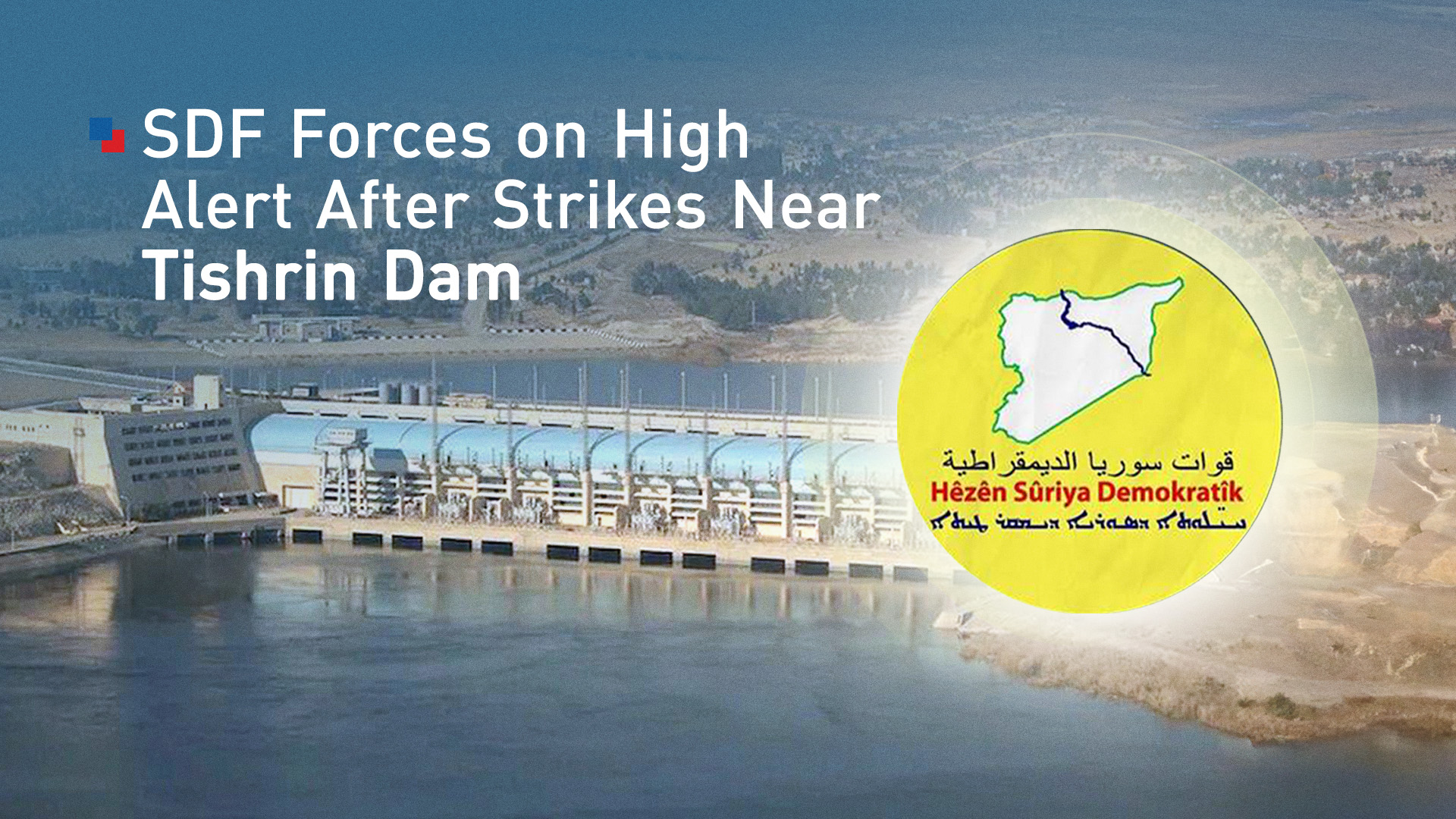
ERBIL (Kurdistan24) – The Syrian Democratic Forces (SDF) placed their units on maximum alert early Monday following a coordinated series of aerial and artillery attacks targeting the vicinity of the strategic Tishrin Dam. The escalation marks a significant widening of hostilities in northern Syria, coming less than 24 hours after Kurdish forces agreed to withdraw from contested districts in Aleppo.
In a statement released at dawn on Monday, Jan. 12, 2026, the SDF Media Center reported that the airspace surrounding the Tishrin Dam had witnessed "intensive activity" by suicide drones.
The SDF attributed these unmanned aerial systems to "armed groups and militias loyal to the Damascus government." The drone incursions were reportedly synchronized with violent artillery shelling directed at the same area, compounding the security threat to the vital infrastructure.
The situation was further complicated by the involvement of regional military powers. The SDF statement noted that warplanes belonging to the Turkish Army were "flying heavily" in the skies above the region during the bombardment.
The presence of Turkish jets, ostensibly to monitor the situation, has reportedly increased the "severity of field complexities" for forces on the ground. In response to these developments, the SDF confirmed that its forces are closely monitoring field changes and military movements across the region.
The attacks on the Tishrin Dam infrastructure represent a volatile new front in a conflict that has intensified sharply over the past week.
The shelling follows a major shift in the balance of power in Aleppo, where Kurdish forces have maintained a presence for much of the 14-year Syrian conflict.
On Sunday, Mazloum Abdi, the General Commander of the SDF, announced that an internationally mediated agreement had been reached to implement a ceasefire in the Kurdish-majority neighborhoods of Sheikh Maqsud and Ashrafiyeh.
Under the terms of that agreement, Kurdish fighters, wounded individuals, and besieged civilians are being evacuated to areas administered by the Autonomous Administration of North and East Syria.
The withdrawal was described by Commander Abdi as a necessary measure to halt attacks and protect civilians after five days of heavy urban combat. "After much effort and with the mediation of international parties... they have reached an understanding," Abdi stated on the social media platform X.
The context of the withdrawal from Aleppo is grim.
The Internal Security Forces operating in Sheikh Maqsud issued a statement on Sunday accusing paramilitary units affiliated with the Syrian government of launching a systematic offensive aimed at the "extermination" of the local population.
They alleged that the operation, which began on Jan. 6, utilized drones, tanks, and heavy artillery to alter the demographic structure of the districts.
Specific allegations regarding the conduct of pro-government forces include the targeting of civilian infrastructure. Security forces reported that the Khalid Fajr Hospital, the only medical facility in the neighborhood capable of treating the wounded, was struck "dozens of times" by heavy weapons and drones.
The facility was rendered out of service, a factor that heavily influenced the SDF's decision to agree to a ceasefire to facilitate the evacuation of patients and medical staff.
The humanitarian toll of the recent fighting has been substantial. Reports indicate that at least 60 civilians were killed and nearly 100 others wounded during the clashes in Aleppo. The violence triggered a mass exodus, with Aleppo Governor Azam al-Gharib reporting that approximately 155,000 people had fled their homes.
The Barzani Charity Foundation corroborated the scale of the crisis, documenting the displacement of more than 27,000 families, many of whom have sought refuge in the Afrin district amid harsh winter conditions and shortages of basic necessities.
The renewed violence near Tishrin Dam and the forced withdrawal from Aleppo have drawn sharp criticism from Kurdish political leaders in Türkiye. On Sunday, the co-chairs of the Peoples’ Equality and Democracy Party (DEM Party), Tulay Hatimogullari and Tuncer Bakirhan, held a news conference condemning the Syrian Arab Army’s operations.
They warned that the escalation risks destabilizing the entire region and called on the international community to break its silence. Bakirhan argued that military pressure was being used to derail dialogue, urging that SDF officials be invited to Ankara for talks to find a sustainable political solution.
Diplomatic efforts to contain the violence have involved high-level engagement from the United States and the European Union. On Saturday, U.S. Ambassador to Türkiye and Special Envoy for Syria Tom Barrack met with Syrian President Ahmed al-Sharaa in Damascus.
According to reports, Barrack conveyed messages from President Donald Trump and Secretary of State Marco Rubio, warning that continued violence could undermine Syria's political transition following the fall of the Assad government.
The U.S. envoy reportedly urged Syrian leadership to return to the terms of the "March 2025 integration agreement" between Damascus and the SDF.
This agreement outlines a framework for incorporating SDF forces into national institutions while addressing Kurdish rights. However, the fresh attacks on the Tishrin Dam suggest that despite American warnings and the implementation of a ceasefire in Aleppo, pro-government militias may be seeking to press their military advantage in other strategic sectors of northern Syria.
As of Monday morning, the SDF remains on maximum alert, with the situation around the dam described as deteriorating.
The convergence of militia-led drone strikes, artillery fire, and Turkish aerial surveillance indicates that the security architecture of northern Syria remains deeply fragile, even as diplomatic channels attempt to enforce a pause in the fighting.