Former South Korean President Sentenced to Five Years in Prison
Former South Korean President Yoon Suk Yeol was sentenced to five years in prison Friday for obstruction of justice and other charges linked to his 2024 martial law decree, Yonhap News Agency reported.
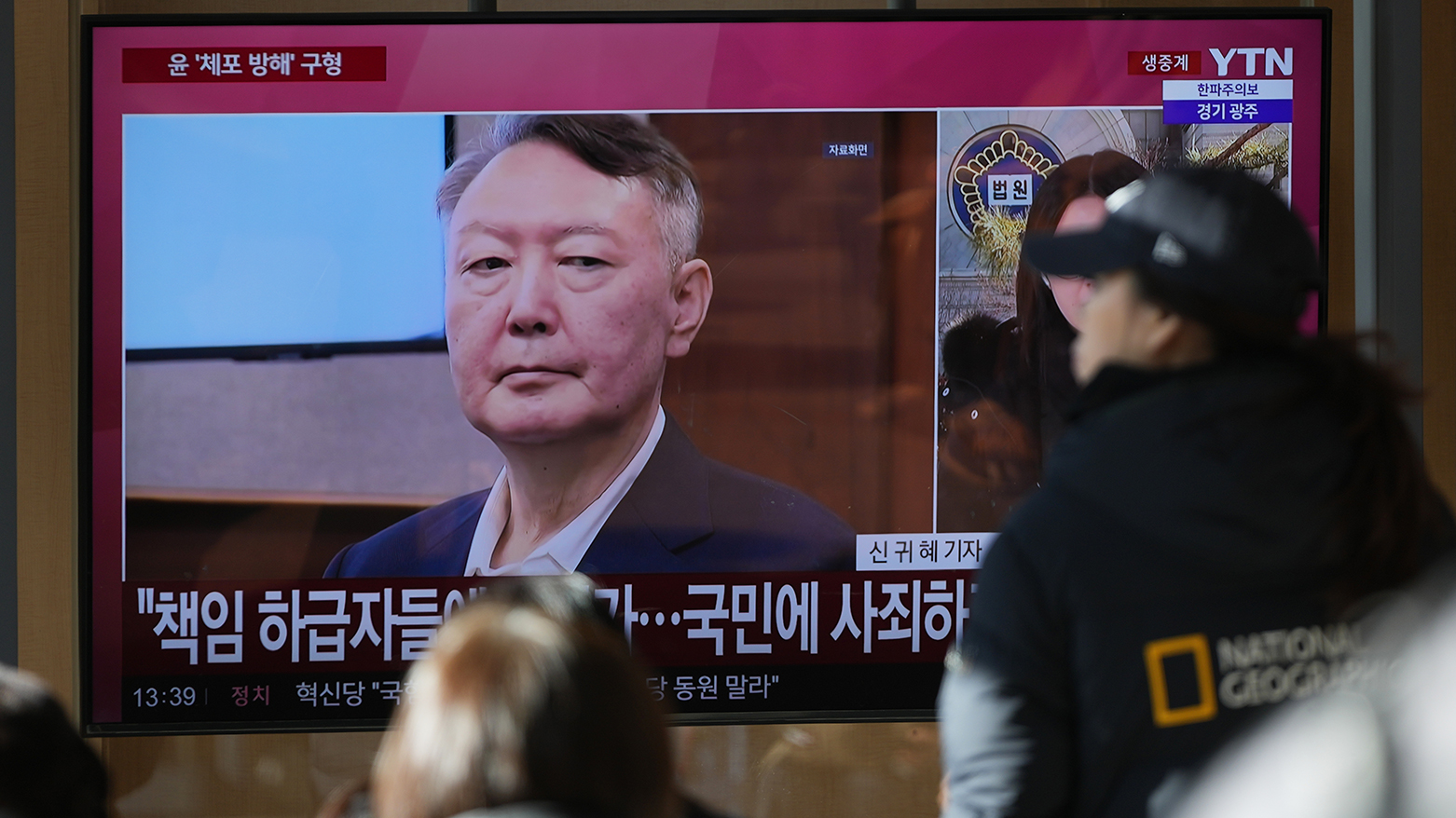
ERBIL (Kurdistan24) - The Seoul Central District Court on Friday sentenced former South Korean President Yoon Suk Yeol to five years in prison after finding him guilty of obstruction of justice and other offenses related to his administration’s attempts to thwart investigations following a declaration of martial law in late 2024.
According to a report by the Yonhap News Agency, the verdict represents the first judicial ruling concerning charges stemming from Yoon’s short-lived imposition of martial law in December 2024.
The sentence handed down by the court was half the term sought by the prosecution team led by special counsel Cho Eun-suk. Last month, the special counsel had requested a heavier sentence, arguing that the former president had committed a "grave crime" by privatizing state institutions with the specific aim of concealing and justifying his criminal acts.
Judge Baek Dae-hyun presided over the hearing, which was televised live and attended by the incarcerated former president.
During the proceedings, the judge detailed the specific charges and the bench's findings on each count. Yonhap News Agency reported that Judge Baek remarked that Yoon demonstrated no remorse for his actions, characterizing the nature of the crimes as "very bad."
The court convicted Yoon on a series of charges centered on his conduct during and immediately after the martial law crisis. Specifically, he was accused of ordering the Presidential Security Service to physically block investigators from executing a detention warrant against him in January of last year.
This act of obstruction was a central component of the prosecution's case regarding the former president’s defiance of judicial processes.
In addition to the obstruction charge, the court found Yoon guilty of violating the procedural rights of his own government officials.
The verdict confirmed that he had violated the rights of cabinet members who were excluded from a critical meeting to review his martial law plan. While the accusation involved nine cabinet members, the judge ruled that Yoon was guilty regarding the rights violations of all but two of them.
Further convictions included charges related to the manipulation of official records.
The court found that Yoon had drafted and subsequently destroyed a revised proclamation after the martial law decree was lifted. Moreover, he was convicted of ordering the deletion of records from secure communication devices used by military commanders at the time, an act interpreted by the court as an attempt to destroy evidence.
While the conviction covered the majority of the indictment, the judge acquitted the former president on specific counts.
Beyond the acquittal regarding the rights of two cabinet members, the court also found him not guilty of ordering the distribution of press statements containing falsehoods regarding the martial law declaration.
In its ruling, the Seoul Central District Court addressed the legitimacy of the investigation itself.
The judge affirmed that the Corruption Investigation Office for High-ranking Officials had acted within the scope of its legal authority when investigating and attempting to execute detention warrants for the then-president last year, dismissing arguments that the probe was politically motivated or procedurally property.
This sentencing serves as a prelude to a more severe legal challenge facing Yoon.
Yonhap News Agency noted that the ruling is expected to have significant implications for a separate verdict scheduled for Feb. 19, which addresses charges that Yoon led an insurrection through the issuance of the martial law decree. Earlier this week, special prosecutors demanded the death penalty for the former president in relation to the insurrection charge.
The former president is currently standing for a total of eight trials. These legal battles encompass allegations connected to the martial law attempt, corruption charges involving his wife, and the 2023 death of a Marine.
The Yonhap report highlighted the historical significance of the proceeding, noting that this marked only the third instance in South Korean history where a former president’s trial was broadcast live. Previous instances occurred in 2018 during the sentencing hearings for former Presidents Park Geun-hye and Lee Myung-bak regarding their respective corruption trials.