'President Barzani Continuously Works to Protect Kurds in Western Kurdistan,' Says Fawzi Hariri
US and SDF envoys arrived in Erbil Saturday to address Syrian unrest. Officials stated President Barzani is engaging Türkiye and Syria to protect Kurds and save the 2025 SDF-Syria integration deal.
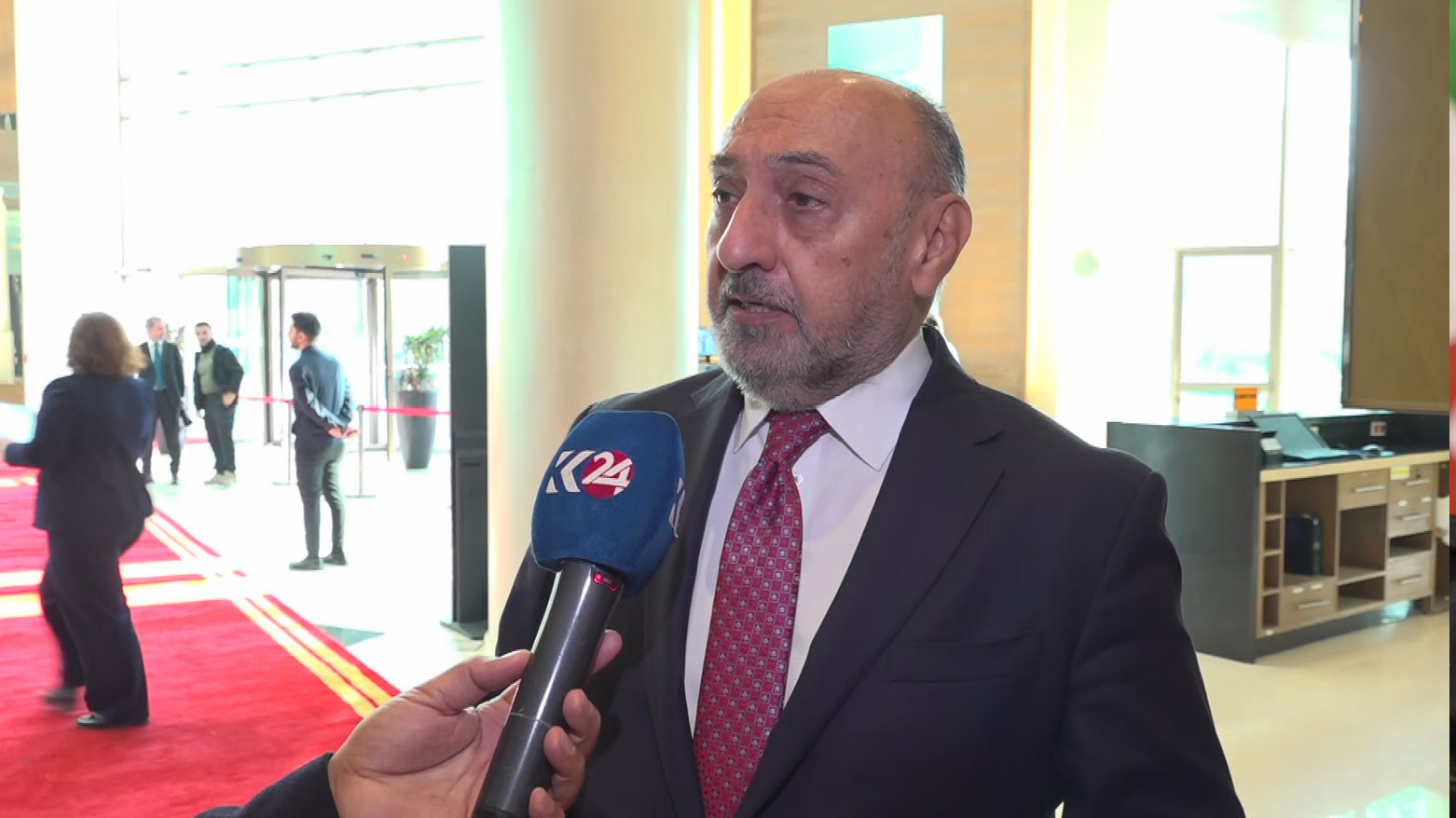
ERBIL (Kurdistan24) - Fawzi Hariri, Chief of Staff of the Kurdistan Region Presidency, stated on Saturday, that President Masoud Barzani is maintaining continuous contact with the governments of Türkiye and Syria, as well as Kurdish leadership in northeast Syria, to protect civilian populations and reduce hostilities.
The diplomatic activity in Erbil comes amid a deterioration of security in the city of Aleppo, where renewed fighting has threatened to unravel a political agreement signed last year.
Hariri, speaking to a Kurdistan24 reporter Hoshmand Sadiq on Saturday, outlined the scope of the Presidency’s involvement.
He noted that President Barzani’s communications extend to the Turkish government, the Syrian government, and Mazloum Abdi, the General Commander of the SDF. According to the Chief of Staff, the primary objective of these high-level contacts is to de-escalate current tensions and ensure the protection of Kurds residing in Western Kurdistan (Rojava).
The urgency of the diplomatic mission was underscored by the arrival in Erbil on Saturday morning of a delegation including General Commander Abdi and Tom Barrack, the United States President's Special Envoy for Syria. The visit coincides with reports of intensified conflict between the SDF and the Syrian Army.
Sources familiar with the matter indicate that the meetings in Erbil are part of a broader American diplomatic initiative designed to restore calm and maintain stability in the region following weeks of unrest.
The agenda for the meetings in Erbil is set to cover several critical subjects, most notably the status of the March 10, 2025, agreement.
That accord was signed by Mazloum Abdi and Ahmed Sharaa, the Interim President of Syria. The terms of the 2025 agreement outlined a framework for integrating the institutions of the Autonomous Administration into the formal institutions of the Syrian state. However, recent developments on the ground have placed the viability of this integration deal in jeopardy.
Discussions are also scheduled to address the specific outbreaks of violence in Aleppo. The Sheikh Maqsud and Ashrafiyeh neighborhoods, both of which have significant Kurdish populations, have been the site of heavy clashes in recent periods.
These confrontations between the SDF and the Syrian Army have resulted in substantial casualties, with reports citing the deaths of dozens of Kurdish citizens.
Additionally, the fighting has caused the displacement of thousands of residents from these neighborhoods, creating a humanitarian concern that officials warn could further destabilize the March 10 agreement.
In his remarks on Saturday, Hariri also pointed to the potential involvement of other senior US officials in the de-escalation process. He noted that if Mark Savaya, the US President's Special Envoy for Iraqi Affairs, is present in the Kurdistan Region, he is expected to play an effective role in the ongoing discussions.
Hariri suggested that Savaya’s involvement would focus on bridging the diverging perspectives regarding the Syrian file and facilitating steps toward a peaceful resolution of the current problems.
The diplomatic push reflects a shift in the posture of the United States regarding the Syrian government. Sinam Mohamad, the representative of the Syrian Democratic Council (SDC) in the United States, commented on the context of the Erbil meetings, stating that Washington has broken its previous silence and altered its stance toward Damascus.
This shift appears to correlate with the renewed efforts to mediate between the conflicting parties and preserve the framework established by the previous year's agreement between the SDF and Interim President Sharaa.
As the meetings proceed, the focus remains on whether the tripartite communication channels maintained by President Barzani, combined with direct US intervention, can arrest the cycle of violence in Aleppo and salvage the institutional integration plan agreed upon in March 2025.