KNCS Member Says Al-Sharaa Decree is a Positive But Incomplete Step
KNCS member Ibrahim Biro said President Ahmed al-Sharaa’s decree on Kurdish rights is a positive step, but warned it lacks constitutional guarantees needed to protect Kurdish identity and rights permanently.
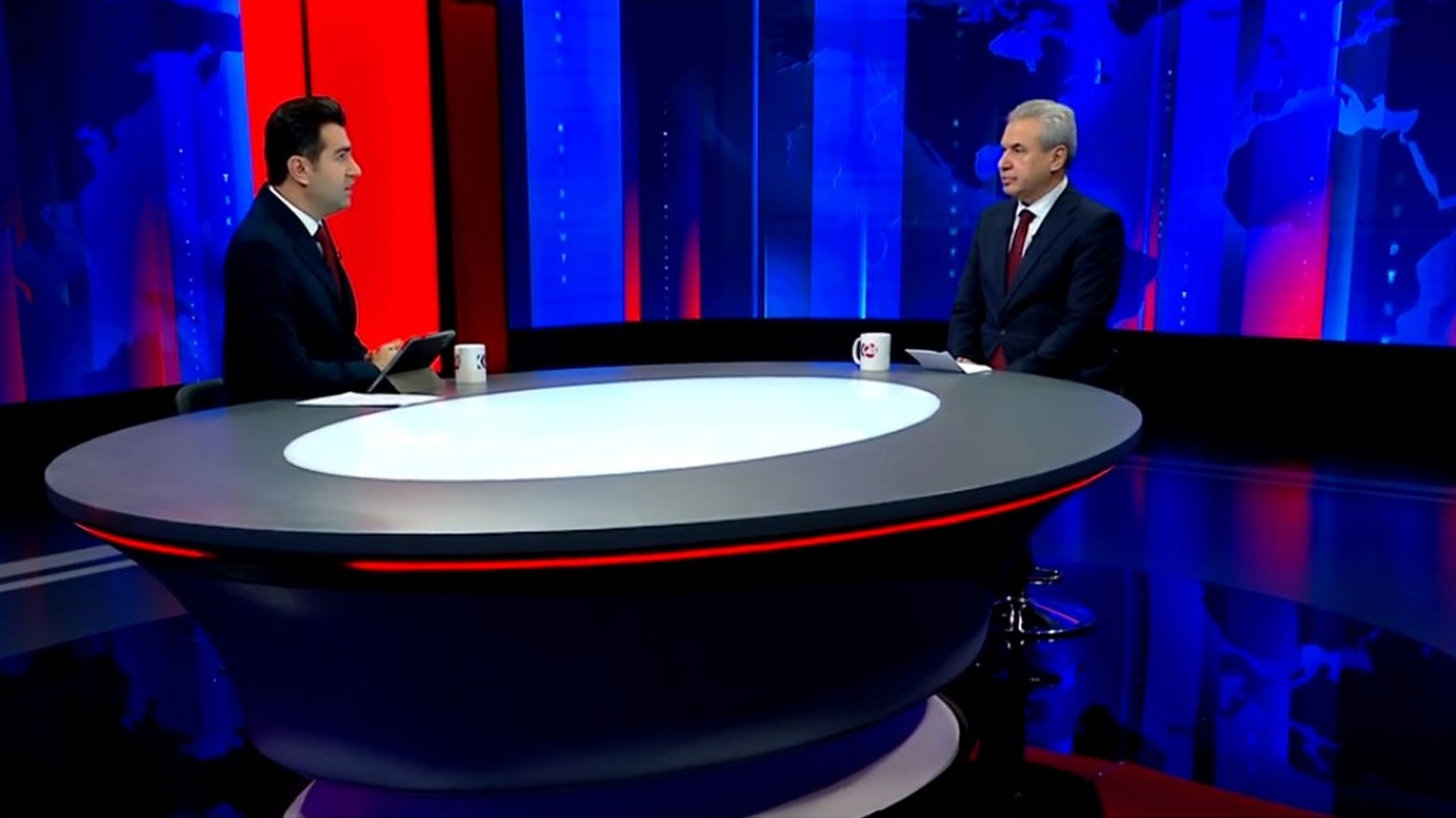
ERBIL (Kurdistan24) - As Syria’s interim leadership issues a decree addressing Kurdish rights, a senior member of the Kurdish National Council is Syria (KNCS) has welcomed the move as historic in form, while warning that its substance remains fragile without firm constitutional backing.
Ibrahim Biro, a member of the Foreign Relations Committee of the KNCS, said the recent decree issued by Syria’s interim president, Ahmed al-Sharaa, represents “a step in the right direction,” but lacks the constitutional guarantees necessary to entrench the identity and rights of the Kurdish people as an authentic nation.
Speaking in an exclusive interview with Kurdistan24, Biro said the decree is the result of decades of struggle by the Kurdish people in Syria.
“For the first time in the history of the Syrian state, a decree of this clarity has been issued by the highest political authority,” he said, adding that its strength remains limited unless it is incorporated within the core of a new Syrian constitution to prevent any future reversal.
Biro criticized the use of the term “Kurdish component” in the decree instead of “the Kurdish people” or “the Kurdish nation,” stressing that Kurds are not merely a sect or a social group, but an authentic nation living on its historical land.
He said the demands of the Kurdish National Council extend beyond cultural and linguistic rights, emphasizing the need for full political and constitutional recognition of Kurdish national identity and their role in shaping Syria’s future.
Commenting on recent field developments and the withdrawal of Syrian Democratic Forces toward areas east of the Euphrates River, Biro described the move as one that “serves de-escalation,” underscoring that the solution in Syria must be political and based on negotiation.
He stressed that Kurdish rights must not be tied to military files or battlefield dynamics.
“Kurdish rights should not be linked to military issues or field conflicts; Kurdish rights are a national and historical entitlement that is not subject to bargaining,” he said.
Biro concluded by affirming the readiness of the Kurdish National Council to participate in future constitutional committees tasked with drafting a permanent constitution for Syria, calling on all Kurdish political forces to unify their discourse in order to secure firm constitutional guarantees, including federalism or expanded administrative decentralization, as a foundation for Syria’s stability and unity.