Nechirvan Barzani Welcomes Syrian Decree Recognizing Kurdish Rights, Calls for Constitutional Guarantees
While praising the decree, the President of the Kurdistan Region emphasized that its true and lasting value depends on translating it into enforceable laws and enshrining it in Syria’s forthcoming constitution to ensure long-term protection and sustainability.
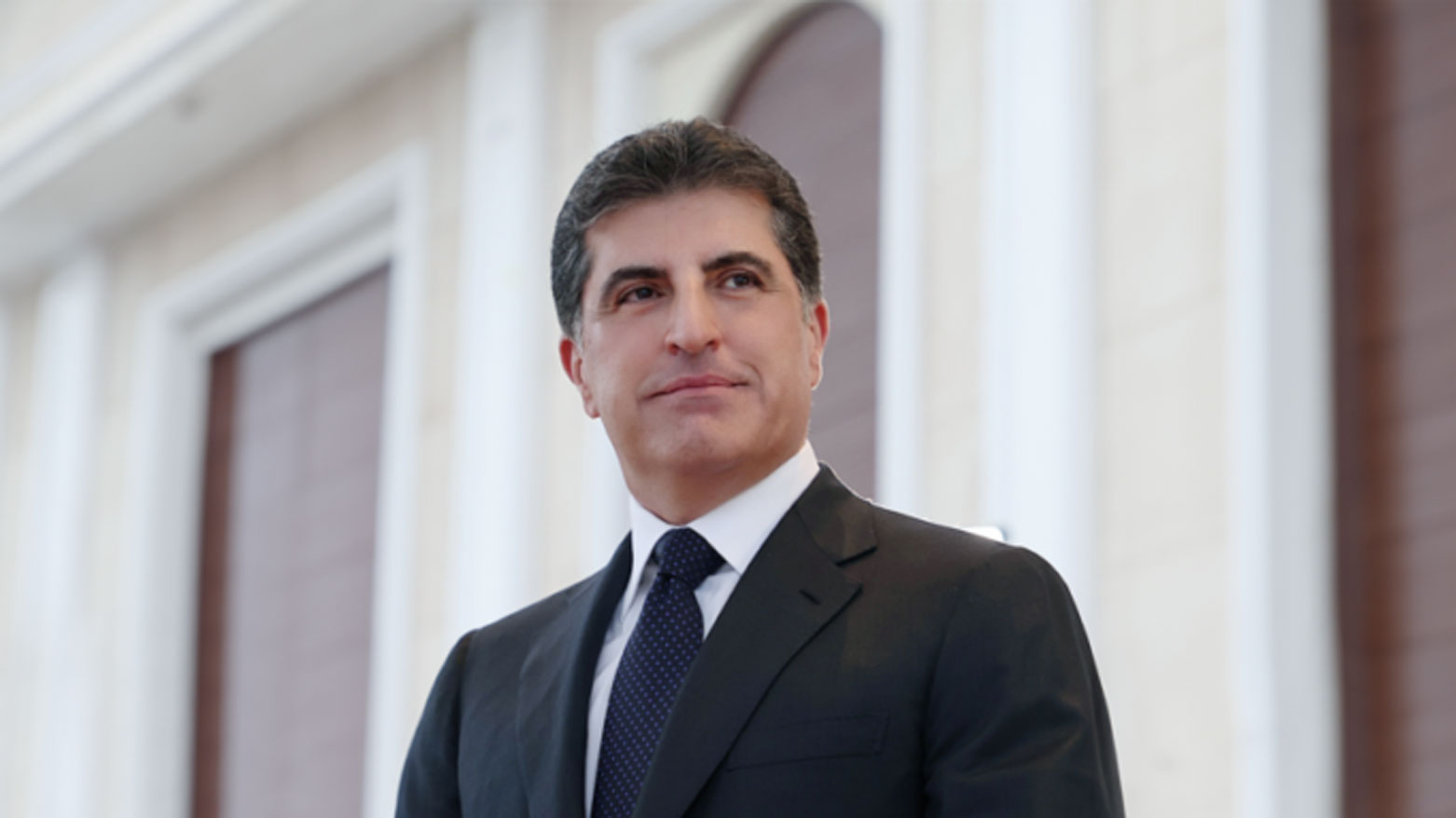
ERBIL (Kurdistan24) — Kurdistan Region President Nechirvan Barzani on Saturday welcomed a decree issued by Syrian President Ahmed al-Sharaa recognizing Kurds as an integral component of Syria and declaring Kurdish a national language, describing the move as an important and correct political and legal step toward building a new Syria that guarantees the rights of all its citizens.
In a statement, Barzani said that acknowledging Kurds as a foundational part of Syrian society and protecting their rights represents a meaningful advance toward equality and inclusive statehood.
He stressed that respect for pluralism and equality should be viewed as a source of strength rather than division, noting that such principles form the basis of stability, peace, and national coexistence.
While praising the decree, Barzani emphasized that its true and lasting value depends on translating it into enforceable laws and enshrining it in Syria’s forthcoming constitution to ensure long-term protection and sustainability.
He reaffirmed the Kurdistan Region’s support for any effort to build a Syrian state that embraces all components without discrimination or marginalization and safeguards political and cultural rights for everyone, thereby contributing to regional security and stability.
Barzani also called on all parties to work collectively and peacefully to establish clear mechanisms for implementing the decree and turning it into tangible policies and practices on the ground.
He reiterated the Kurdistan Region’s readiness to cooperate in all forms to advance peace and stability in Syria.
The statement came a day after President al-Sharaa issued a landmark decree declaring Kurdish a “national language” that can be taught in public schools in areas with significant Kurdish populations.
The decree, the first formal recognition of Kurdish national rights since Syria’s independence in 1946, also recognized Kurds as an “essential and integral part” of the country. It designated the Kurdish New Year, Nowruz, celebrated on March 21, as an official holiday and granted nationality to Kurds who had been stripped of citizenship under a controversial 1962 census.
In a televised address announcing the decision, al-Sharaa urged Kurds to actively participate in rebuilding Syria and pledged to guarantee their rights. The move was widely seen as a gesture of goodwill following recent clashes between Syrian government forces and Kurdish fighters.
However, reactions among Kurdish political actors have been mixed. Salih Muslim, a senior Kurdish political figure, described the decree as an attempt to evade broader Kurdish demands and sow division.
The Kurdish-led administration in northern and northeastern Syria said the decision was “a first step” but fell short of the aspirations of the Syrian people, arguing that rights must be protected through permanent constitutional provisions rather than temporary decrees.
The announcement also comes amid a stalled effort to implement a March agreement to integrate the Kurds’ de facto autonomous administration in the north into the Syrian state.
The US-backed Syrian Democratic Forces (SDF), which control large swathes of oil-rich territory in northeastern Syria, have been under pressure as Damascus seeks to reassert authority nationwide following the ouster of Bashar al-Assad a year ago.
Tensions escalated last week when Kurdish forces were pushed out of two neighborhoods in Aleppo by the Syrian army, which subsequently deployed reinforcements near Deir Hafer, east of the city.
SDF commander Mazloum Abdi later announced a withdrawal of forces east of Aleppo toward areas east of the Euphrates, a move welcomed by Syria’s defense ministry, which said government troops would fill the vacated positions.
According to estimates, Syria’s population of about 20 million includes roughly two million Kurds, most of whom live in the northeast. While the decree marks a historic shift in official policy, Kurdish leaders and observers say its ultimate significance will depend on whether it is embedded in a future constitutional framework that reflects the will of all components of Syrian society.