Iraq Prepares for Second Convoy of ISIS Detainees as Transfer from Syria Accelerates
The Iraqi Ministry of Interior confirmed the second convoy of ISIS prisoners will arrive from Syria shortly, overseen by CENTCOM, as Iraq fortifies borders and urges European repatriation.
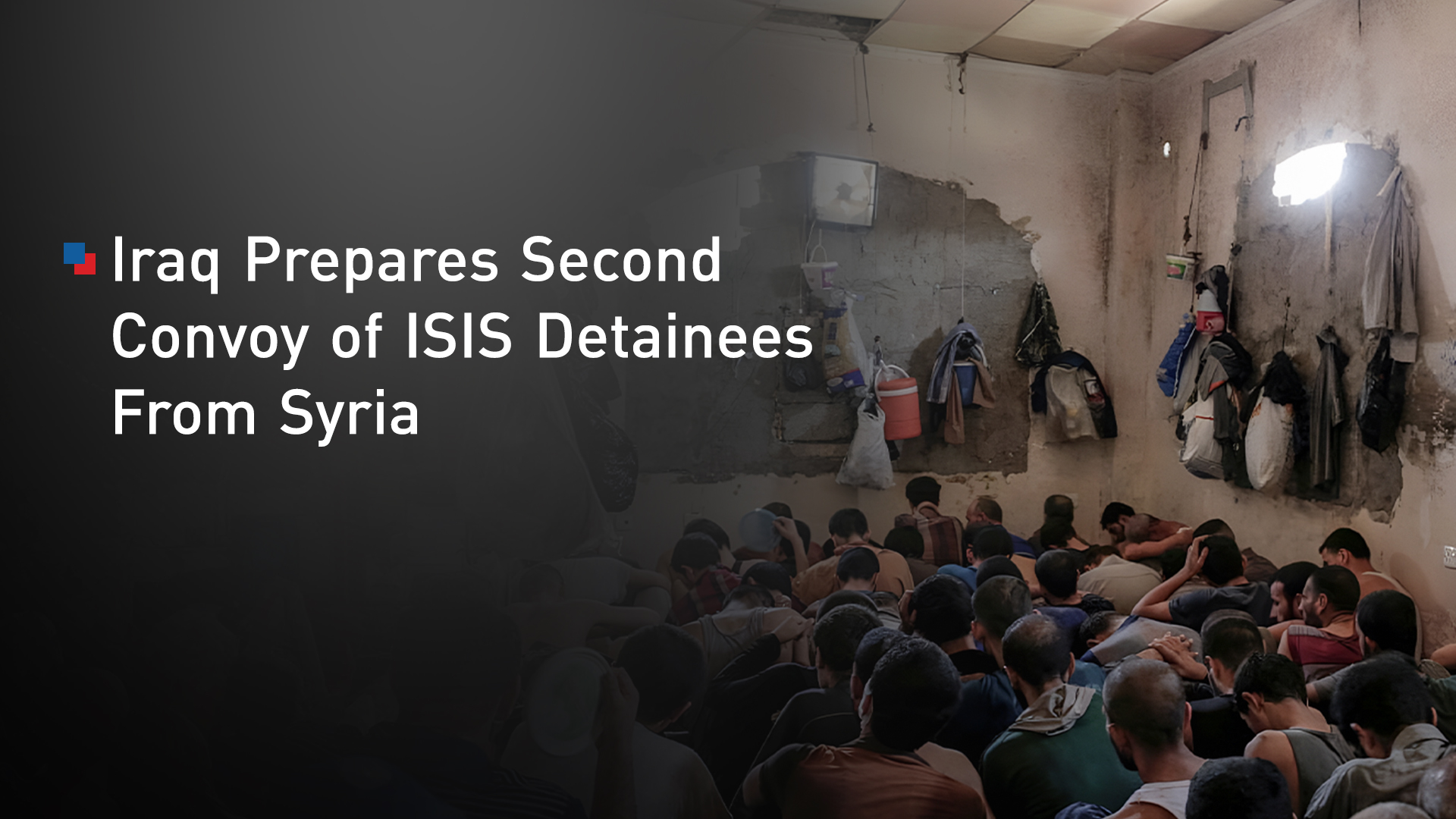
ERBIL (Kurdistan24) - The Iraqi Ministry of Interior announced on Saturday that a second convoy of Islamic State (ISIS) detainees is scheduled to arrive in Iraq from Syria within the coming days. The transfer, conducted under the joint supervision of Iraqi security forces and the United States Central Command (CENTCOM), marks a continuation of a large-scale repatriation and detention effort aimed at mitigating the risk of mass escapes from facilities in northeastern Syria.
Miqdad Miri, the spokesperson for the Iraqi Ministry of Interior, told Kurdistan24 on Saturday, Jan. 24, 2026, that the upcoming arrival follows the successful handover of 150 fighters from the organization so far.
Miri detailed an operational framework in which the detainees will not be housed in a single centralized location but will instead be distributed across various high-security prisons throughout Iraq.
The transfer process is being executed through a partnership between the Ministry of Interior and CENTCOM, with the U.S.-led International Coalition providing significant logistical support.
According to Miri, the Coalition has expressed its full readiness to assist the Iraqi government in both the transportation and the protection of the prisoners during transit. This coordination is intended to ensure that the mission is performed in a secure manner, utilizing the administrative and technical groundwork established by both Baghdad and its international partners.
The decision to accelerate the transfer of ISIS members comes as the security environment in northeastern Syria remains increasingly volatile.
According to statements from CENTCOM, the ultimate objective of the operation is the transfer of approximately 7,000 ISIS prisoners from Syrian territory to Iraqi jurisdiction to prevent the extremist group from exploiting potential security breaches.
Basim Alawadi, the spokesperson for the Iraqi government, characterized the repatriation of these fighters as a "preemptive step to protect national security."
He indicated that by bringing the detainees under the direct control of the Iraqi state, the government aims to neutralize the "serious threat" posed by the possibility of insurgent elements storming Syrian prisons to release their subordinates.
Parallel to these security measures, the Supreme Judicial Council of Iraq has officially initiated legal procedures to process the transferred prisoners within the national court system.
The logistical scale of this undertaking was further highlighted in reports from the Interior Ministry earlier this week.
Spokesperson Miqdad Miri previously noted that the transfer process is being implemented under strict security measures, with detainees slated for distribution among facilities in the provinces of Nasiriyah, Hillah, and Nineveh.
While current handovers are being reported in specific convoys, the ministry has indicated that the broader repatriation plan involves a significant volume of individuals, including both Iraqi citizens and foreign nationals.
To safeguard the national frontier during this period of high-volume prisoner movement, Iraqi authorities have established a robust defensive architecture along the border with Syria.
Officials provided assurances to Kurdistan24 that the border is strictly protected through the deployment of three distinct defensive lines.
This multi-layered strategy is overseen by the border guards, the Iraqi army, and the Popular Mobilization Forces (PMF), a configuration designed to repel any potential cross-border threats or infiltration attempts.
The operational details of the transfer were a primary topic of discussion during a meeting on Friday between Iraqi Prime Minister Mohammed Shia al-Sudani and Admiral Brad Cooper, the Commander of the U.S. Central Command.
During the meeting in Baghdad, Prime Minister al-Sudani emphasized that the Iraqi leadership possessed "early foresight" regarding the potential for regional developments to unfold in a destabilizing manner.
According to a release from the Prime Minister’s Media Office, received by the Iraqi News Agency (INA), this strategic outlook prompted the federal government to implement border fortification methods that had not been utilized in the country’s history.
Al-Sudani also cited the government’s efforts to repatriate large numbers of Iraqi families from regional camps as a component of this broader security strategy, aimed at preventing long-term radicalization.
The Prime Minister praised Admiral Cooper for his role in coordinating the conclusion of the International Coalition’s mission and the formal handover of the Ain al-Asad Airbase to Iraqi forces.
Admiral Cooper, in turn, expressed the gratitude of the international community for Iraq’s "effective security step" in receiving the ISIS detainees.
The Admiral confirmed that U.S. forces would continue to provide logistical and technical support to Baghdad, ensuring that cooperation between the two parties remains at the "highest levels."
Beyond the security and military dimensions, the transfer has created a significant diplomatic and custodial challenge for the Iraqi government. Data provided by the Interior Ministry indicates a stark demographic disparity among the transferees.
While approximately 7,000 ISIS prisoners are slated for transfer—with previous estimates citing a weekly capacity for such movement—the majority are not Iraqi. According to Miri, the anticipated influx includes around 5,000 foreign nationals compared to approximately 2,000 Iraqi citizens.
This disparity has prompted Prime Minister al-Sudani to increase diplomatic pressure on Western governments. In a telephone conversation with French President Emmanuel Macron on Friday, the Prime Minister insisted that European Union member states must assume their legal and moral responsibilities.
According to a statement from his office cited by Agence France-Presse (AFP), al-Sudani urged international partners to receive those individuals who hold their nationalities so they can be prosecuted within their own jurisdictions.
The Iraqi government has suggested that the current arrangement, while necessary for regional stability, is unsustainable without international reciprocity regarding the legal burden of foreign combatants.
The meeting with U.S. Special Envoy for Syria Tom Barrack on Thursday further solidified the link between the prisoner transfers and broader regional stability. Barrack conveyed the gratitude of U.S. President Donald Trump for Iraq's efforts to promote security during what he described as a critical period for the Middle East.
The discussions between the Prime Minister and the U.S. envoy also touched upon the necessity of economic cooperation and sustainable development as essential pillars for long-term regional security, ensuring that the gains made in the fight against terrorism are maintained.
As the second convoy approaches the Iraqi border, the convergence of judicial, military, and diplomatic efforts underscores the complexity of managing the ISIS legacy.
While Iraqi officials maintain that the borders are secured by triple-layered defenses and that the Supreme Judicial Council is prepared for the legal influx, the ultimate success of the "preemptive step" described by Alawadi remains tied to continued cooperation with CENTCOM and the eventual response of the international community to Iraq’s calls for repatriation.