Iraqi Military to Prosecute ISIS Detainees Under National Law Amid Internal Security Friction
Iraq will try 700 ISIS militants from Syria under national law, a move the government calls preemptive, but PMF leaders condemn as a mistake. Borders remain secured by a triple-layered defense.
ERBIL (Kurdistan24) – The Iraqi government announced Saturday that it has initiated legal and security protocols to process hundreds of Islamic State militants being transferred from northeastern Syria, affirming that the detainees will face trial under Iraqi law despite vocal opposition from senior paramilitary leadership.
Sabah al-Numan, the spokesperson for the Commander-in-Chief of the Iraqi Armed Forces, stated in a briefing to Kurdistan24 that all militants moved into the country’s jurisdiction would be subject to the national judiciary. He emphasized that the transfer process aims to ensure that those responsible for past atrocities receive "just punishment" within a secured legal framework.
According to Numan, the current status of the prisoners who have arrived on Iraqi soil is stable and fully secured. He noted that a significant portion of the individuals currently being transferred are already wanted by Iraqi courts for prior criminal activity. Consequently, the government intends to bring them before the bench in accordance with effective national statutes.
The Supreme Judicial Council has signaled its readiness to oversee these proceedings. Numan indicated that formal legal maneuvers are scheduled to commence in the "near future."
While the transfer operation is currently ongoing, officials have disclosed that 150 militants have already been handed over from Syria to Iraq. The scope of the operation is expected to broaden, with current projections suggesting that the total number of transferred fighters will reach 700 during the upcoming stages of the mission.
Despite the government’s formal stance, the decision to repatriate and house these high-value detainees has encountered significant resistance from within the country's security apparatus. Abu Turab al-Tamimi, a senior commander in the Popular Mobilization Forces (PMF) and a leading figure in the Badr Organization, characterized the arrival of the prisoners as a profound strategic error.
In a statement to Kurdistan24 on Saturday, al-Tamimi expressed total rejection of the policy, describing the return of the militants as a "wrongful act." He asserted that the federal government must be held accountable for what he labeled a "major mistake," arguing that terrorists should be barred from entering Iraq regardless of their nationality or legal status.
The internal disagreement over the transfer coincides with a heightened military posture along the frontier.
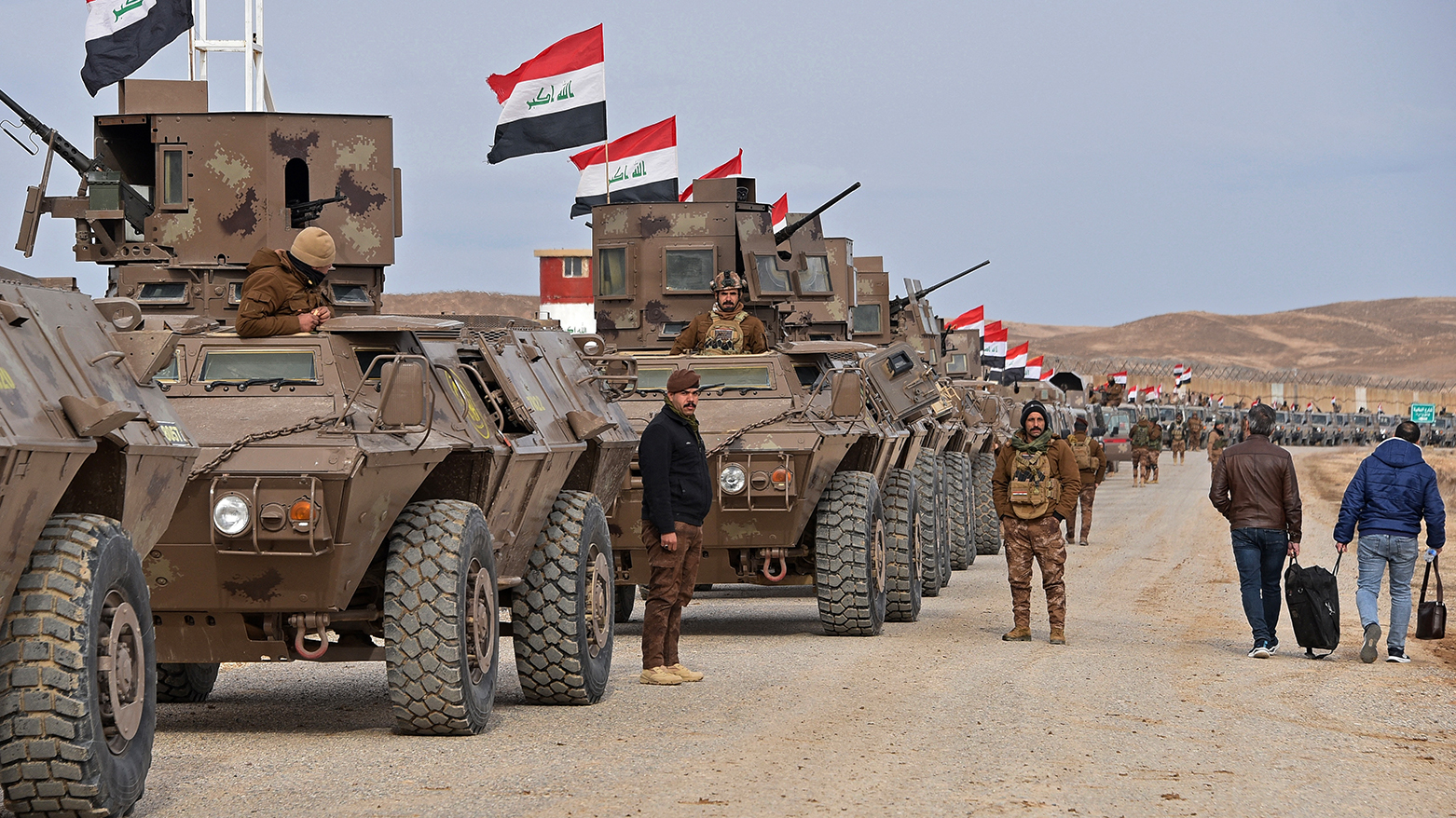
Al-Tamimi confirmed that the PMF has dispatched an additional unit, the 1st Brigade, to Anbar province to bolster border security. He maintained that the border is "fully secured" and suggested that the PMF had long anticipated such a development and prepared its defensive contingencies accordingly.
The logistical undertaking is being conducted in coordination with the United States. U.S. Central Command (CENTCOM) recently announced the start of a new phase in the transfer of detainees from northeastern Syria to Iraq. The initial group of 150 prisoners was moved from facilities in Hasakah.
Miqdad Miri, a spokesperson for the Iraqi Ministry of Interior, confirmed that these detainees are being distributed among various high-security prisons across the country to prevent overcrowding and mitigate security risks.
The drive to relocate the prisoners was precipitated by a sharp decline in the security environment of detention centers in Rojava, or Western Kurdistan. Fears of a mass resurgence were amplified following recent attacks on the Shaddadi prison, which resulted in the escape of several high-risk Islamic State operatives.
The Iraqi government has framed the relocation as a "preemptive" measure necessary to "protect national security." While the United States has welcomed Baghdad’s decision as a critical step toward the total eradication of the terrorist organization, domestic critics continue to question the long-term implications of housing the militants.
To address public and political concerns, senior security officials have offered assurances regarding the integrity of the nation's borders. The frontier is currently protected by three reinforced defensive lines: the primary line is managed by the Border Guard, the secondary line by the Iraqi Army, and the tertiary line by the PMF.
Technical measures including thermal surveillance cameras, drones, concrete barriers, and trenches have been deployed to reinforce these perimeters. Furthermore, officials noted that there is ongoing coordination between federal security forces and the Peshmerga to ensure a comprehensive regional defense.