From Inside the Siege: Hospitals in Kobani on the Brink as Death Looms
An ICU doctor in besieged Kobani warns hospitals are nearing collapse due to fuel and medical shortages, as DAANES reports another child died on Jan. 24, 2026, from lack of oxygen amid a seven-day siege.
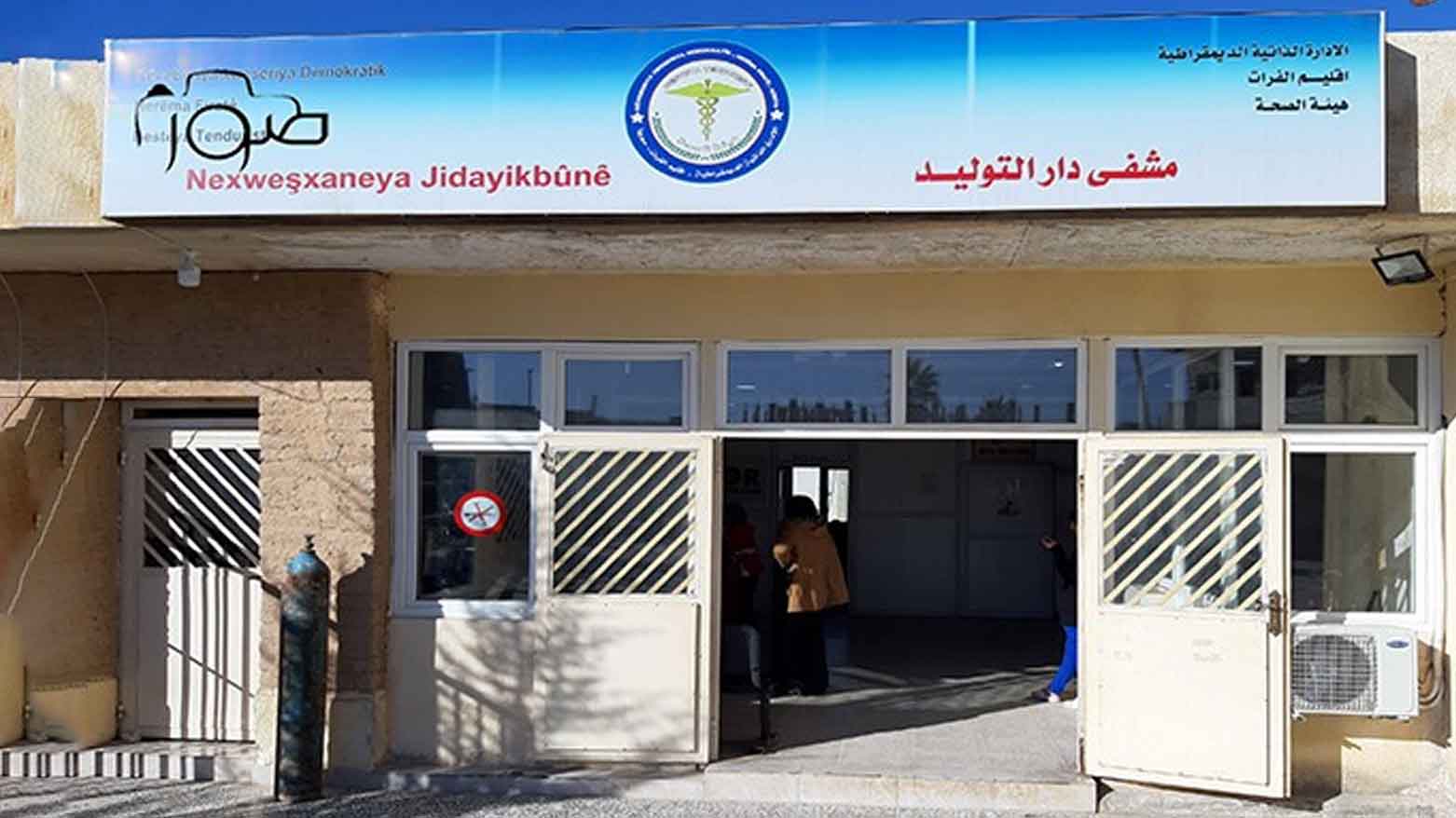
ERBIL (Kurdistan24) - Inside besieged Kobani, hospitals are racing against time as fuel shortages threaten to shut down life-saving machines, medical supplies are nearly exhausted, and civilians endure freezing temperatures without food or shelter, according to a detailed account from a senior intensive care physician.
In an interview with Kurdistan24, Dr. Haqi Ali Demir, a specialist in anesthesia and intensive care (ICU) at Aykor hospital in Kobani, said Kobani’s hospitals are operating on emergency generators alone, placing patients dependent on ventilators in immediate danger.
“We are now living the final hours before a major catastrophe,” Damer said. “At present, we rely entirely on electrical generators to operate sensitive equipment in operating rooms and intensive care units. The problem is that diesel reserves are almost completely depleted. If these generators stop, it will be a death sentence for patients connected to ventilators who cannot survive for even a single minute without power. This is not about comfort; it is about heartbeats that will stop the moment fuel runs out.”
He warned that the medical stockpile is being rapidly drained, threatening the hospital’s ability to provide even basic care.
“The pharmaceutical situation is tragic. Within one or two days at most, we will lose the ability to provide any surgical medical care,” he said. “There is a severe and dangerous shortage of IV fluids and serums, which are the backbone of emergency medicine. Anesthetic drugs are also close to running out, meaning we may reach a stage where we cannot perform life-saving surgeries for the wounded.”
Damer added that shortages extend beyond hospitals, noting a critical lack of infant formula. “This places infants at risk of dying from hunger in the absence of alternatives,” he said.
Describing the broader humanitarian situation, the doctor said Kobani is under a suffocating siege, with the surrounding countryside displaced into a city already stretched beyond capacity.
“Shops are completely empty of basic foodstuffs,” he said. “What we see on the ground is beyond description. Entire families, children and women, are sleeping in streets and cars amid heavy snowfall and bitter cold, without the most basic means of heating or food. This warns of a wave of deaths caused by hypothermia and severe malnutrition.”
He said the closure of all roads and crossings has eliminated any possibility of medical evacuation.
“Because all routes around Kobani are closed, it has become impossible to transfer any wounded person or critically ill patient outside the city,” Damer said. “Patients with kidney failure, heart disease, and diabetes face an unknown fate due to the absence of specialized medicines and the impossibility of evacuation.”
He also warned of potential outbreaks. “With the interruption of clean water, our fears as doctors are growing about the spread of deadly epidemics such as cholera. The current environment, with overcrowding and water shortages, is fertile ground for bacterial disasters,” he said.
Damer said medical staff are working under extreme pressure.
"The medical teams are on maximum alert around the clock. We are working under enormous physical and psychological strain,” he said. “Although we have not yet reached the stage of ‘triage between lives’ due to lack of resources, we are approaching this dark moment at a frightening speed if the siege is not broken immediately.”
In an appeal to the international community, he warned that hospitals could soon cease to function altogether.
“My message in the name of humanity and on behalf of the medical sector in Kobani is that we are facing an imminent human catastrophe,” Damer said. “We urgently appeal to the international community, human rights organizations, and global medical organizations to act within the next twenty-four hours to open safe humanitarian corridors. What is immediately required is fuel for hospitals, surgical supplies, anesthetic drugs, and infant formula. The shutdown of hospitals simply means their transformation into mass graves. Save civilians before it is too late.”
The warning comes as the Democratic Autonomous Administration of North and East Syria (DAANES) told Kurdistan24, that another child died in Kobani due to a lack of medical oxygen.
Avin Qamishlo, Co-chair of the Media Office of the Autonomous Administration, told Kurdistan24 that on Saturday, a child died in one of Kobani’s hospitals because the required oxygen was unavailable. She said the death occurred amid an intensifying siege and a sharp
decline in medical supplies, stressing that health facilities are no longer able to meet basic needs.
Under a severe seven-day siege, water, electricity, and internet services have been completely cut off, while access to food and medicine has been blocked, placing thousands of civilians at risk. Kurdish parties and organizations have described the situation as a “slow death,”
warning that hospitals and vital institutions have stopped functioning due to the absence of fuel.
In a joint statement issued on Saturday, Kurdish parties and organizations in Kobani called for an urgent humanitarian response, describing the siege as a violation of international humanitarian laws and norms and warning that collective punishment against civilians could
amount to crimes against humanity.
As fuel, medicine, and oxygen run out, doctors in Kobani warn that without immediate humanitarian access, hospitals may fall silent and civilian deaths will continue to mount inside the besieged city.