Syria to Open Two Humanitarian Corridors to Deliver Aid to Kobani
Syria will open two humanitarian corridors in Aleppo and Hasakah for Kobani as BCF convoys enter the city. The moves follow a siege that left 150,000 civilians without food or power.
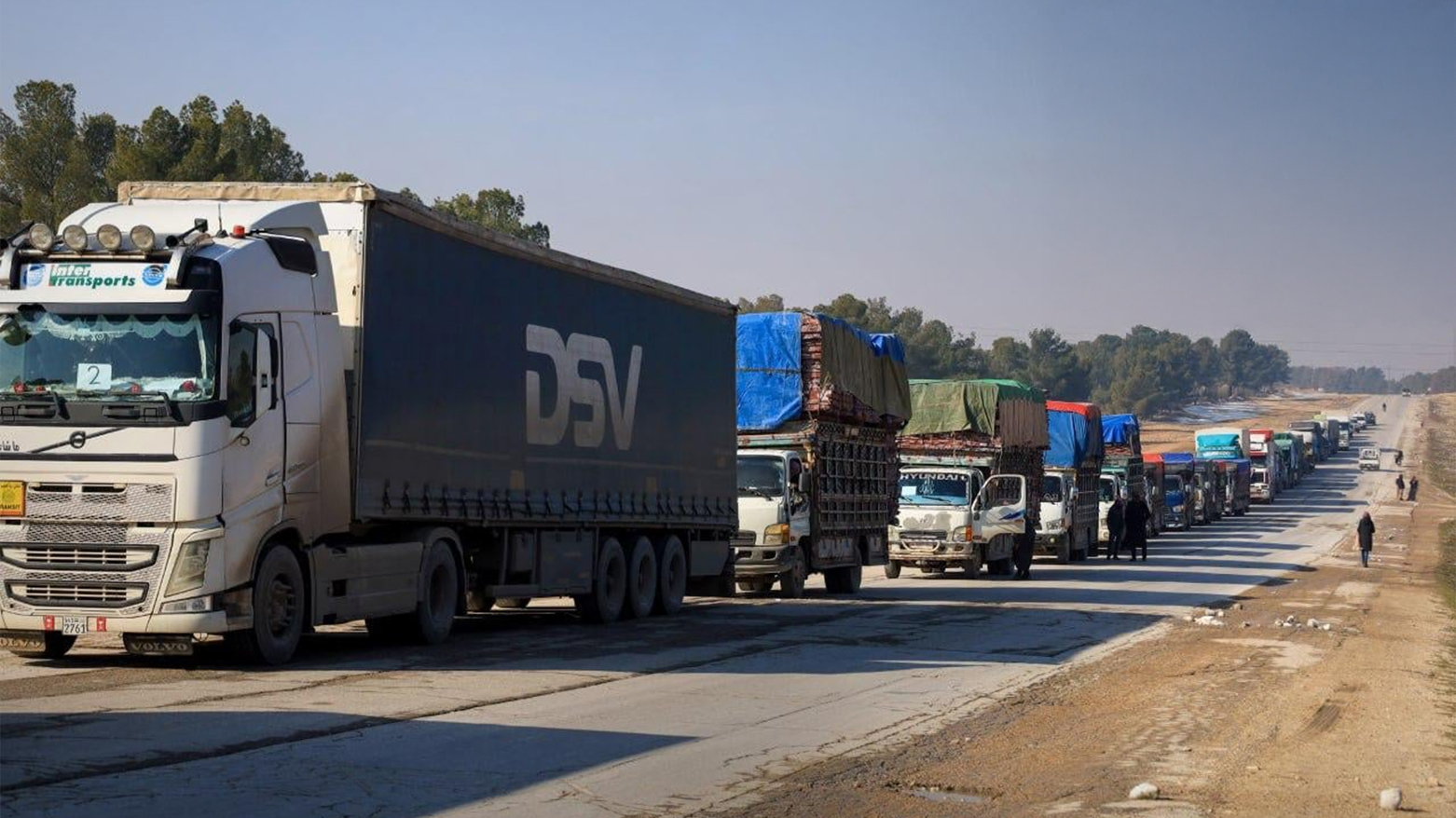
ERBIL (Kurdistan24) - The Syrian Ministry of Defense announced Sunday that it is coordinating with the governorates of Hasakah and Aleppo to open two new humanitarian corridors intended to facilitate the delivery of relief supplies to the city of Kobani. The announcement occurs as the first major humanitarian convoys reached the city, which has been isolated by a military blockade for over a week, precipitating a severe humanitarian emergency compounded by record-breaking winter weather.
According to the Directorate of Media and Relations of the Syrian Ministry of Defense, the Syrian Arab Army is currently in the preparatory stages of establishing these corridors.
In a statement provided to the official Syrian news agency, SANA, the ministry noted that once all necessary logistical and administrative procedures are finalized, the specific times and locations for the opening of these routes will be formally disclosed.
The announcement of the new corridors coincided with a separate relief operation coordinated by the Central Committee for Aleppo Response and United Nations organizations.
This joint effort resulted in the dispatch of a large humanitarian convoy to Kobani consisting of 24 trucks. Reports indicate the shipment contains food, logistical necessities, and a substantial quantity of medical supplies for the city’s residents.
BCF Efforts and Regional Aid Mobilization
Parallel to the developments in Damascus and Aleppo, the Barzani Charity Foundation (BCF) has successfully moved its first humanitarian convoy into Kobani.
During a press conference held Sunday in the city of Qamishlo, Musa Ahmad, the President of the BCF, confirmed the entry of the aid, characterizing the breakthrough as the result of sustained diplomatic efforts led by President Masoud Barzani and supervised by Masrour Barzani, the Prime Minister of the Kurdistan Region.
Ahmad revealed that the scale of the relief operation has expanded significantly, with 114 trucks now reaching the region of Rojava (Western Kurdistan). Each vehicle in the convoy is loaded with approximately 12 tons of supplies.
The BCF’s presence is supported by a workforce of more than 160 employees on the ground, supplemented by a specialized medical team that has been providing emergency healthcare services in the area.
The humanitarian mission has also addressed critical infrastructure needs. Under a directive from Prime Minister Masrour Barzani, the BCF has provided diesel fuel to 81 schools to ensure heating for educational centers during a winter that has seen the heaviest snowfall in over 50 years.
Furthermore, 30 additional schools were supplied with food and health packages, with each container holding 22 distinct types of supplies.
The statistical reach of the BCF’s intervention is extensive. Ahmad reported that on Saturday alone, 5,827 families—representing 34,227 individuals—benefited from the aid distribution.
The foundation’s medical teams treated 1,367 patients, while its mobile kitchens continue to provide 3,500 hot meals daily. Beyond direct assistance, the relief project has secured 200 job opportunities for local youth to assist in the logistical requirements of the campaign.
The Humanitarian Crisis in Kobani
The opening of corridors and the arrival of aid convoys occur as Kobani faces what local observers describe as a "slow death" driven by military encirclement. The city and its surrounding villages have been besieged for eight days by the Syrian Arab Army and affiliated armed groups.
This blockade resulted in the total cessation of water, electricity, internet, and communication services, isolating an estimated 150,000 civilians.
The human toll of the siege has been compounded by environmental extremes. The Democratic Autonomous Administration of North and East Syria (DAANES) announced that health facilities in Kobani have largely collapsed, relying on failing emergency generators.
On Saturday, local authorities confirmed that a child died in a Kobani hospital due to a critical lack of medical oxygen. Simultaneously, the Kurdish Red Crescent reported that five children, including an infant, died in the city due to extreme cold and a lack of heating fuel.
Mustafa Sheikh Muslim, a lawyer residing in Kobani, told Kurdistan24 that the situation has been at its "worst" since hostilities began. He noted that while attacks by the Syrian Arab Army on the city's outskirts were audible through Sunday morning, they had ceased to some extent on the eastern front.
Despite the reported ceasefire, Muslim emphasized that encircling forces have actively obstructed the delivery of aid, making the newly announced corridors essential for the city’s survival.
Regional Displacement and International Response
The crisis in Kobani is part of a broader wave of displacement that has engulfed Western Kurdistan. Official statistics indicate that more than 130,000 people have fled areas including Sheikh Maqsud, Ashrafiyeh, Raqqa, and Tabqa.
Many of these displaced persons have headed toward Qamishlo and Hasakah, where they are currently seeking shelter in mosques and schools under harsh conditions.
Projections suggest the number of displaced persons could reach 150,000 in the coming days. Local officials have highlighted a significant gap in international support, noting that while various UN agencies were active in the past, the BCF currently remains the primary relief provider on the ground.
The Fishkhabour–Semalka border crossing continues to serve as the sole gateway for the Kurdistan Region to deliver this sustained assistance.
Farhan Haq, the Deputy Spokesperson for the UN Secretary-General, expressed concern that all access routes to Kobani had been closed, and noted that the UN has requested facilitation for aid delivery.
During a meeting with BCF leadership, UN representatives reportedly expressed admiration for the variety and quality of the foundation’s aid and promised full coordination to reach all affected areas.
Security and Diplomatic Context
The humanitarian emergency is unfolding against a volatile security backdrop. Late Saturday, the Syrian Democratic Forces (SDF) and the Syrian Ministry of Defense announced a 15-day extension of a standing ceasefire through international mediation.
Damascus indicated that the truce is intended to facilitate the transfer of approximately 7,000 ISIS detainees to Iraqi territory, an operation being overseen by the United States Central Command (CENTCOM).
However, political tensions remain high. Gulistan Kiliç, the head of the DEM Party parliamentary group, recently characterized the offensive against Kurdish areas as a continuation of extremist objectives. She urged NATO members, including the United States and Turkey, to pressure the Syrian government to permanently lift the blockades.
As the first BCF convoys begin to distribute food and medicine within Kobani, the opening of the promised corridors in Aleppo and Hasakah remains the critical factor in determining whether the city can avert a large-scale humanitarian disaster.
BCF President Musa Ahmad reiterated that the foundation is ready to coordinate with any party to serve the population, framing the mission as a national and humanitarian duty.
This article was updated on Sunday, Jan. 25, 2026, at 01:36pm.