Eleven Years After ISIS Defeat, Kobani Faces Renewed Siege
Kobani marks 11 years since its liberation from ISIS by Peshmerga forces. Today, the city faces a new siege by Syrian government forces, prompted by a wide-scale offensive in Western Kurdistan.
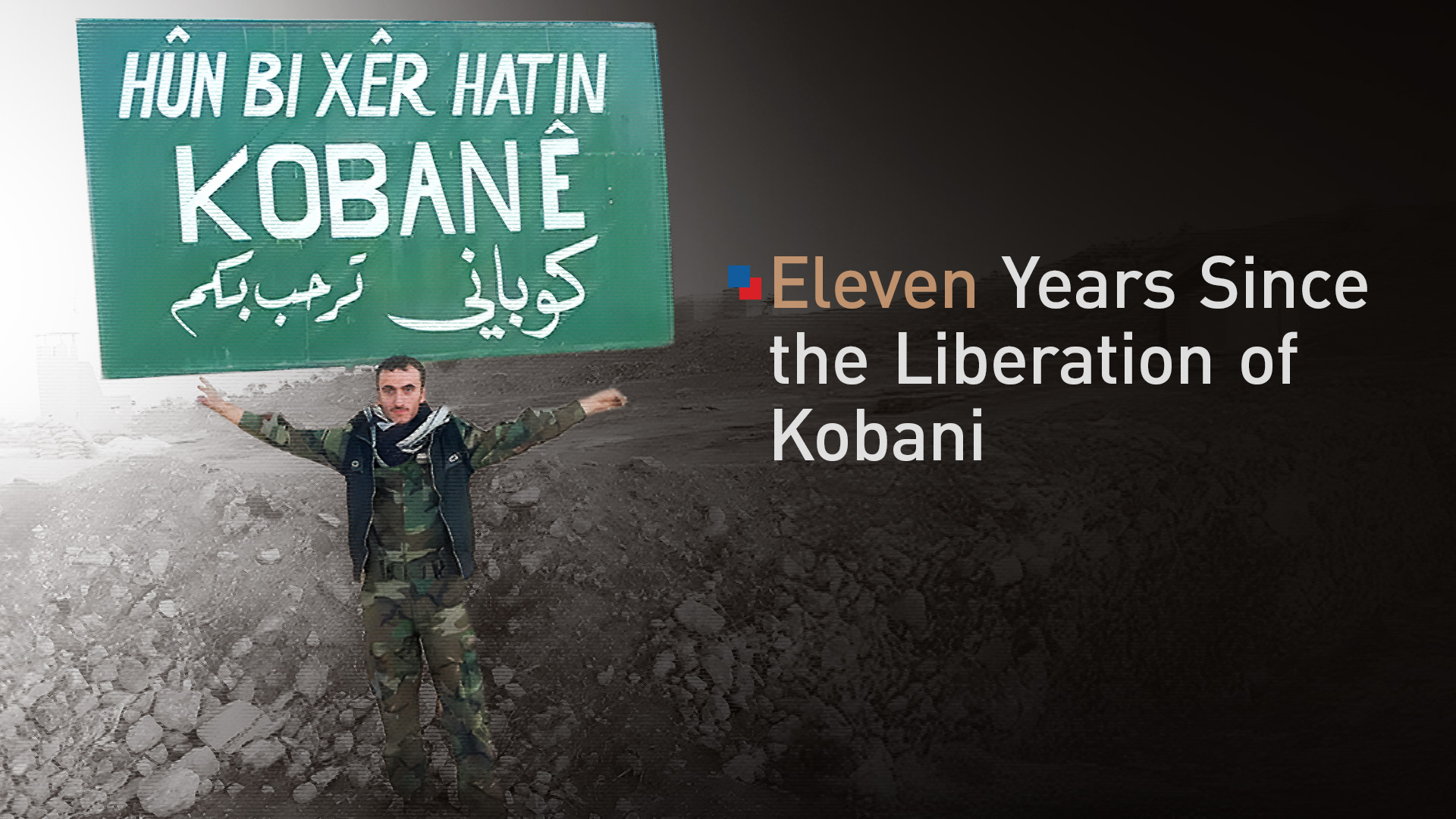
ERBIL (Kurdistan24) – The city of Kobani in Western Kurdistan (Rojava) observed the 11th anniversary of its liberation from the Islamic State (ISIS) on Monday, a milestone marked by both historical reflection and an urgent contemporary security crisis. While the date commemorates the 2015 victory facilitated by the Kurdistan Peshmerga, the city currently faces a renewed military challenge as post-Assad Syrian government forces and affiliated armed groups have established a fresh siege around the urban center.
According to a report detailing the anniversary, the liberation of Kobani on January 26, 2015, remains a definitive moment in the regional conflict against extremist groups. However, eleven years to the day after Kurdish fighters cleared the city of terrorists, the strategic enclave is once again isolated.
This convergence of history and current events highlights the shifting alliances and persistent volatility defining the security landscape in northern Syria.
The Historical Context of the 2015 Liberation
The anniversary traces back to September 2014, when Islamic State militants launched a massive offensive that saw the group seize control of approximately 80 percent of Kobani. In response to the looming humanitarian and strategic collapse, Masoud Barzani, then-President of the Kurdistan Region, initiated an unprecedented military intervention.
By October 2014, the Kurdistan Parliament formally approved a decision to dispatch Peshmerga forces across international borders to Western Kurdistan to aid in the city’s defense.
The deployment marked a significant diplomatic achievement, involving extensive coordination between the Kurdistan Regional Government, the United States, and Turkey.
On October 28, 2014, an initial convoy of 150 Peshmerga fighters passed through Turkish territory to reach the front lines.
This logistical feat was made possible through a tripartite agreement that allowed Kurdish forces from Iraq to transit through Turkey to reach the besieged city. In total, four convoys were dispatched at varying intervals to sustain the defense efforts.
The mission was characterized by significant sacrifice. Zeravan Mzuri was one of the brave Peshmerga heroes who was the first Kurdistan Peshmerga to be martyred in Kobani.
Born in 1991, Mzuri was a second-year student in the Kurdish Language Department at Soran University who had taken a leave of absence from his academic studies to join the fight against the Islamic State. He was killed in action on Jan. 20, 2015, just days before the final victory.
Supported by these Peshmerga units and intensive airstrikes from the U.S.-led International Coalition, Kurdish fighters in Western Kurdistan regained full control of the city on January 26, 2015.
The Peshmerga forces remained in the city to ensure its security until their final return to the Kurdistan Region on April 22, 2015.
Reflecting on the decision to deploy the forces, President Barzani stated in a subsequent interview that the move was "not an easy decision, but it was a historical one."
He characterized the intervention as a national and humanitarian necessity. "Turkey's position was positive; had Turkey not consented, that force could not have been sent to Kobani," President Barzani noted, adding that the force successfully achieved its objectives of driving the terrorists out of the city.
The Renewed Crisis in 2026
The 11th anniversary arrives as Kobani is once again at the center of military operations.
The Syrian Arab Army (SAA) and armed groups affiliated with the Damascus government have launched a wide-scale offensive across Western Kurdistan, placing the city under a new siege. This development has prompted a surge in diplomatic activity and humanitarian efforts from the Kurdistan Region.
During a recent visit to the Vatican and the Kurdistan Regional Government’s representation in Rome, Italy, President Barzani addressed the unfolding crisis.
Speaking to journalists, he emphasized that the "dignity and existence" of the Kurdish people remain the most sacred priorities for the regional leadership. He assured the public that despite extreme pressure, "the people of Kurdistan will remain."
President Barzani’s current diplomatic strategy focuses on preventing the conflict from escalating into a broader ethnic confrontation.
He disclosed that he has engaged in high-level communications with international and regional leaders, including the Emir of Qatar and Syrian officials.
"All efforts are aimed at preventing the war from spreading or expanding, stopping what is currently happening, protecting the Kurdish region there, and ensuring our people's dignity is preserved," he said. He added that interlocutors have promised to prevent the situation from devolving into a "Kurdish-Arab war."
Eleven Years After ISIS Defeat, Kobani Faces Renewed Siege
— Kurdistan 24 English (@K24English) January 26, 2026
Kobani marks 11 years since its liberation from ISIS by Peshmerga forces. Today, the city faces a new siege by Syrian government forces, prompted by a wide-scale offensive in Western Kurdistan.
📹The footage features… pic.twitter.com/KjQRilGlNP
Humanitarian Response and the Breaking of the Siege
As military tensions persist, the focus has shifted heavily toward the humanitarian needs of the trapped civilian population. President Barzani confirmed that he has instructed the Barzani Charity Foundation (BCF) to utilize all available resources to deliver aid to the city.
The report indicates a significant breakthrough in these efforts.
On Sunday, January 25, 2026—the eve of the liberation anniversary—the Barzani Charity Foundation successfully reached the city, effectively breaking the current siege for the purposes of relief. The BCF delivered a convoy containing food, fuel, and other essential daily necessities to the residents of Kobani.
This humanitarian intervention is viewed by regional authorities as an extension of the "national and humanitarian duty" that first drove the Peshmerga to the city in 2014.
While the 15-day ceasefire extension recently announced by the Syrian Democratic Forces and Damascus provides a temporary pause in large-scale combat, the 11th anniversary of the first liberation serves as a reminder that the city's stability remains a primary concern for Kurdish leadership and the international community alike.
The commemoration of January 26, 2015, now stands in parallel with the ongoing efforts to secure a permanent political solution in 2026. As the city reflects on its victory over the Islamic State, the presence of the Syrian Arab Army on its outskirts continues to define the current era of the city's history.