Russian Military Withdraws From Qamishlo Airport
Russian forces withdrew tanks and military vehicles from Qamishlo Airport Monday, relocating to Latakia as the U.S. shifts to a defense strategy emphasizing allied self-reliance and regional stability.
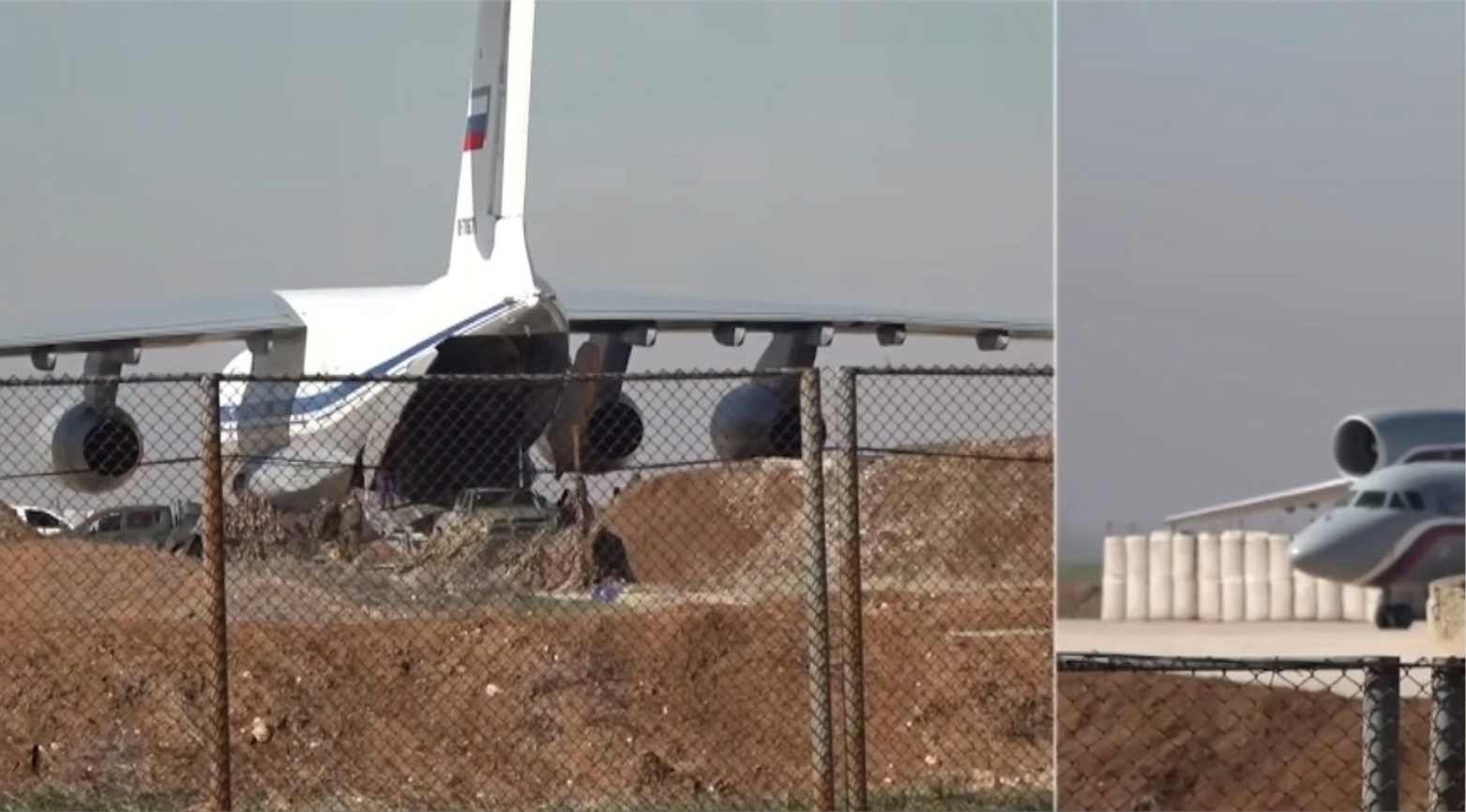
ERBIL (Kurdistan24) - As the 2026 United States National Defense Strategy makes clear that Europe taking primary responsibility for its own conventional defense is the answer to the security threats it faces, a corresponding shift in international military footprints has emerged in the Middle East, where Russian forces have begun a systematic withdrawal from a strategic airport in northeastern Syria.
The relocation of Russian personnel and heavy armor from the Qamishlo Airport to the country’s Mediterranean coast marks a significant realignment of foreign military presence in the region during a period of acute local instability.
According to reports from the region on Monday, Jan. 26, 2026, Russian military units initiated the withdrawal process several days ago, culminating in a visible movement of hardware on Monday morning.
Dilan Barzan, a correspondent for Kurdistan24 reporting from Western Kurdistan (Rojava), confirmed that a contingent of tanks and various military vehicles were transferred out of the airport facility. This equipment, alongside soldiers and associated military supplies, is being moved to established Russian military bases in Latakia, situated on the Syrian coast.
The withdrawal ends a mission that has defined the security architecture of the northeast for more than six years.
Russia has utilized the Qamishlo Airport since 2019 as a primary hub for monitoring the complex geopolitical landscape of northeastern Syria and as a staging ground for operations to confront Islamic State (ISIS) terrorist elements.
The facility was viewed as a critical outpost for the Kremlin to project influence within the Kurdish-administered territories while coordinating with the central government in Damascus.
The departure of Russian units coincides with a fundamental recalibration of American military priorities outlined in the newly released 2026 National Defense Strategy (NDS).
A previous report by Kurdistan24 noted that the Pentagon's new doctrine emphasizes "more limited" support for traditional allies as Washington pivots toward homeland defense and the deterrence of China.
The NDS characterizes the threat from Russia as "persistent but manageable," focusing primarily on NATO’s eastern members rather than the broader Syrian theater.
This transition in the international security posture occurs against a backdrop of increasing fragility on the ground. Northeastern Syria is currently navigating an unstable ceasefire between the Syrian Democratic Forces (SDF) and the central Syrian government.
The United Nations High Commissioner for Refugees (UNHCR) has reported that tens of thousands of people have been displaced across the region due to these prevailing tensions and the absence of a long-term political resolution.
As Russian forces consolidate their presence in the coastal stronghold of Latakia, the vacuum left at the Qamishlo Airport underscores the broader trend of international powers demanding regional actors assume greater responsibility for their own security.
For the residents of Qamishlo and the surrounding districts, the withdrawal of the Russian monitoring component removes a key international arbiter at a time when the humanitarian crisis continues to expand and the political future of the region remains unresolved.
This article was updated on Monday, Jan. 26, 2026, at 12:56pm.