Iraqi Parliament Set to Elect New President as Kurdish Blocs Field Multiple Candidates
The Iraqi Parliament meets today to elect a new president from 18 candidates. A two-thirds quorum is required for the session, which follows a post-2003 agreement reserving the post for Kurds.
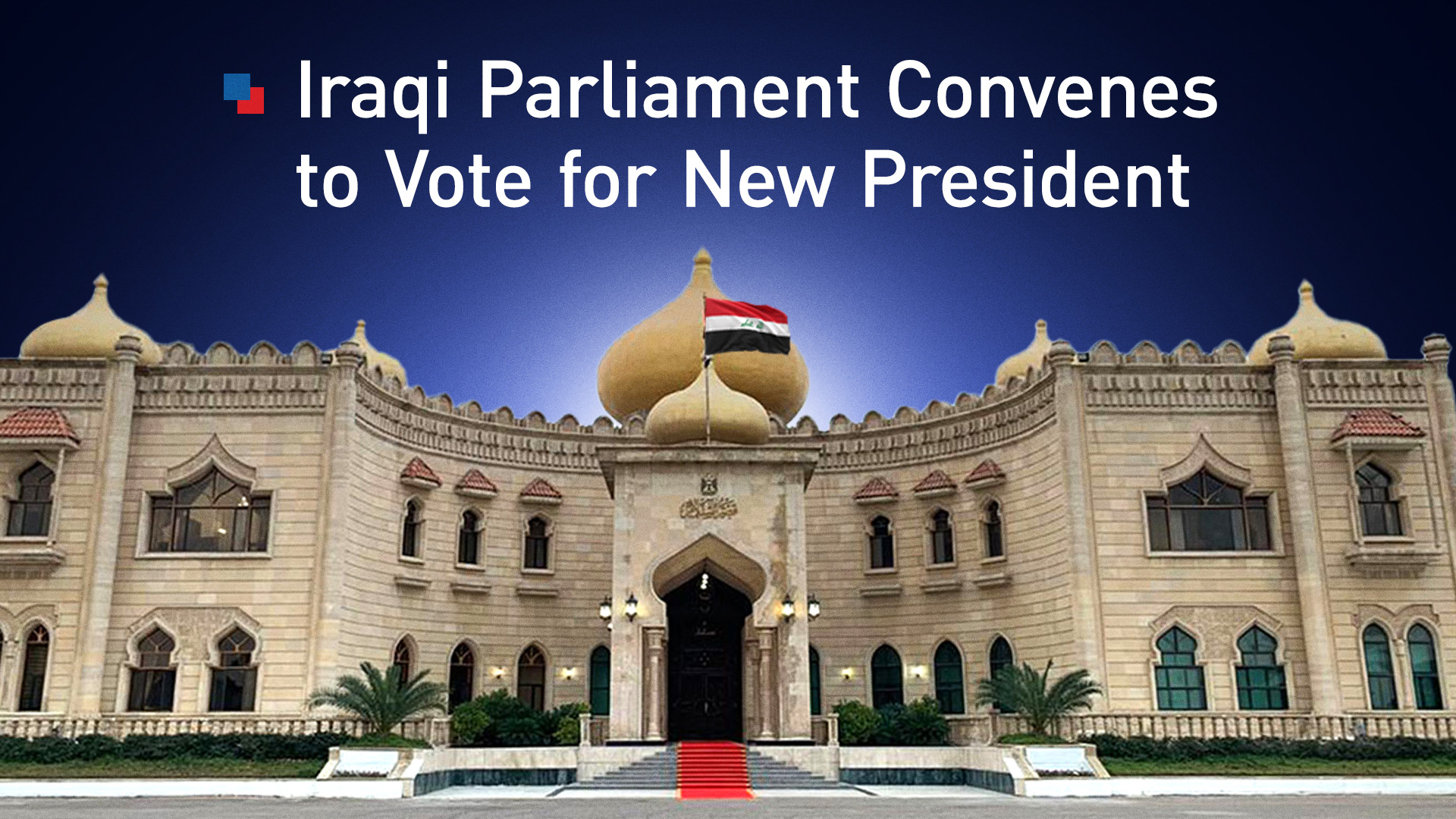
ERBIL (Kurdistan24) - The Iraqi Parliament is scheduled to convene on Tuesday morning to elect the nation’s next president, marking a critical step in the formation of the country’s new federal government. According to the agenda released by the legislative body’s media office, the eighth meeting of the first semester of the sixth legislative term is set to begin at 11:00 a.m. local time, featuring a field of 18 candidates vying for a position that remains central to the country’s power-sharing framework.
The Media Office of the Iraqi Parliament issued a communiqué on Tuesday to clarify the timing of the vote, explicitly denying reports that the session had been postponed.
Officials stated that the election would proceed exactly as scheduled and characterized rumors of a delay as untrue.
This clarification comes amid a period of intense political deliberation among Iraq’s various factions, particularly the Kurdish political parties that have historically held the presidency under the governing norms established after 2003.
The post-2003 political agreement, which serves as the foundation for the modern Iraqi state, dictates that the presidency is the share of the Kurdish component. While the role is primarily symbolic, the president is constitutionally responsible for tasking the candidate of the largest parliamentary bloc with forming a government.
For the current election, the competition remains divided among the primary Kurdish parties, including the Kurdistan Democratic Party (KDP), the Patriotic Union of Kurdistan (PUK), and the Kurdistan Islamic Union (KIU), none of which have reached a final consensus on a single joint candidate.
The path to the current list of 18 candidates involved a significant vetting process. When the window for self-nomination opened earlier this year, approximately 81 individuals submitted their curricula vitae for consideration by the January 5, 2026, deadline.
Following a review, the Presidency of the Iraqi Parliament published an initial list of 19 approved candidates on Friday, January 23. However, the field was narrowed to 18 after Nawzad Hadi, one of the two nominees put forward by the Kurdistan Democratic Party, officially withdrew from the race.
The final list of candidates includes several prominent figures from the Kurdistan Region’s political establishment. Among the most notable contenders are Fuad Hussein, representing the Kurdistan Democratic Party, and Nizar Mohammed Said Mohammed, the official candidate for the Patriotic Union of Kurdistan.
The incumbent, President Latif Rashid, is also standing for a second term. Other candidates identified by the parliamentary media office include Muthanna Amin Nadir, nominated by the Kurdistan Islamic Union, alongside a diverse group of individuals: Dr. Abdullah Mohammed Ali Alyawayi, Shwan Hawiz Fareeq Namiq, Ahmed Abdullah Tawfiq Ahmed, Hussein Taha Hassan Mohammed Sinjari, Najmaddin Abdulkarim Hamakarim Nasrallah, Aso Fereidun Ali, Saman Ali Ismail Shali, Sabah Salih Said, Iqbal Abdullah Amin Haliwi, Sardar Abdullah Mahmoud, Khalid Siddiq Aziz Mohammed, Azad Majid Hassan, Rafe' Abdullah Hamid Musa, and Salem Hawas Ali Saedi.
Procedurally, the election of the president is governed by a multi-stage process defined by the Iraqi Constitution.
The first requirement for a legal election is the establishment of a quorum.
Under parliamentary rules, at least two-thirds of the total membership—specifically 220 out of 329 members of parliament—must be present for the session to be considered legal. This quorum requirement is often a high hurdle in Iraqi legislative sessions, requiring broad coordination across sectarian and political lines.
Once a quorum is established, the Parliament moves to the first round of voting. According to Article 70 of the Iraqi Constitution, a candidate must secure a two-thirds majority of the total number of members—again, 220 votes—to be elected president in the initial round.
Given the fractured nature of the current parliamentary blocs and the number of competing candidates, achieving such a majority in a single vote is considered a difficult benchmark.
If no candidate achieves the required 220 votes in the first round, the competition moves to a second round of voting. Under these rules, only the two candidates who received the highest number of votes in the first round are permitted to compete.
In this second and final round, the candidate who receives the most votes is declared the winner and the new President of the Republic of Iraq. Upon the announcement of the results, the elected president is required to take the constitutional oath of office before the assembly.
The outcome of today’s session is viewed by analysts as a harbinger of the broader government-formation process. The successful election of a president would end a period of political stasis and allow for the formal nomination of a prime minister-designate.
The Parliament’s Media Office emphasized that the session's continuity is essential for upholding the constitutional timeline and ensuring the stability of state institutions during the sixth legislative term.
As the 11:00 a.m. deadline approaches, the presence of 18 separate candidates highlights a more competitive and less unified Kurdish front than has been seen in some previous terms, shifting the ultimate decision to the collective body of the Iraqi Parliament.