Erbil Extends Aid Campaign for Western Kurdistan as Public Support Grows
“So far, more than 65 trucks loaded with food and essential supplies have been prepared, and donations collected in the boxes have exceeded 300 million Iraqi dinars,” Khoshnaw said.
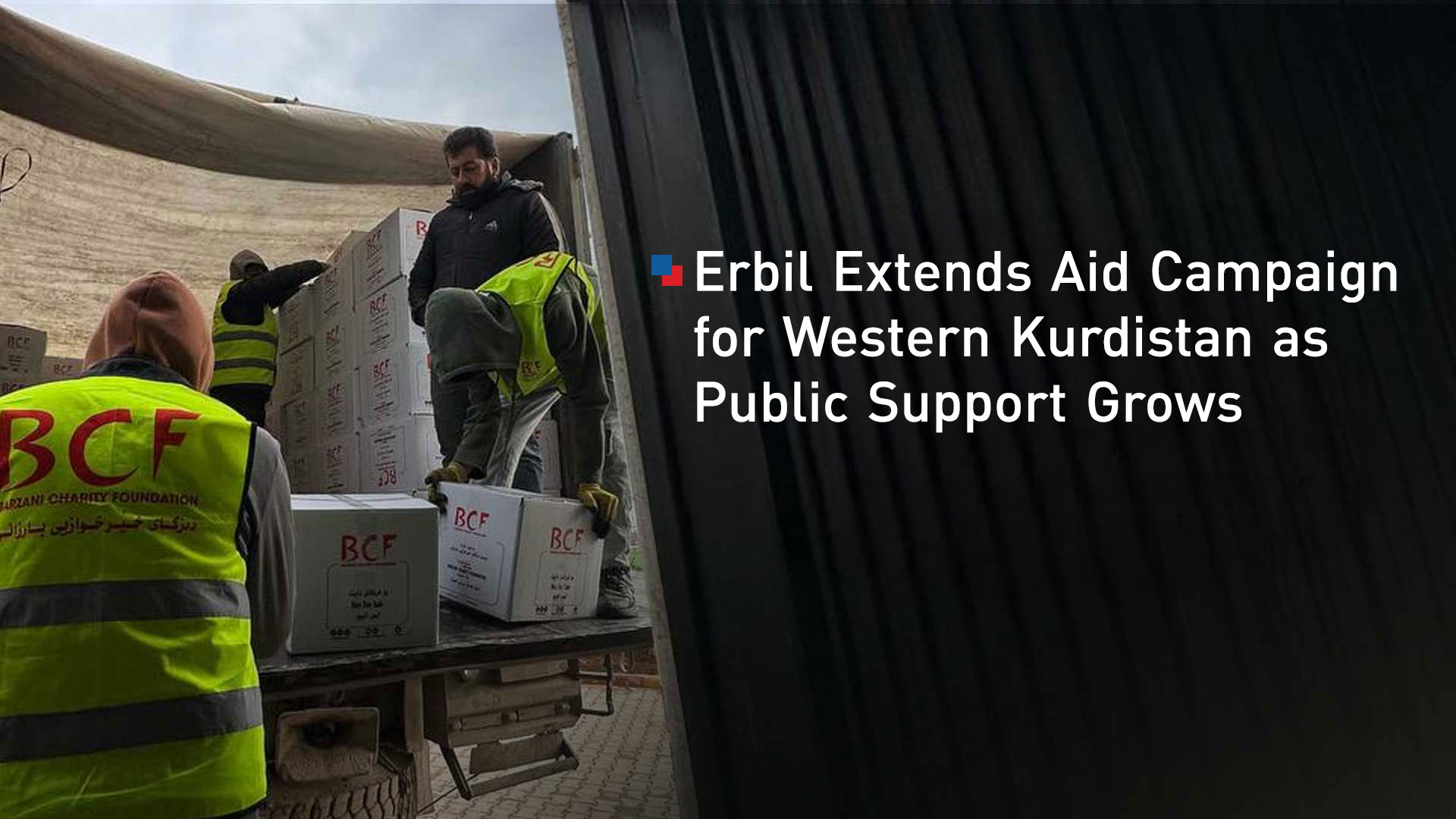
ERBIL (Kurdistan24) — Erbil Governor Omed Khoshnaw announced on Wednesday that the humanitarian aid campaign for Western Kurdistan (northeastern Syria) has been extended until Jan. 31, following strong public demand.
Speaking to Kurdistan24, Khoshnaw said the decision came in response to requests from residents across Erbil province, allowing more citizens to take part in what he described as a national and humanitarian effort.
He noted that donations are being received daily in front of Shanadar Park from 8:30 a.m. to 12:00 p.m., with teams from Erbil province working alongside the Barzani Charity Foundation (BCF) to organize and collect contributions.
“So far, more than 65 trucks loaded with food and essential supplies have been prepared, and donations collected in the boxes have exceeded 300 million Iraqi dinars,” Khoshnaw said.
He added that these figures reflect only on-the-ground public contributions, in addition to significant direct donations made by the Kurdistan Region’s Investment Board, local businessmen, and investors to support civilians in Western Kurdistan.
The extension of the Erbil campaign comes as BCF continues to scale up its humanitarian operations in Western Kurdistan. On Tuesday, BCF announced that a total of 165 trucks carrying essential aid have reached the region to assist tens of thousands of civilians affected by recent instability.
BCF President Musa Ahmad said during a press conference in Qamishlo that the relief operation includes food distribution, medical assistance, and fuel supplies, particularly as families face harsh winter conditions and displacement. According to figures released on Tuesday, the foundation’s 115 staff members, organized into 12 specialized teams, are operating across several cities and towns, including Qamishlo, Amuda, Derik, and Derbasiya.
Ahmad stated that the aid effort has so far reached 9,180 families, benefiting nearly 58,000 people across the education, health, and livelihood sectors, underscoring what officials say is a growing spirit of solidarity between the Kurdistan Region and Western Kurdistan.