Kurdistan Region Intervenes to Reinstate Student Expelled Over Flag Drawing in Kirkuk
The Kurdistan Region’s Ministry of Education overturned the expulsion of a Kurdish student in Kirkuk punished for drawing the Kurdistan flag, guaranteeing his return to education and pledging full academic and financial support.
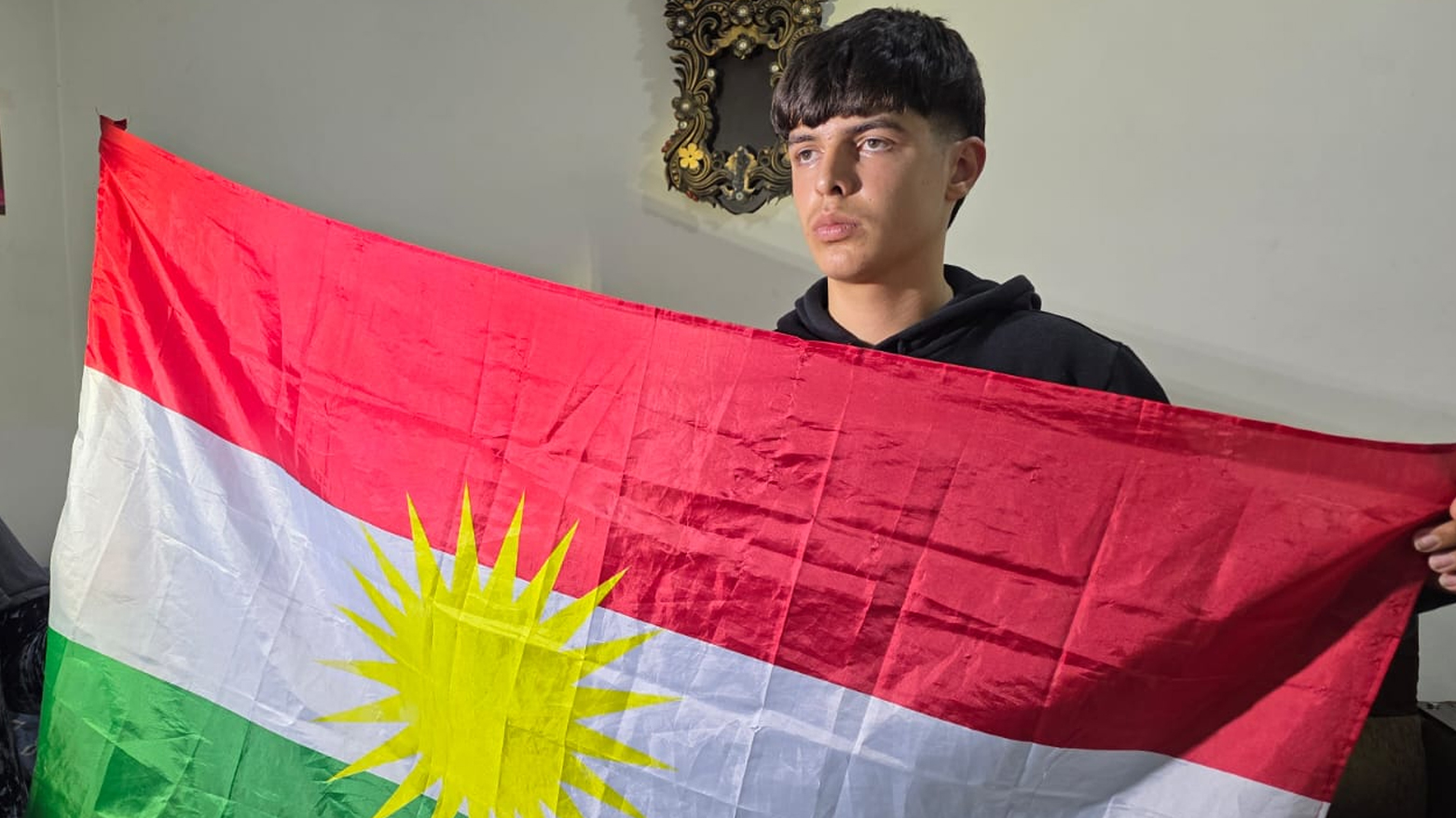
ERBIL (Kurdistan24) - What began as a single drawing in a classroom in Kirkuk escalated into a widely followed case before ending with the Kurdistan Regional Government’s Ministry of Education intervening to overturn disciplinary measures imposed on a Kurdish student barred from school over an illustration of the Kurdistan flag.
In Kirkuk, a student enrolled in a private school operating under the federal education system and teaching the Arabic curriculum was expelled after drawing the Kurdistan flag on a sheet of paper. The incident triggered strong reactions, prompting direct intervention by the Kurdistan Region’s Ministry of Education to resolve the case and support the student.
During a press conference, Kamaran Ali, Director of Kurdish Education in Kirkuk, announced that all Kurdish schools in the city have opened their doors to the student. He explained that, based on directives from the Minister of Education, the student will be able to sit his examinations after the scheduled break and will not lose the academic year.
Alan Hama Saeed, Minister of Education of the Kurdistan Regional Government, described the school’s conduct as “uneducational and chauvinistic.” He said the ministry had contacted the student’s family directly and confirmed that it is prepared to cover all of the student’s education expenses for the current academic year.
The minister also stated that the General Directorate of Education in Kirkuk, which operates under the federal government, responded to the ministry’s request and pledged to resolve the issue and ensure that the student is not deprived of his right to education.
The report further noted that the student’s father passed away in 2017 and that the family’s financial situation is limited, factors that prompted the Kurdistan Regional Government to commit to providing full financial and moral support.
The case drew regional attention after a Kurdish student was barred from continuing his education in Kirkuk and referred to an investigative committee over an expressive artwork depicting the Kurdistan flag.
According to details circulated by news platforms, the student, identified as Diar Khalil, is enrolled in the ninth grade, the third intermediate year, at Ajil Nasr School in Kirkuk. During an art education exam, the student drew the Kurdistan flag, wrote the word “Kurdistan” in English, and added the slogan “2+2=1.”
The slogan carries political and national symbolism among Kurds, representing aspirations for the unity of the four parts of Kurdistan as a single entity.
Leaked images of the drawing showed a red-ink notation reading “referred to an investigation committee,” a measure later confirmed by the student’s mother in press statements. She said the action went beyond disciplinary procedures and directly affected her son’s academic future.
“Because my son drew the Kurdistan flag, a red mark was placed on his academic file,” the mother said. “This procedure prevented him from being accepted into any other school, threatening his educational future with loss.”
According to her account, the student’s artwork was rejected by his art teacher, an investigative committee was formed, and the student was ultimately expelled from the school.
The incident occurred amid politically and administratively sensitive conditions in the Kurdistani Territories Outside the Kurdistan Regional Government’s administrative control, including the city of Kirkuk, where restrictions have been imposed on the display of Kurdish flags and symbols in government institutions and schools affiliated with the federal Ministry of Education since the events of October 2017.
Reacting to the case, Alan Hama Saeed said the expulsion decision was unacceptable. He stated that once the issue reached him, he immediately instructed Mamosta Kamran, Director of Kurdish Education, to engage with the Kirkuk General Directorate of Education under the federal government. According to the minister, discussions were held and federal officials pledged that the issue would be resolved and that an investigation would be conducted into the school’s actions.
Hama Saeed also announced his decision to personally cover the student’s education expenses as a form of support.
“I assure everyone that this child will not remain without education,” he said, adding that the case would be resolved. He also confirmed that all Kurdish schools affiliated with the Kurdistan Regional Government in Kirkuk remain open and available.
At the time the background information was reported, no official statement had been issued by the Kirkuk Directorate of Education clarifying the final outcome of the investigation or the student’s formal academic status.
With the Kurdistan Region’s Ministry of Education overturning the disciplinary measures and guaranteeing academic continuity, the case has shifted from expulsion to reinstatement, reaffirming official commitments that no student should be denied education over expression.