U.S. Lawmakers Call for Safeguards for Kurds in Western Kurdistan as Integration Accord Advances
Syrian government and SDF officials are set to implement a regional integration agreement on Monday, supported by international oversight and U.S. congressional calls for Kurdish civil rights.
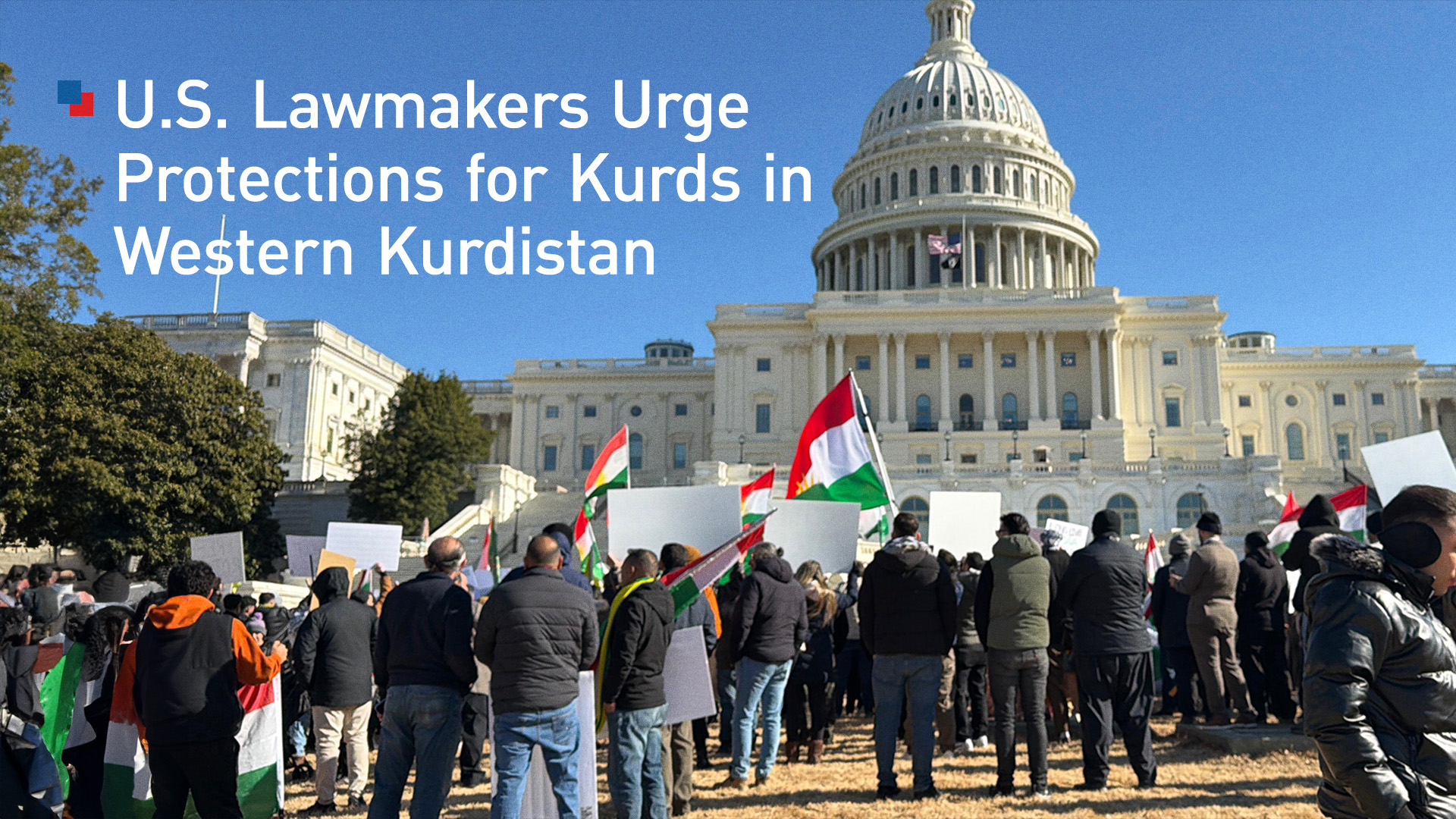
ERBIL (Kurdistan24) - A group of high-ranking United States lawmakers expressed support this week for the security and civil rights of the Kurdish population in northern Syria, as a landmark agreement between the Syrian Democratic Forces (SDF) and the central government in Damascus moves toward formal implementation. In statements provided to Kurdistan24, members of both the House of Representatives and the Senate emphasized the need for a stable transition that respects the rights of minorities and avoids the resurgence of ethnic violence or extremist activity.
U.S. Congressman Don Beyer, speaking with Kurdistan24, stated that while he was monitoring the situation from abroad, the primary objective for Washington remains ensuring that the various ethnic and religious groups within Syria, particularly the Kurds in the north, are afforded a future defined by peace rather than conflict.
"What we want, though, is the many different groups within Syria, but especially the Kurds in northern Syria, have a chance to live in freedom and peace, without violence, without genocide," Congressman Beyer said. He added that it is incumbent upon the current leadership in the region to reach a consensus that ensures "everyone's rights are respected."
The sentiment was echoed by U.S. Senator Ben Ray Luján, who told Kurdistan24 that the international community maintains a collective responsibility to confront those who destabilize regional security. "Across the world whenever there is bad people doing bad things, the whole world should be uniting, going after bad people," Senator Luján stated.
He characterized the support for allies who combat terrorism as a global imperative, suggesting that when local forces work to "push back against the terrorists that are hurting the people," the world should stand in solidarity with those efforts.
Further affirming the bilateral partnership between Washington and the Kurdish leadership, U.S. Senator John Boozman told Kurdistan24 that the United States continues to value the long-standing cooperation of the Kurdish people.
“What I can say is that we do support the Kurds,” Senator Boozman said. “And we appreciate their support of us.”
These congressional calls for stability arrive as the Syrian government prepares to activate a comprehensive integration agreement with the SDF starting Monday. Syrian Information Minister Hamza al-Mustafa announced that the deal constitutes a "fundamental executive step" in the restoration of state sovereignty over the country’s entire geography.
In an interview with Syria TV on Friday, al-Mustafa clarified that the upcoming implementation is not a new political invention but rather a practical framework designed to operationalize understandings reached on March 10 of last year and January 18 of the current year.
According to al-Mustafa, the agreement centers on a comprehensive ceasefire and the start of a phased integration process.
This transition involves merging military forces and civilian administrative bodies from both sides into a unified state structure. The Information Minister noted that the government has now received a "clear response" from the SDF regarding the technical implementation of these provisions, suggesting that previous political and field obstacles have been largely overcome.
SDF Commander Mazloum Abdi provided additional details regarding the security and administrative "red lines" established during an intensive meeting with Syrian President Ahmed Sharaa in Damascus on January 27.
Abdi stated that the agreement was strategically formulated to prevent the marginalization of Kurdish communities and to protect social cohesion in the northeast.
Central to the military component of the accord is the guarantee that the Syrian Arab Army will not be permanently stationed within Kurdish urban centers. Abdi specifically emphasized that the Syrian army would not enter cities such as Kobani or the broader Jazira region, where defense and internal security will remain under the exclusive control of the SDF.
Under the new arrangement, the SDF will be reorganized as the “Division of the Syrian Defense Forces,” maintaining its current personnel in Qamishli, Hasakah, Derik, and Kobani. SDF Commander Abdi clarified that while strategic coordination with the national army would occur, it would not signify the imposition of central military authority over these territories.
The agreement also addresses the administrative and economic status of the autonomous region. Abdi announced that all current employees of the Autonomous Administration will be transitioned onto the Syrian state’s general payroll as official government workers.
Furthermore, he noted that the deal includes the lifting of the siege on Kobani and a cessation of attacks on the city, with the implementation phase set to begin after a three-day preparatory period.
International oversight remains a vital component of the transition. Abdi revealed that the United States and France, as active participants in the high-level negotiations, have assumed responsibility for overseeing the implementation of the agreement.
He stated that U.S. President Donald Trump has engaged directly with President Sharaa on the matter, while French President Emmanuel Macron has provided political guarantees to ensure the terms are respected.
The security transition is already underway in sensitive areas such as the al-Hol camp, located south of Hasakah. On Friday, the Syrian army declared the camp and its immediate surroundings a “closed security zone” following its deployment to the area.
The camp remains a major concern for the international community, housing approximately 24,000 people, including 6,300 foreign women and children from 42 nations. Syrian state television published a map designating the facility as a high-security perimeter to regulate internal conditions and prevent escapes.
Despite the progress of the deal, Abdi acknowledged that the agreement does not meet all the aspirations of the Kurdish people.
He characterized it as a "necessary and unavoidable step" under difficult circumstances, marking a shift from military confrontation toward a new phase of political struggle to secure Kurdish rights within a recognized Syrian nation-state.