Trump Administration Formally Opposes Iraqi Prime Minister Choice as Baghdad Political Blocs Signal Defiance
U.S. officials warned Iraqi leaders against nominating Nouri al-Maliki as prime minister, with President Trump threatening to end aid, according to The Washington Post. Baghdad blocks now face a choice between Tehran and Washington.
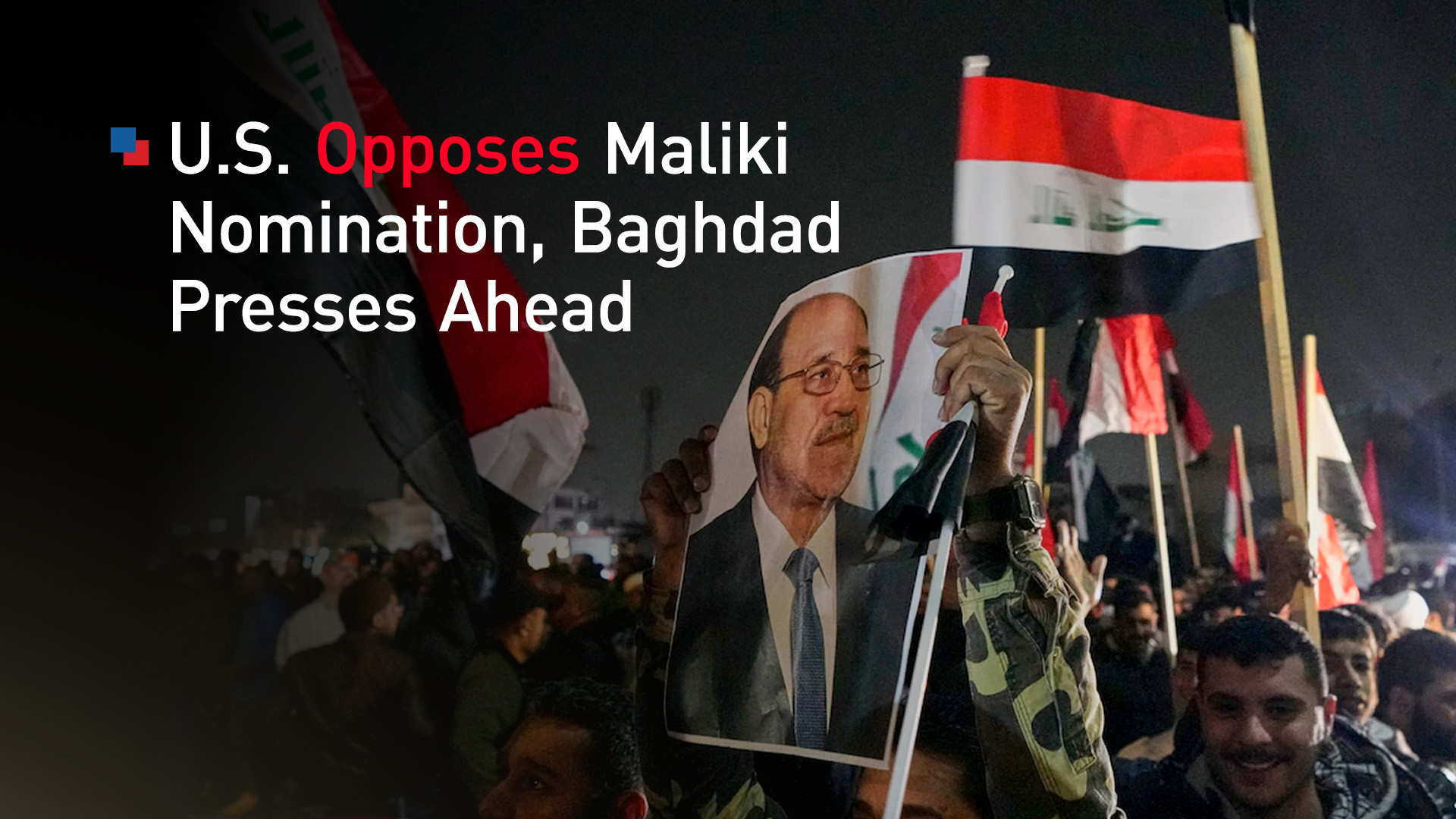
ERBIL (Kurdistan24) - An extraordinary diplomatic communication from the Trump administration formally opposed the selection of Nouri al-Maliki as Iraq’s next prime minister, yet political leaders in Baghdad proceeded with his nomination regardless, The Washington Post reported on Friday. The intervention marks a significant escalation in the United States' efforts to curb regional influence within the Iraqi government, triggering a high-stakes standoff that threatens the financial and security ties between the two nations.
According to The Washington Post, the confrontation began during a private gathering of Iraq’s most powerful political figures last weekend.
At the meeting, Ammar al-Hakim, an influential cleric and politician, read aloud a letter received from the U.S. administration. The missive stated clearly that Washington opposed the return of Maliki to the premiership, citing a "negative" view of his previous eight-year tenure, which ended more than a decade ago.
The missive was sent by Joshua Harris, the chargé d’affaires at the U.S. Embassy in Baghdad, The Washington Post reported, citing people familiar with the communication.
The letter reportedly struck a cautionary tone, acknowledging that while the selection of a prime minister is a "sovereign Iraqi decision," the United States would similarly make its own "sovereign decisions" regarding future cooperation based on U.S. interests.
Specifically, the administration expressed a desire for a government that weakens regional influence over Iraq and dismantles armed militias.
Maliki, who is widely perceived by U.S. officials as a primary conduit for regional interests in Iraq, was reportedly "astonished" by the bluntness of the letter, The Washington Post wrote.
However, despite the warning, the Coordination Framework—the dominant coalition of Shiite Muslim factions that secured the most seats in the recent November elections—pushed ahead with his formal nomination. Attendees of the meeting told The Washington Post that Maliki initially did not believe the U.S. warning was serious.
However, the weight of the administration’s position became clear on Tuesday when President Donald Trump personally intervened via social media. Trump warned that the United States would "no longer help" Iraq if Maliki returned to power, describing the candidate’s policies and underlying ideologies as "insane," The Washington Post reported.
The public nature of the President Trump’s statement has provided unprecedented visibility to U.S. efforts to shape the makeup of the Iraqi executive branch, a process that has historically been contested between Washington and Tehran since the 2003 ouster of former Iraqi dictator, Saddam Hussein.
The U.S. pressure campaign arrives as Washington intensifies a broader regional effort to roll back regional influence.
The Washington Post also noted that the U.S. aircraft carrier Abraham Lincoln arrived in Middle Eastern waters this week, accompanied by additional warships, as the Trump administration weighs the possibility of a confrontation against targets within the region.
Top Iraqi officials now face a difficult calculation: proceed with a candidate endorsed by Tehran or avoid a total rupture with Washington. Victoria Taylor, a former U.S. deputy assistant secretary of state for Iraq and Iran, told The Washington Post that it is difficult to see how the Shiite coalition can sustain Maliki’s nomination.
She characterized the situation as a binary choice for Baghdad, noting that continuing with the nomination would be "tantamount to picking the Iranian side in the eyes of this administration."
The Iranian government appears to have doubled down on its support for Maliki.
According to The Washington Post, Brig. Gen. Ismail Qaani, the head of Iran’s elite Quds Force, visited Baghdad this month to deliver a letter from Iran's Supreme Leader Ayatollah Khamenei. That letter reportedly offered a formal blessing for the Coordination Framework’s choice of Maliki, signaling that Tehran believed a consensus had been reached among Iraqi Shiite leaders.
The economic implications of the standoff are particularly acute for Iraq. Iraqi officials told The Washington Post they fear that defying Washington could result in the "economic suffocation" of the country.
Iraq’s oil revenues are deposited directly into the U.S. Federal Reserve, which then manages the monthly distribution of dollars to Baghdad to fund the national budget. A decision by the U.S. to freeze these assets or restrict dollar access would leave the Iraqi government unable to meet its financial obligations, including public sector salaries.
Ezzat al-Shahbandar, a veteran politician close to the Shiite coalition, told The Washington Post that the ultimate decision may rest with Maliki himself. "If he chooses to withdraw for the national interest, it’s up to him," Shahbandar said, while acknowledging that if Maliki refuses to step aside, it will be "very hard to handle" the resulting friction with the U.S.
On the Iraqi side, some remain hopeful for a change in the U.S. posture.
Aqeel al-Fatlawi, a spokesman for Maliki’s State of Law coalition, suggested in a televised interview that President Trump might eventually reverse his objections, citing the President’s history of evolving relationships with foreign leaders.
Al-Fatlawi asserted that Maliki’s past relationship with the Americans was "strong" and claimed that the Iraqi people would not accept "external interference" in their internal affairs.
The nomination of Maliki is also viewed through the lens of his controversial legacy from 2006 to 2014.
The Washington Post noted that his tenure was widely criticized for religious sectarianism, which many analysts believe created the grievances that allowed the Islamic State to rise. While the U.S. initially backed him for a second term, officials eventually pressed for his removal in 2014, viewing him as a barrier to national reconciliation.
A further complication for U.S.-Iraq relations is the inclusion of individuals and groups within the Coordination Framework that Washington considers to be terrorist affiliates.
Among the leaders tasking the next prime minister is Qais al-Khazali, the founder of Asa’ib Ahl al-Haq, a group responsible for numerous attacks on U.S. forces.
The Washington Post reported that U.S. officials were particularly "infuriated" by the recent selection of Adnan Fayhan as the first deputy speaker of parliament. Fayhan has been implicated in the 2007 abduction and killing of five American soldiers.
U.S. Special Envoy to Iraq Mark Savaya has utilized public platforms to reinforce Washington's opposition to any militia participation in the government.
According to The Washington Post, the U.S. position remains that a government that dismantles these paramilitary groups and excludes U.S.-designated organizations is the only type of administration with which Washington can maintain a beneficial partnership.