Initial Implementation: Military Redeployments Begin Under Syria-SDF Security Agreement in Syria
SDF withdrew from Sheikh Fouqani and Sheikh Tahtani east of Aleppo, while Syrian army forces redeployed from Hasakah outskirts, marking the first field phase of the SDF–Damascus security agreement.
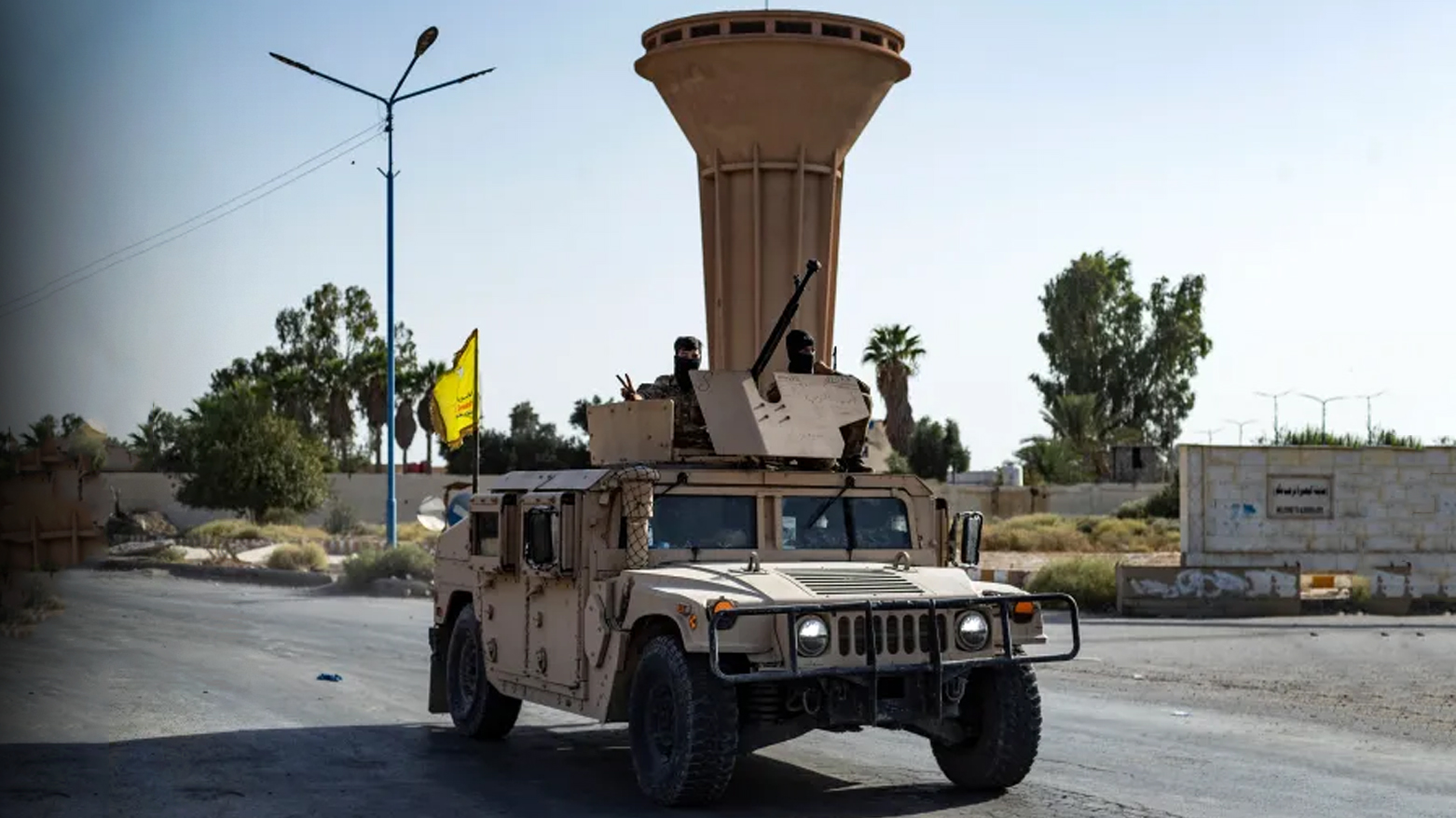
ERBIL (Kurdistan24) - Across two fronts, military positions shifted in silence as night turned into morning, signaling the first visible steps of a newly signed security pact between the Syrian Democratic Forces and the Syrian government.
On Saturday, field sources reported that the Syrian Democratic Forces (SDF) fully withdrew from the two villages of Sheikh Fouqani and Sheikh Tahtani in the eastern countryside of Aleppo. The forces moved toward other interior areas, including Bandar, as part of a broader redeployment plan linked to the implementation of the new agreement with Damascus.
The withdrawals were described as part of a reorganization of the military map and the execution of the agreement’s security clauses.
According to the same sources, General Asayish forces are expected to enter the Sheikh area the following day. The stated purpose of this deployment is to ensure security and prepare conditions for the return of residents who left the area due to recent military tensions.
In a parallel development, Syrian Arab Army (SAA) forces began vacating their trenches and strategic positions surrounding Hasakah province on Friday night, in what was described as the initial implementation of the same security and administrative agreement.
The redeployment continued into Saturday.
According to Dilan Barzan, Kurdistan24 correspondent in Western Kurdistan (Rojava), SAA units previously stationed on the outskirts of Hasakah moved toward the Shaddadi area. At the same time, SDF units began positioning themselves at Mount Qazwan, also known as Mount Abdulaziz.
These simultaneous movements marked the first coordinated field changes following weeks of volatility and the formal announcement of the agreement between the two sides.
The field redeployments come in parallel with statements by Mazloum Abdi, commander of the SDF, who said the agreement with Syria prevents Kurdish marginalization and keeps security under exclusive SDF control in Kurdish cities, including Kobani, while limiting the Syrian army’s role to specific integration tasks in Hasakah and Qamishli.
Abdi said the agreement was announced after a lengthy meeting with Syrian President Ahmed Sharaa in Damascus on Jan. 27, 2026, and was designed to neutralize plans aimed at undermining Kurdish communities.
He said a joint committee would be formed solely to reorganize civil and administrative institutions, not for military purposes, and that governance in Kurdish areas would remain in the hands of local residents.
Abdi stated that the Syrian army would not enter any Kurdish city or area, particularly Kobani and the Jazira region, and that defense and security would remain fully under SDF control. He said a limited number of Syrian army personnel were allowed to enter Hasakah and Qamishli strictly to facilitate the integration process, without authority to assume control.
He said the agreement would enter the implementation phase three days after its signing, during which Syrian forces would withdraw from agreed areas and some SDF units would redeploy from certain locations.
With withdrawals around Aleppo and Hasakah now underway, the agreement has moved from paper to the field, reshaping positions on the ground as its first phase takes effect.