Erbil Art College Highlights Western Kurdistan Struggle Through International Video Project
Erbil College of Fine Arts produced "Wall of Braids," a video art piece on Rojava's resistance, for international festivals. This follows regional screenings of "Radio Kobani" raising relief funds.
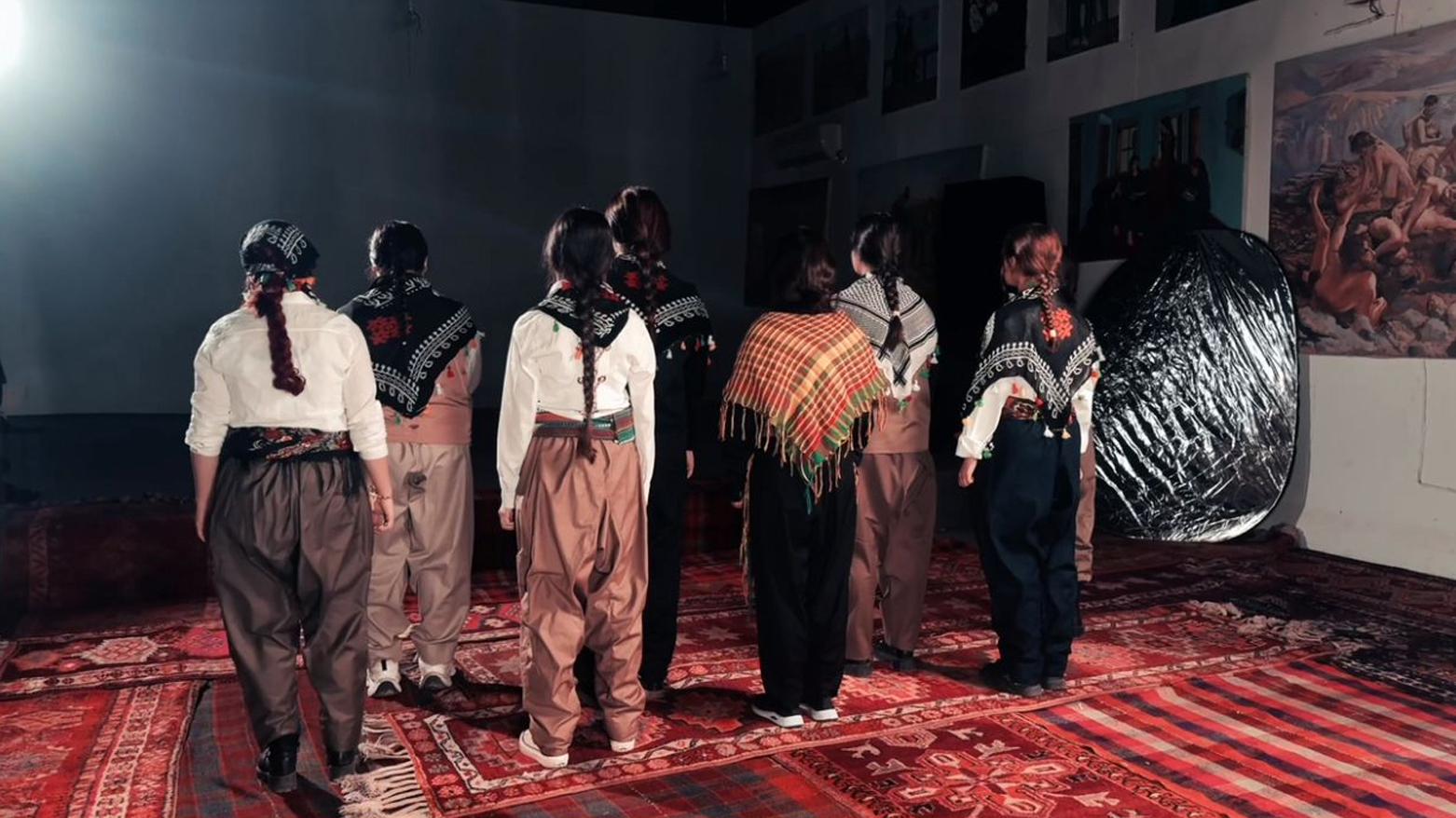
ERBIL (Kurdistan24) - The Cinema and Theater Department of the Erbil College of Fine Arts has formally announced the production of a new video art piece titled "Wall of Braids" (Dîwarî Keziyekan). The work, directed by Dana Mohammed, is slated for submission to international film festivals as part of a broader initiative to utilize artistic expression to communicate the political and social realities of Western Kurdistan (Rojava).
On Sunday, Dana Mohammed provided details regarding the project’s release schedule and thematic focus in an interview with Kurdistan24.
According to the director, the department has scheduled a special screening of the video art to take place later this month. Following its initial debut, the piece will be featured as a central component of the College of Fine Arts Festival in April.
The primary objective of the production, according to Mohammed, extends beyond local exhibition. He outlined a strategy to submit "Wall of Braids" to various international festivals, aiming to ensure that the "voice and image" of Rojava reach a global audience.
The director emphasized that the medium of video art was chosen specifically to transmit the narrative of the region to countries across the world through a distinct visual language.
In his discussion with Kurdistan24, Mohammed offered a detailed explication of the work’s content, which he described as a direct commentary on the "resistance of the Rojava revolution." The narrative centers on a metaphorical confrontation between an oppressor and the cultural identity of women in the region.
"When an oppressor tries to break a woman's identity by cutting her hair, he is confronted by a silent wall of braids tied together like the roots of mountains," Mohammed said, describing the central imagery of the piece.
He explained that this visual metaphor serves as a response to acts of suppression, illustrating that "the cutting of one individual results in the rising of thousands."
The production features a large ensemble cast filling the leading roles. The director confirmed that the performers include Diar Farhad, Zainab Kawa, Viana Asaad, Nur Omar, Shadi Osman, Awat Asaad, Rayan Shorish, Shinyar Mohammed, and Shayma Hatem.
The announcement of "Wall of Braids" comes amidst a concentrated weekend of cultural activity in the Kurdistan Region focused on the humanitarian situation in Rojava. Just one day prior to Mohammed’s announcement, cinematic institutions across the region launched a coordinated fundraising initiative centered on the screening of the documentary "Radio Kobani."
On Saturday, January 31, 2026, major urban centers including Erbil, Duhok, and Sulaimani participated in a synchronized screening event. The project, organized under the slogan "Cinema of Resistance," was a collaborative effort between the Art Cinema Youth Club and the Rangin Film Collective, working in coordination with regional theater management.
The screenings commenced at 6:00 p.m. local time at Erbil Cinema, Duhok Cinemax, and Cinema Salim in Sulaimani. Organizers announced that all box office proceeds from these events would be donated directly to support humanitarian relief efforts in Western Kurdistan.
Reber Dosky, the director of "Radio Kobani," spoke with Kurdistan24 on Saturday to provide context on the film’s production and its charitable mandate.
Dosky described the documentary as a rigorous undertaking that required three years of filming. He noted that the project utilized a professional crew and multiple actors to ensure a high-quality production capable of capturing the nuances of the post-conflict environment.
"We are screening this film in the cinemas of Erbil, Duhok, and Sulaimani, and we have decided that the proceeds from the film will be allocated as aid to Rojava," Dosky stated. He issued a public appeal for attendance, urging the people of Kurdistan to view the purchase of a ticket as a direct means of helping their "brothers and sisters in Rojava."
The documentary focuses on the story of Dilovan, a 20-year-old Kurdish woman who becomes a broadcaster following the liberation of Kobani. The film documents her efforts to establish a radio station that addresses the collective trauma of the city's survivors. Through her reporting, Dilovan interviews a cross-section of the community, including refugees and poets, in an attempt to bring comfort to listeners described by the director as having "wounded hearts."
Together, the release of "Wall of Braids" and the charity screenings of "Radio Kobani" mark a significant mobilization of the Kurdistan Region’s arts sector, leveraging cinema and video art to maintain focus on the resilience and humanitarian needs of Western Kurdistan.
Kurdistan24's arts correspondent Germian Geli contribued to this report.