Yazidis Mark Winter Forty-Day Feast with Rites at Lalish Temple
Yazidi Kurds celebrated the Winter Forty-Day Feast (or in Kurdish Çileya Zivistanê) at Lalish Temple following a 40-day winter fast. Led by the Baba Sheikh, rituals included sacred recitations, traditional music, and the lighting of temple lamps.
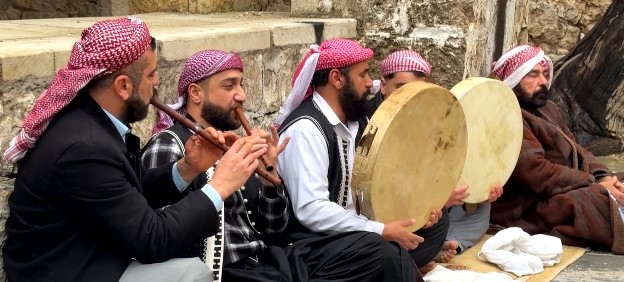
ERBIL (Kurdistan24) - The Yazidi community gathered at their holiest site on Sunday to observe the Winter Forty-Day Feast (or in Kurdish Çileya Zivistanê) after fasting for 40 days, a significant religious event marking the culmination of the forty days of winter. The ceremonies, presided over by the Baba Sheikh and other prominent religious figures, took place at the Lalish Temple, where the faithful engaged in a series of traditional rituals deeply rooted in the faith's connection to the natural world and the winter season.
The festival serves as the conclusion to an extended period of asceticism known as the "Winter Forty."
According to the religious calendar observed by the community, Yazidis undertake a fast that begins annually on December 25 and concludes on February 1. February 2 is subsequently designated as the commencement of the Winter Forty-Day Feast, a celebration that transitions the community from the period of fasting into a time of communal observance and ritual performance.
On the eve of the feast, the atmosphere at the Lalish Temple was defined by the presence of the faith's spiritual leadership. The Baba Sheikh, accompanied by the clergy and a specific group of adherents known as the "Çilegir"—those individuals who strictly observed the full forty-day fast—led the proceedings.
These figures gathered to perform special rituals designed to honor the completion of the fasting period.
Central to the opening ceremonies was the performance of the traditional "Govand" dance. This religious dance was conducted in front of the "Deriyê Kaniyê," or the Gate of the Spring, a location of particular significance within the temple complex. Coinciding with the performance of the dance, the lamps of the temple were simultaneously lit, illuminating the site as part of the observance.
Luqman Suleiman, the media officer for the Lalish Temple, spoke to Kurdistan24 regarding the dedication required during the preceding weeks.
Suleiman emphasized the rigorous nature of the observance, noting that the fast is maintained "for 40 days, and during the coldest 40 days of winter." He confirmed that the Baba Sheikh, the clergy, and the fasters had all participated in this sustained period of abstinence leading up to the current celebrations.
The ceremonies were characterized by a blend of auditory and visual elements intended to embody the spiritual essence of the Yazidi philosophy.
Amid the cold weather, participants gathered before log fires, which provided warmth and light for the recitation of sacred texts. The reading of these religious scriptures was accompanied by the playing of traditional instruments, specifically the daf (frame drum) and the shimshal (flute).
The combination of the music, the fires, and the recitation created a solemn environment for the attendees.
Qewal Ilyas, a noted Yazidi religious figure, provided further details regarding the structure of the event. He explained that the period known as the Winter Forty is strictly delineated, starting on December 25 and lasting through February 1. Following this conclusion, the festival officially begins on the second day of the month.
Ilyas noted that the special ceremonies held within the Lalish Temple are scheduled to last for two days. He described "Chilley Zistan" as one of the most sacred festivals for the Yazidis, highlighting its importance within the religious calendar.
The timing and nature of "Çileya Zivistanê" underscore a fundamental aspect of Yazidi theology. Religious festivals and occasions within the faith are primarily linked to the seasons and the cycles of nature.
By observing this fast specifically during the coldest forty days of winter, the community reaffirms a profound philosophy that is rooted in a connection to natural phenomena.
The rites performed at Lalish, from the lighting of the lamps at the Gate of the Spring to the gathering before log fires, serve to physically and spiritually manifest this relationship between the believers and the turning of the seasons.
Kurdistan24 correspondent Derman Baadri contributed to this report.