KNCS Arrives in Damascus for Talks as Syrian Security Forces Deploy to Hasakah
Syrian forces entered Hasakah with Coalition escorts Monday as a KNCS delegation arrived in Damascus for talks on Kurdish rights and regional security.
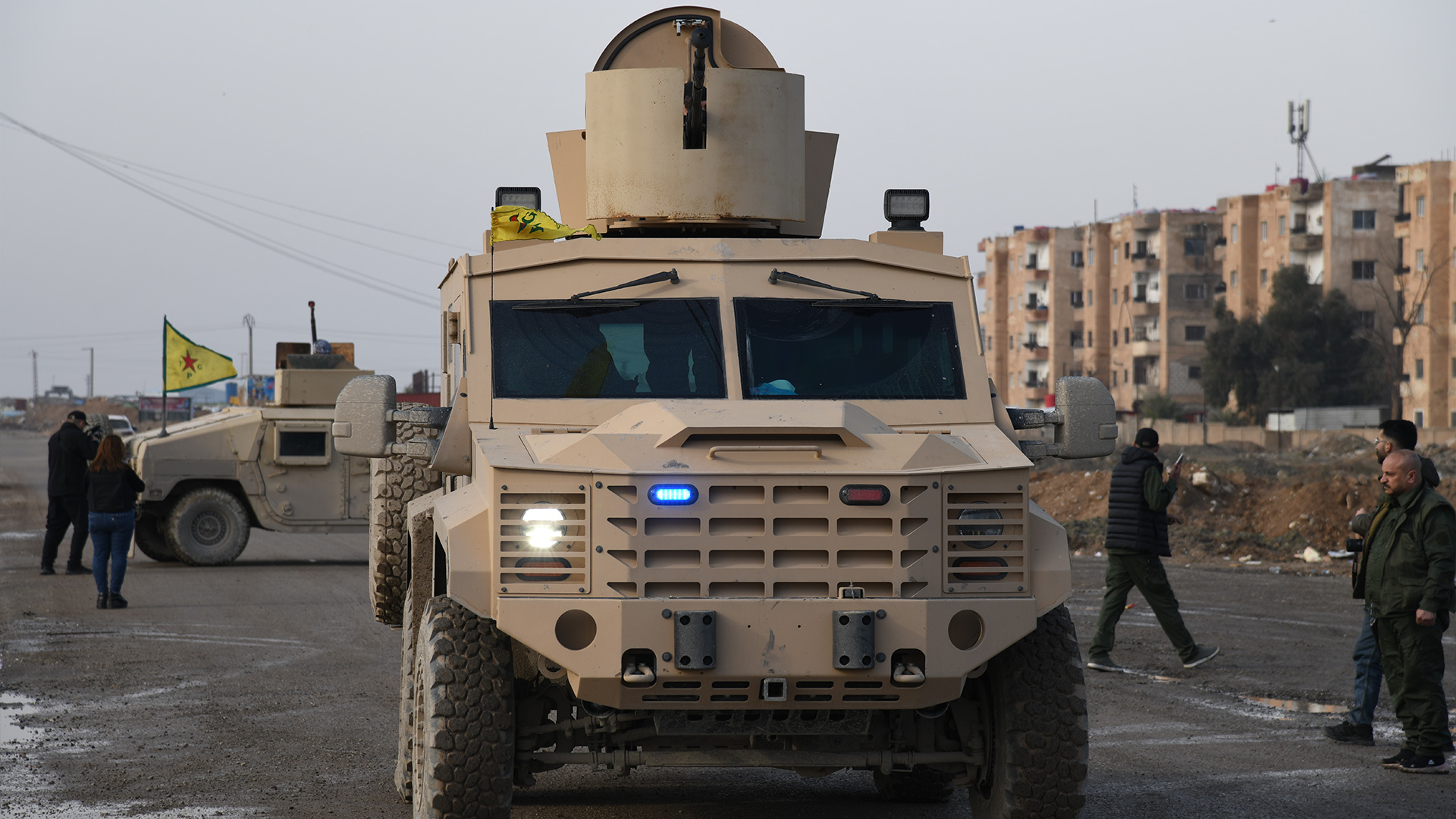
ERBIL (Kurdistan24) - In a simultaneous unfolding of diplomatic and military developments involving the future of Western Kurdistan (northeastern Syria), a high-ranking delegation from the Kurdish National Council (KNCS) arrived in Damascus for scheduled talks with state officials on Monday, February 2, 2026, coinciding with the Syrian government security forces entering the city of Hasakah.
According to field reports provided by Kurdistan24’s correspondent in Hasakah, a convoy comprising approximately 15 vehicles belonging to Syrian government forces entered the city on Monday.
The movement of these units was notable for the presence of an accompanying force from the International Coalition, suggesting a coordinated arrangement regarding the deployment.
The entry of these limited government units marks a specific implementation of security protocols in the area, though the scope remains defined by the relatively small number of vehicles involved in the operation.
Parallel to the security developments on the ground in Hasakah, a significant diplomatic initiative commenced in the Syrian capital.
A senior delegation from the Presidency of the Kurdish National Council in Syria (KNCS), also known as ENKS, arrived in Damascus on Monday to engage in direct dialogue with the central government. The delegation is led by KNCS President Mohammed Ismail.
The visit was precipitated by an official invitation extended by the Syrian Ministry of Foreign Affairs, signaling a renewed willingness from Damascus to engage with Kurdish political leadership.
The delegation is scheduled to hold a series of political meetings with relevant parties and senior government officials to discuss the status of the Kurdish regions and the broader political landscape of the country.
Suleiman Oso, a member of the KNCS Presidency, provided details to Kurdistan24 regarding the background of the visit. Oso confirmed that the office of the Syrian Foreign Minister had initiated contact with the KNCS leadership to request the meeting.
He stated that the Council made the decision to accept the invitation to utilize the platform to clearly articulate its political perspectives and formally present the demands and aspirations of the Kurdish people directly to decision-makers in Damascus.
The discussions in Damascus are framed by the strategic policy decisions adopted by the KNCS the previous year.
Oso emphasized that the delegation’s engagement is strictly guided by the resolutions of the "April 26, 2025, Conference." He reiterated the Council's adherence to the principles established during that gathering, specifically the commitment to Kurdish unity and the formation of a "joint Kurdish delegation" for negotiations.
"As the KNCS, we remain committed to the decisions of the April 26, 2025, Conference, Kurdish unity, and a joint Kurdish delegation," Oso told Kurdistan24. He clarified that the immediate strategic objective of the KNCS in this current phase is to ensure the protection of Kurdish regions from the threat of war and further instability.
Oso further elaborated on the ultimate goal of these engagements. He stressed that the KNCS is seeking to establish a framework for a "comprehensive political meeting" that would involve a joint Kurdish delegation—representing a unified Kurdish political front—and the Syrian government.
The objective of such a meeting, according to Oso, would be to find a durable resolution for the Kurdish issue within the context of settling the protracted Syrian crisis.
The synchronized timing of the security deployment in Hasakah, facilitated by International Coalition presence, and the arrival of the KNCS leadership in Damascus suggests a complex maneuvering of military and political assets as stakeholders attempt to stabilize the region and address long-standing governance disputes.