Syrian Ministry of Interior Forces Enter Hasakah
Syrian Interior Ministry forces, comprising 125 personnel and 15 vehicles, entered Hasakah peacefully Monday under an SDF-Damascus deal. The deployment follows a similar move in Kobani, aiming to integrate security while preserving local administration.
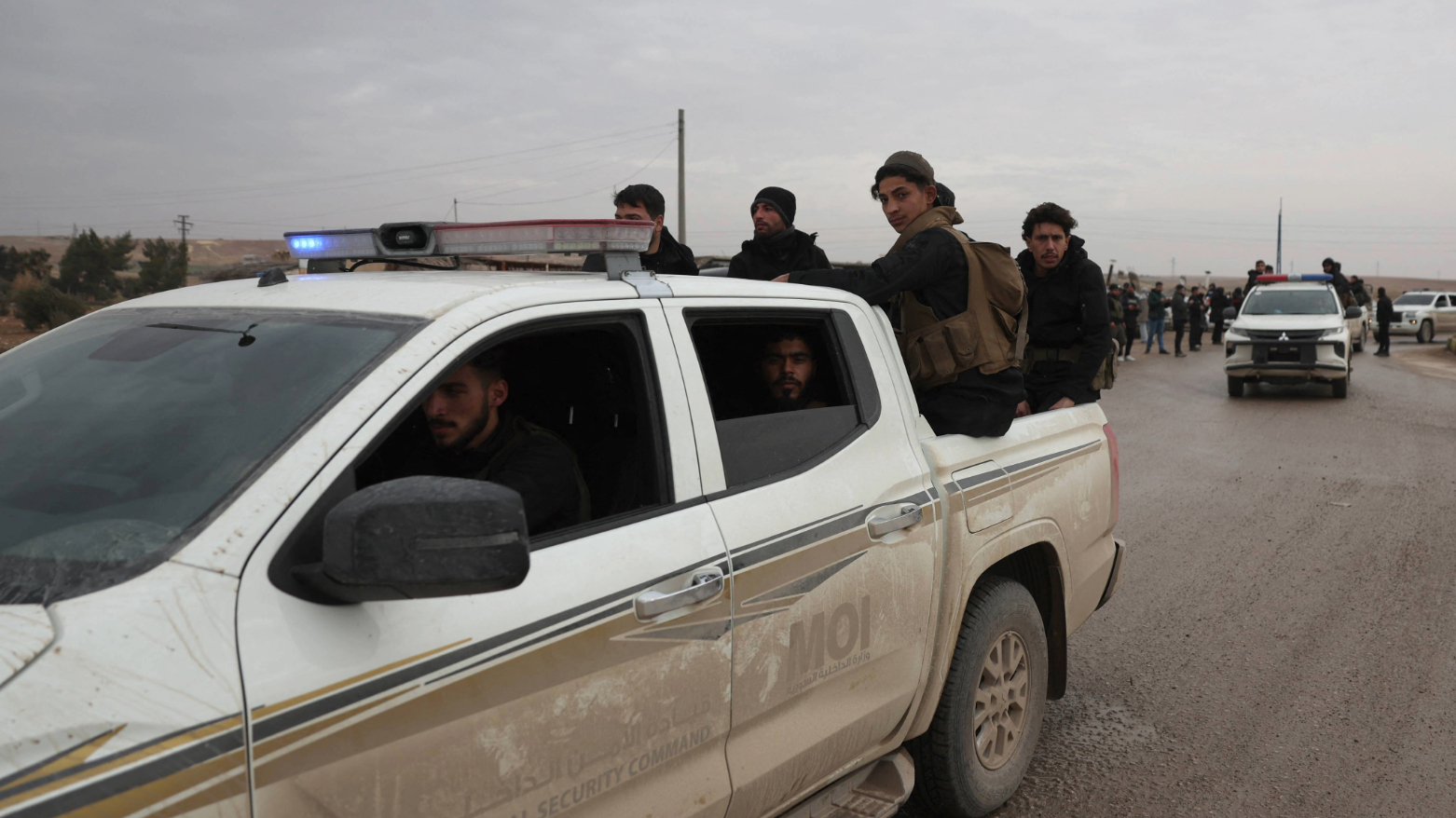
ERBIL (Kurdistan24) - Units affiliated with the Syrian Ministry of Interior entered the city of Hasakah on Monday afternoon, marking a significant operational step in the implementation of a comprehensive agreement between the Syrian Democratic Forces (SDF) and the central government in Damascus. The deployment, which proceeded without incident, represents the beginning of a major restructuring of the security architecture in Western Kurdistan (Rojava).
According to Akram Saleh, a correspondent for Kurdistan24 reporting from the region, the government forces arrived in the city on the afternoon of February 2, 2026.
The contingent consisted of approximately 125 personnel traveling in a convoy of 15 military vehicles. Saleh confirmed that the entry of these units was conducted peacefully, noting that "no clashes occurred" between the arriving Ministry of Interior personnel and the SDF forces that have historically maintained control over the area.
The security environment within Hasakah was described as stable following the arrival of the government units.
Reports from the ground indicate that the city remains calm, with residents strictly adhering to a general curfew. This restriction on movement has been in effect since the night of Friday, January 30, 2026, and appears to be a precautionary measure intended to ensure an orderly transition during this sensitive period of realignment.
The developments in Hasakah are part of a synchronized regional transfer of authority mandated by the new accord.
Earlier on Monday, a similar deployment occurred in the city of Kobani, where 20 vehicles belonging to Syrian internal forces entered the city limits.
Additionally, expectations remain that a third group of government forces will deploy to the city of Qamishlo in the near future, operating under the same legal and security framework established by the announced agreement.
The deployment follows a detailed disclosure of the agreement's terms by Mazloum Abdi, the General Commander of the SDF.
On Friday, January 30, 2026, Commander Abdi outlined the specifics of the pact signed with the Damascus government, characterizing it as a strategic necessity aimed at "protecting the people and preventing massacres." The agreement establishes a new protocol for the region's diverse security forces, delineating clear roles for local and national entities.
Under the provisions regarding the "Security File," the Asayish—the region's internal security forces—are set to become formally integrated into the Syrian Ministry of Interior. Their specific mandate will focus on assuming the duty of protecting the interior of the cities.
Crucially, the agreement stipulates that the regular Syrian Army will not enter Kurdish cities or villages, a clause intended to maintain a level of demilitarization in civilian centers. Conversely, the SDF itself is slated to become part of the Syrian Ministry of Defense, though it will retain its operational cohesion as brigades and military units stationed within their own specific regions.
Beyond the immediate security arrangements, the accord includes significant administrative and cultural provisions designed to address long-standing local demands. It mandates that education in the Kurdish language will be made official in schools and universities.
Additionally, current employees of the Autonomous Administration are to be transferred to the status of state employees, ensuring their continued employment and integration into the national civil service. The agreement further specifies that the administration of the region will remain "in the hands of the local people," attempting to balance state sovereignty with local governance.
Regarding the specific status of Kobani, the agreement ensures the lifting of the siege on the city, with military forces inside the urban center withdrawing to the outskirts to allow the internal security units to assume control.
Commander Abdi also highlighted the international dimensions of the pact during his Friday address, stating that the United States and France are aware of the details and will remain as "political guarantors" of the arrangement.
While acknowledging the complexities of the deal, Commander Abdi emphasized that although it does not meet all of the SDF's aspirations, it represented "the best option for protecting their gains at this stage."
This article was updated on Monday, Feb. 2, 2026, at 03:05pm.