Seif al-Islam Gaddafi Killed in Gun Attack at Home in Western Libya
Death of late ruler’s son revives uncertainty in Libya’s fractured political landscape as motives behind the killing remain unclear.
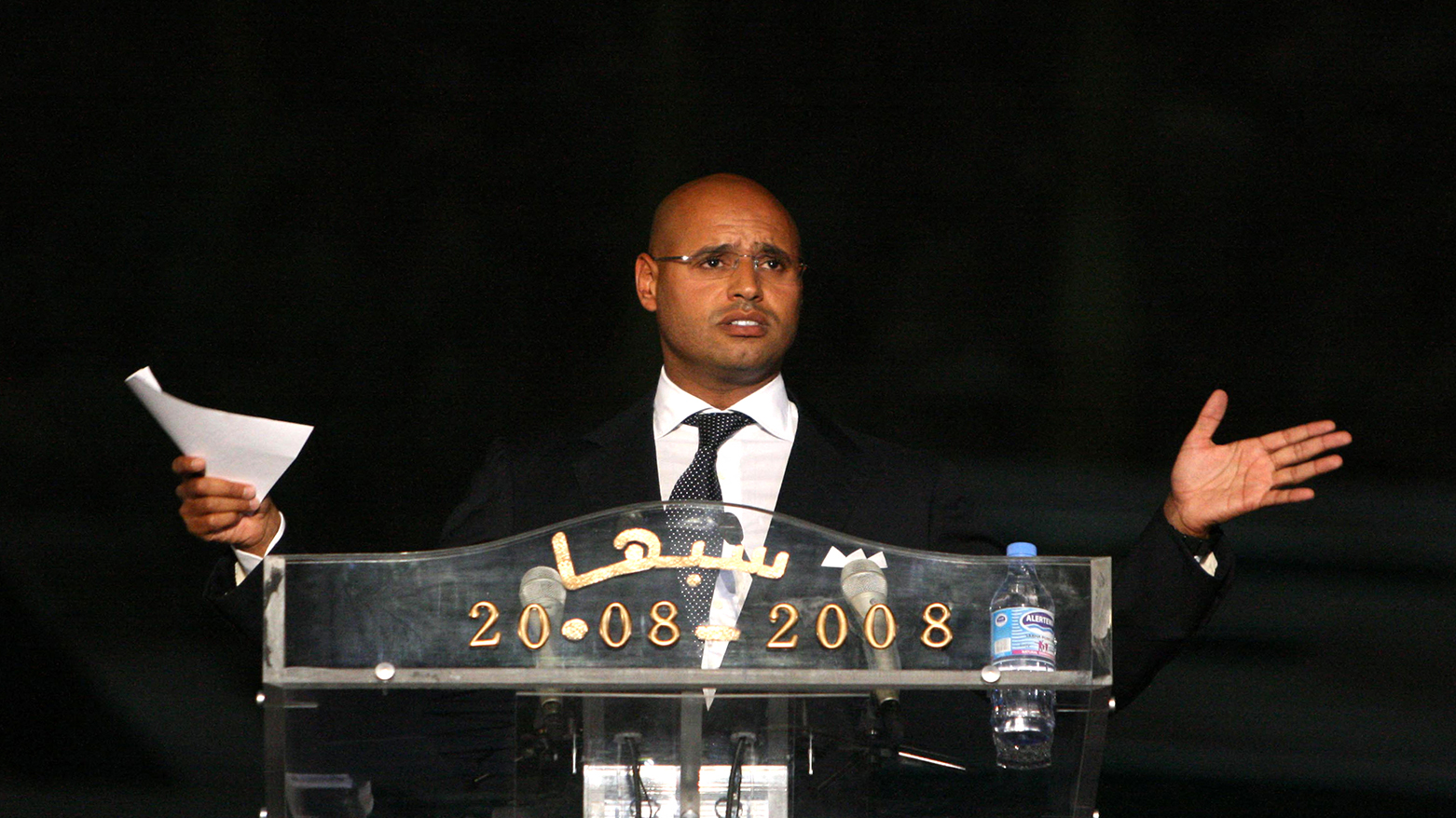
ERBIL (Kurdistan24) — Seif al-Islam Gaddafi, the son of Libya’s late longtime ruler Muammar Gaddafi and a controversial figure in the country’s post-2011 political scene, was killed on Tuesday after gunmen stormed his home in the western Libyan town of Zintan, his French lawyer confirmed.
“He was killed today at 2:00 pm (1200 GMT) in his home in Zintan by a four-man commando,” lawyer Marcel Ceccaldi told AFP, adding that the assailants had forcibly entered the residence before carrying out the killing.
Seif al-Islam, 53, had long been viewed by supporters as the political heir to his father, despite being the subject of an arrest warrant issued by the International Criminal Court (ICC) for alleged crimes against humanity committed during the 2011 uprising.
His adviser, Abdullah Othman Abdurrahim, told Libya’s Al-Ahrar television that four unidentified men stormed the house, disabled surveillance cameras, and then executed him. No group immediately claimed responsibility, and authorities have yet to clarify who was behind the attack.
Ceccaldi said he had been warned days earlier that Seif al-Islam’s security situation had deteriorated. According to the lawyer, the head of the Gaddafi tribe had contacted Seif al-Islam to offer additional protection, but he declined the proposal.
“So much so that the head of the tribe told him, ‘I will send you people to ensure your security,’ but Seif refused,” Ceccaldi said.
Although he held no formal government post during his father’s rule, Seif al-Islam was widely described before 2011 as Libya’s de facto prime minister. Educated in the West, he cultivated an image as a reform-minded figure capable of modernizing Libya and normalizing relations with Europe and the United States.
That image collapsed during the Arab Spring uprising, when he delivered a defiant televised speech warning that the regime would unleash “rivers of blood” to crush protests—a moment that cemented his status as a symbol of the old order for many Libyans.
Seif al-Islam was captured in November 2011 in southern Libya following the ICC warrant. In 2015, a Tripoli court sentenced him to death after a widely criticized trial held in absentia, but he was later granted amnesty under a law passed by Libya’s eastern-based authorities.
For years, his whereabouts remained unclear. Ceccaldi said Seif al-Islam moved frequently and largely stayed out of public view.
In 2021, he re-emerged on the political stage, announcing his candidacy for Libya’s long-delayed presidential elections. His bid polarized the country, drawing support from Libyans nostalgic for stability under the former regime while provoking fierce opposition from revolutionary factions and victims of the Gaddafi era.
The elections were ultimately postponed indefinitely amid disputes over candidates and legal frameworks.
Libya analyst Emadeddin Badi said Seif al-Islam’s killing could have far-reaching political consequences. “His death is likely to cast him as a martyr for a significant segment of the population, while also shifting electoral dynamics by removing a major obstacle to presidential elections,” Badi wrote on X, noting that his candidacy had been a central point of contention.
Moussa Ibrahim, Muammer Gaddafi’s last spokesman, condemned the killing in an emotional post. “They killed him treacherously. He wanted a united, sovereign Libya, safe for all its people,” he wrote, adding that he had spoken to Seif al-Islam just two days earlier about hopes for peace and stability.
Libya has struggled to recover from the chaos unleashed by the 2011 NATO-backed uprising that toppled Muammar Gaddafi after more than four decades in power. The country remains split between a United Nations-backed government in Tripoli and a rival eastern administration aligned with military commander Khalifa Haftar.
Against this backdrop of fragmentation, insecurity, and stalled political processes, the killing of Seif al-Islam Gaddafi marks another destabilizing moment—one that underscores how unresolved grievances from Libya’s past continue to shape its uncertain present.