Maliki Says Stepping Aside Under Foreign Pressure Would Undermine Iraqi Sovereignty
“I have said it: I am proceeding with this nomination until the end,” Maliki said.
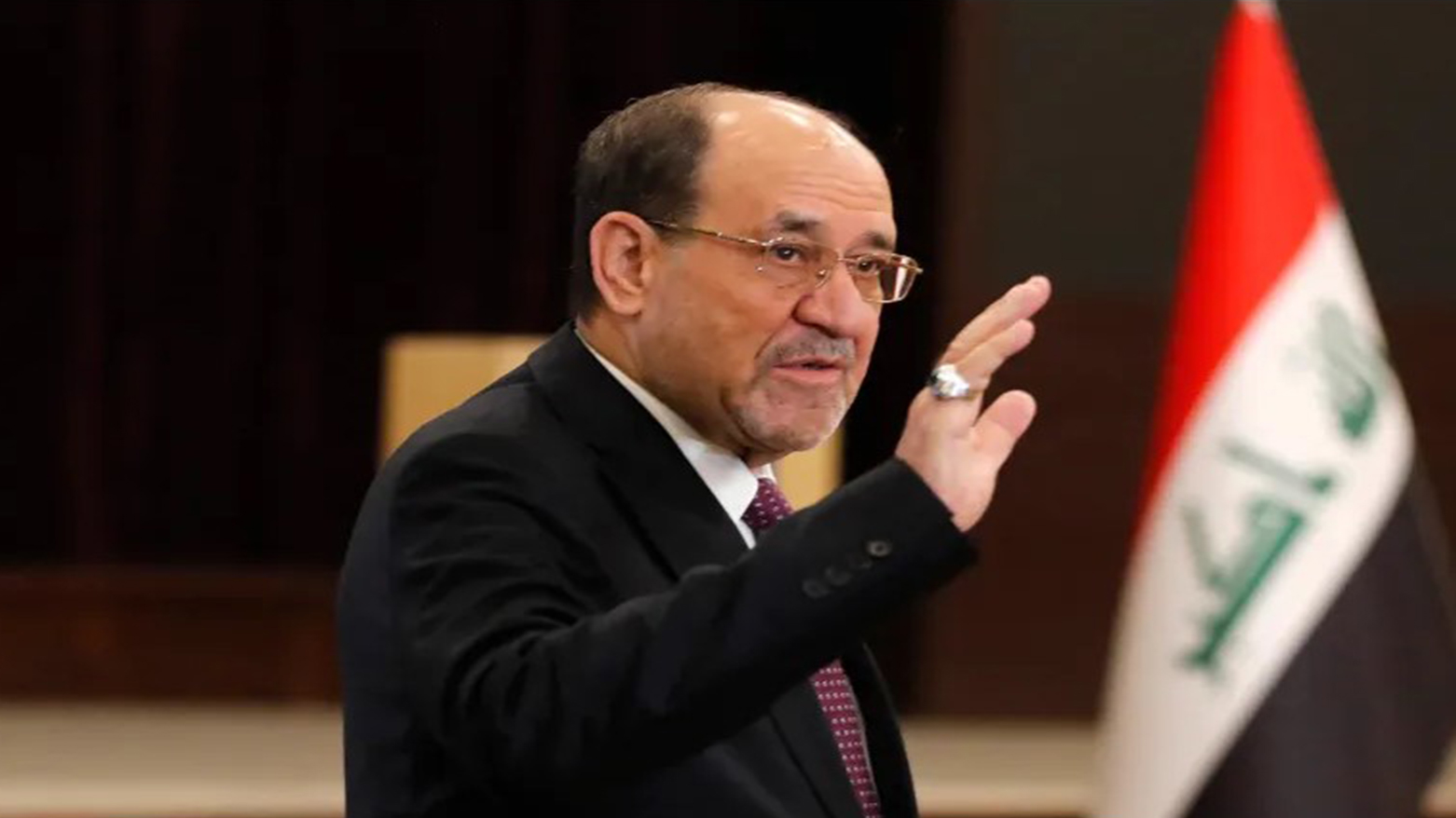
ERBIL (Kurdistan24) — Iraq’s leading prime ministerial candidate, Nouri al-Maliki, said on Tuesday that he will not withdraw from the race unless his own political alliance asks him to do so, arguing that stepping aside under foreign pressure would endanger Iraq’s sovereignty.
Speaking in a televised interview with the Iraqi network al-Sharqiya, Maliki directly addressed mounting pressure following an unprecedented warning from U.S. President Donald Trump, who last week described him as a “very bad choice” for prime minister and threatened to cut U.S. support to Iraq if he were elected.
Asked whether he would withdraw if his candidacy harmed Iraq’s interests, Maliki said he would do so only under Iraqi—not foreign—authority. “Of course, I would withdraw,” he said, “but I believe that withdrawing now endangers Iraq’s sovereignty and undermines any future decision Iraq has to make.”
“I have said it: I am proceeding with this nomination until the end,” Maliki added.
Maliki emphasized that the final decision rests with the Coordination Framework, the Shiite political alliance that nominated him and currently holds a parliamentary majority. “The framework comes first and foremost. If it now decides to change the nomination, I will accept with open arms,” he said.
Last month, the Coordination Framework formally endorsed Maliki as its candidate for prime minister, consolidating his position as the front-runner. Following Trump’s remarks, the alliance reiterated its support on Saturday, signaling defiance of U.S. pressure.
The Framework—an umbrella group of Shiite parties with varying degrees of political and ideological alignment with Iran—has emerged in recent years as Iraq’s dominant ruling coalition. Its backing is decisive in parliament, yet Iraq’s fractured political system means that endorsements do not always translate quickly into government formation.
Iraq’s political process remains notoriously volatile, shaped by internal rivalries and competing external influences, chiefly from the United States and Iran. Key decisions are frequently delayed for months, with negotiations often unfolding behind closed doors amid regional and international pressure.
Trump’s public comments have reignited debate inside Iraq over sovereignty and foreign interference, a sensitive issue in a country still grappling with the legacy of the 2003 U.S.-led freedom operation and decades of instability. While Washington continues to wield significant influence in Baghdad, Iran remains Iraq’s other major external power broker, particularly among Shiite political forces.
Maliki framed the U.S. ultimatum as a dangerous precedent, warning that yielding now would weaken Iraq’s ability to make independent decisions in the future.
A seasoned powerbroker, Maliki is Iraq’s only two-term prime minister, having led the country from 2006 to 2014 during some of its most turbulent years, including the height of sectarian violence and the withdrawal of U.S. forces.
Maliki's tenure ended amid widespread criticism following the collapse of Iraqi security forces in the face of the Islamic State’s 2014 offensive, though he has since rebuilt his influence within Shiite politics.
Supporters view him as a strong leader capable of enforcing state authority, while critics blame his policies for deepening sectarian divisions and weakening state institutions.
As Iraq once again struggles to form a government, Maliki’s candidacy has become a focal point for broader questions about sovereignty, foreign influence, and the balance of power in post-2003 Iraq—issues that continue to define the country’s fragile political landscape.