Shiite Coordination Framework to Hold Decisive Meeting on Maliki’s Premiership Bid
Alliance weighs whether to retain or replace former prime minister amid U.S. pressure and intensive talks with Kurdish parties.
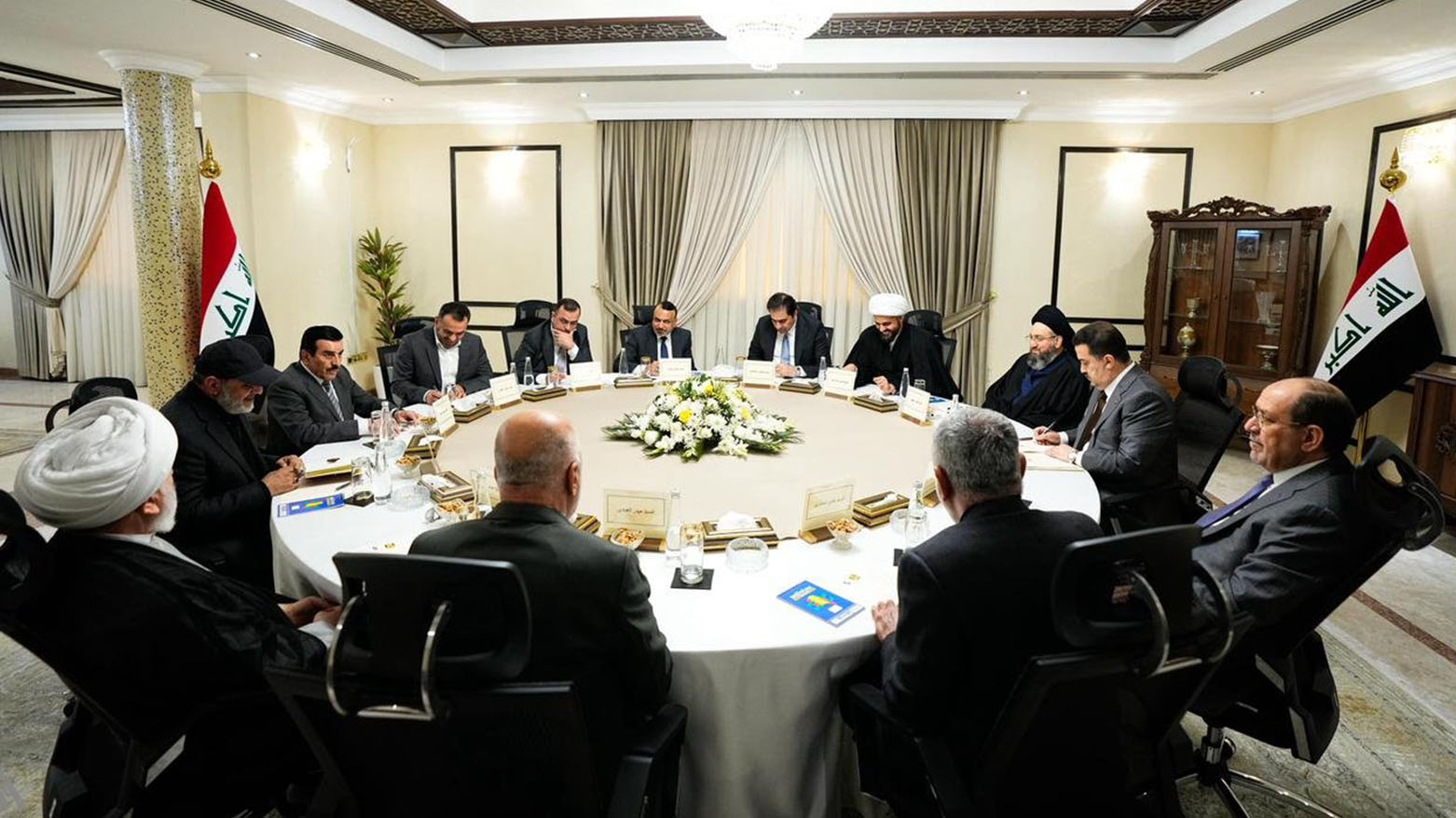
ERBIL (Kurdistan24) — Iraq’s Shiite-led Coordination Framework is to convene a high-stakes meeting on Wednesday to decide whether to maintain or replace Nouri al-Maliki as its candidate for prime minister, in what is widely seen as a pivotal moment for the country’s stalled government formation process.
According to the semi-official daily Al-Sabah, the meeting is reviewing the outcome of a recent high-level delegation visit by the Framework to the Kurdistan Region, where talks were held with the Kurdistan Democratic Party (KDP) and the Patriotic Union of Kurdistan (PUK). Those discussions focused on bridging gaps over government formation and securing a broader political consensus.
At the core of Wednesday’s deliberations is whether Maliki will remain the alliance’s final nominee or whether an alternative candidate will be put forward under mounting pressure—particularly following sharp warnings from U.S. President Donald Trump.
Sources say deep divisions persist within the Coordination Framework, and no final decision has yet been reached on changing the nominee.
On Jan. 24, the Coordination Framework formally endorsed Maliki as its candidate by majority vote, citing his “political and administrative experience.” Maliki served two terms as Iraq’s prime minister between 2006 and 2014, a period marked by intense sectarian conflict, the U.S. troop withdrawal, and the rise of the Islamic State group.
However, his nomination immediately triggered strong domestic and international opposition. Trump publicly described Maliki’s potential return to power as a “very bad mistake” and warned that Washington could cut off all assistance to Iraq should Maliki reassume office. The remarks sparked political shockwaves in Baghdad.
The Coordination Framework responded by denouncing Trump’s comments as “blatant interference” in Iraq’s internal affairs and reaffirmed its support for Maliki.
In his latest televised interview, Maliki said he would respect whatever decision the Coordination Framework ultimately makes and pledged to abide by it. He set a clear condition, stating: “If two-thirds of the Framework’s members—eight out of twelve leaders—decide to replace me, I will accept that decision with full respect.”
Maliki also thanked Prime Minister Mohammed Shia’ al-Sudani for withdrawing from the race, describing the move as a “major surprise” that reshaped the political equation. Addressing concerns over armed factions, Maliki stressed that he has no intention of launching any military operations, reiterating that weapons must remain exclusively under state control.
Responding to Trump’s warnings, Maliki argued that the U.S. president had received “incorrect and misleading information,” suggesting that the controversial message may even have been drafted “from inside Iraq and by Iraqis.”
While firmly rejecting foreign interference, Maliki emphasized the importance of preserving strategic relations with Washington.
Today’s meeting of the Coordination Framework is being closely watched as a potential turning point. The outcome will not only determine Maliki’s political future but also shape Iraq’s broader political trajectory, including relations between Baghdad and Erbil, ties with the United States, and the internal balance of power among Shiite forces.
With Iraq’s political system once again at a crossroads, the decision emerging from this session is expected to have far-reaching consequences for government stability, regional alignments, and the country’s long-delayed path toward institutional normalcy.