President Barzani Meets with the Commander of the Syrian Democratic Forces
President Masoud Barzani met SDF Commander Mazloum Abdi in Pirmam, stressing implementation of the Damascus–SDF agreement, Kurdish rights, and regional security coordination.
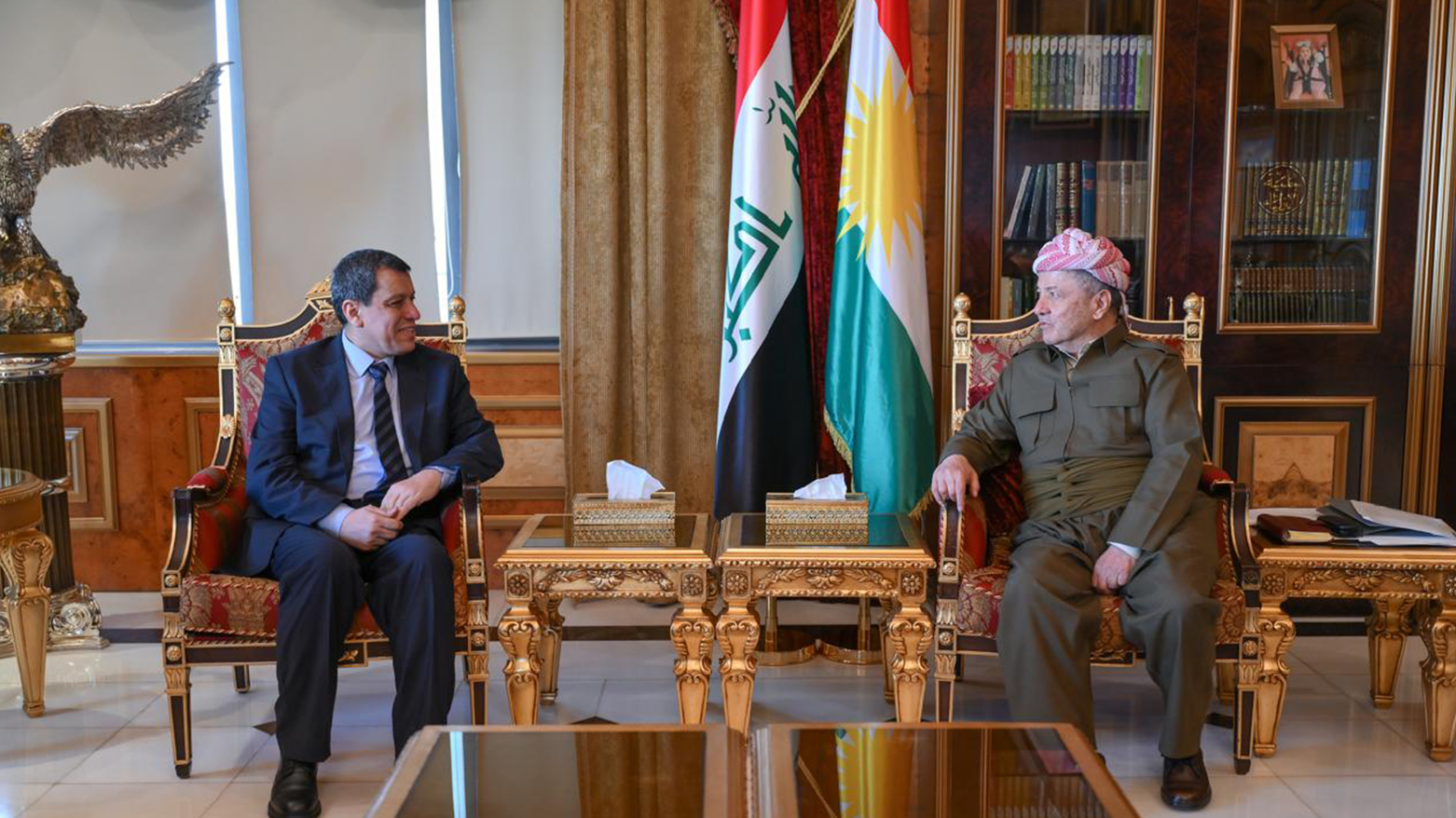
ERBIL (Kurdistan24) - President Masoud Barzani received Syrian Democratic Forces (SDF) Commander-in-Chief Mazloum Abdi in Pirmam on Friday to discuss developments in Rojava (Western Kurdistan), the implementation of the recent agreement between the Syrian government and the SDF, and broader regional security concerns.
The meeting emphasized coordination between Kurdish authorities and relevant stakeholders to safeguard the rights of the Kurdish people and ensure the agreement’s full execution.
During the discussions, President Barzani stressed the importance of remaining committed to the provisions of the agreement, highlighting that its implementation must be carried out in a coordinated manner to protect Kurdish communities and enshrine their rights in Syria’s legal and constitutional framework.
He underscored the necessity of continued collaboration among all parties involved to consolidate stability in northern Syria.
The meeting builds on prior high-level engagements in Erbil, where Kurdistan Region President Nechirvan Barzani met with Commander Abdi and his delegation on Thursday, focusing on the same agreement and its potential implications for regional security, according to a Kurdistan Region Presidency statement.
These discussions coincided with the official visit of French Foreign Minister Jean-Noël Barrot, who also held separate talks with the SDF leadership, reflecting a convergence of diplomatic efforts involving the Kurdistan Region, France, and Syrian Kurdish authorities.
President Barzani has consistently underscored the importance of the agreement between Damascus and the SDF as a foundation for stability in Rojava.
During his previous meetings with French officials, he emphasized the necessity of preventing political disputes from escalating into ethnic conflict between Kurds and Arabs, and of averting acts of violence against Kurdish populations in Syria.
Barzani expressed support for the ongoing integration of SDF forces and administrative structures into Syrian state institutions, viewing this process as a critical mechanism for long-term stability, according to Kurdistan24 reporting on his meetings with French officials.
Security coordination was a key element of Friday’s discussions. President Barzani highlighted the continuing threat posed by the Islamic State (ISIS) and stressed the need for effective mechanisms among regional authorities and international partners to counter any resurgence.
The president noted that coordination with the SDF and other relevant actors is essential to manage security challenges, including the handling of families and detainees linked to ISIS, which remains a priority for both Kurdish and international stakeholders.
Commander Abdi, who was accompanied by senior officials including Rohlat Afrini, commander of the Women’s Protection Units (YPJ), and Ilham Ahmed, co-chair of the Autonomous Administration’s Foreign Relations Department, reiterated the SDF’s commitment to implementing the agreement with Damascus.
Abdi emphasized the importance of protecting the privacy and security of Kurdish regions, integrating military and security forces under agreed arrangements, and safeguarding political and civil rights for Kurdish communities.
According to previous Kurdistan24 report, he also highlighted the need to prevent instability in facilities housing detained ISIS fighters and their families, noting that proper management of these sites is critical to maintaining security.
The timing of the meeting aligns with a series of regional diplomatic efforts aimed at stabilizing northern Syria and strengthening Kurdish rights.
French Foreign Minister Jean-Noël Barrot, who arrived in Erbil on Thursday, engaged both the SDF and the Kurdistan Region leadership in discussions centered on the implementation of the January 29 agreement, counter-terrorism coordination, and the broader political process in Syria.
Barrot underscored France’s continued support for Kurdish rights and the necessity of full compliance with the agreement to maintain stability and counter extremism.
President Masoud Barzani has previously emphasized that the Kurdistan Region seeks to be “an element of stability and connectivity” in the region, maintaining careful relations with Baghdad, neighboring states, and international partners, including France and the United States.
His meetings with both Commander Abdi and Foreign Minister Barrot reflect this approach, reinforcing Erbil’s role as a hub for multilateral dialogue and coordination on security and political matters related to northern Syria.
In addition to the implementation of the SDF–Damascus agreement, the discussions also addressed the broader situation in Syria, including mechanisms for ensuring Kurdish participation in governance, protection of local communities, and prevention of renewed conflict.
The engagements with French officials, coupled with direct consultations with the SDF leadership, reflect a sustained diplomatic effort to integrate regional, national, and international actors into a coordinated framework for stability in Rojava.
The sequence of meetings over Thursday and Friday in Erbil and Pirmam demonstrates the Kurdistan Region’s central role in facilitating dialogue between the SDF, the Syrian government, and international partners. By hosting these high-level consultations, Erbil positions itself as a key interlocutor in resolving political disputes, countering security threats, and promoting the rights of Kurdish populations within Syria.
According to Kurdistan24, the coordinated meetings underscore the alignment between the Kurdistan Region, the SDF, and France on the objectives of implementing the agreement, preserving security in Kurdish areas, and ensuring that Kurdish rights are recognized within the Syrian state framework.
Both President Barzani and Commander Abdi reaffirmed their commitment to ongoing cooperation and dialogue as part of broader efforts to stabilize the region and protect Kurdish communities.
This article was updated on Frinday, Feb. 6, 2026, at 01:37pm.