Syria, Saudi Arabia Sign Major Investment Deals Including Joint Airline and $1 Billion Telecom Project
The agreements also include the development of a new international airport in the northern city of Aleppo, alongside the rehabilitation and expansion of the city’s existing airport.
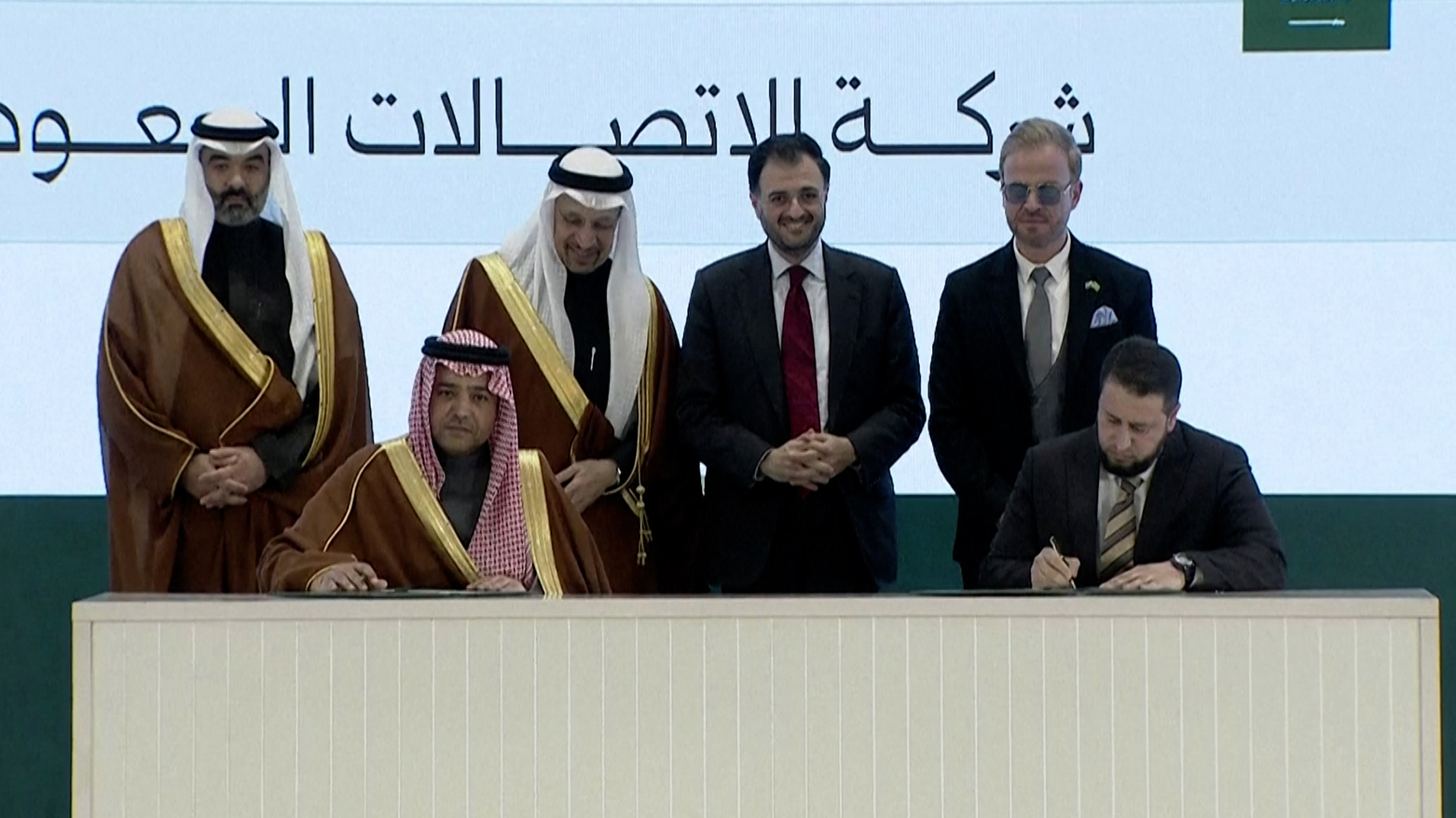
ERBIL (Kurdistan24) — Syria and Saudi Arabia on Saturday signed a series of major economic agreements, including plans for a joint airline and a $1 billion telecommunications project, as Damascus intensifies efforts to rebuild after years of devastating conflict.
The deals come amid growing Saudi support for Syria’s new Islamist-led authorities, who took power after the overthrow of longtime ruler Bashar al-Assad in December 2024. Since then, the new leadership has moved quickly to attract foreign investment, securing agreements with several governments and international companies, particularly from the Gulf.
Syrian Investment Authority chief Talal al-Hilali announced the launch of a low-cost Syrian-Saudi airline aimed at strengthening regional and international air connectivity. The agreements also include the development of a new international airport in the northern city of Aleppo, alongside the rehabilitation and expansion of the city’s existing airport.
Hilali further revealed a major telecommunications initiative, known as SilkLink, designed to modernize Syria’s digital connectivity and communications infrastructure. Syrian Telecommunications Minister Abdulsalam Haykal said the project would be implemented with an investment of approximately $1 billion, calling it a critical step toward rebuilding essential services.
For decades, large-scale foreign investment in Syria was effectively blocked by international sanctions imposed during the Assad era. That barrier was lifted late last year when the United States fully removed its remaining sanctions on Damascus, opening the door for a broad return of international capital.
In addition to aviation and telecommunications, Syria and Saudi Arabia also signed agreements covering water desalination and broader development cooperation. Speaking at the signing ceremony, Saudi Investment Minister Khalid Al-Falih announced the establishment of a new investment fund dedicated to major projects in Syria, with strong participation from the Saudi private sector.
“These agreements are part of building a strategic partnership between our two countries,” Al-Falih said, underscoring Riyadh’s expanding economic role in post-war Syria.
Hilali noted that the deals focus on “vital sectors that directly affect people’s lives and form essential pillars for rebuilding the Syrian economy,” as the country undertakes the massive task of restoring infrastructure shattered by more than a decade of war.
The latest agreements build on a rapidly expanding portfolio of foreign investment commitments. In July last year, Saudi Arabia signed investment and partnership deals with Syria valued at $6.4 billion, targeting infrastructure, telecommunications, and other key sectors.
One month later, Damascus announced agreements worth more than $14 billion, including major investments in Damascus International Airport and transport and real estate projects.
Momentum has continued this week with Syria signing a preliminary offshore oil and gas exploration agreement with U.S. energy giant Chevron and Qatar’s Power International, signaling Damascus’s broader push to re-integrate into regional and global economic networks.