Traders Shut Markets Across Iraq in Protest Over New Customs Tariffs
Widespread strikes erupt in Baghdad, Mosul, Kirkuk, and Basra as merchants warn of soaring prices, collapsing trade, and growing social unrest.
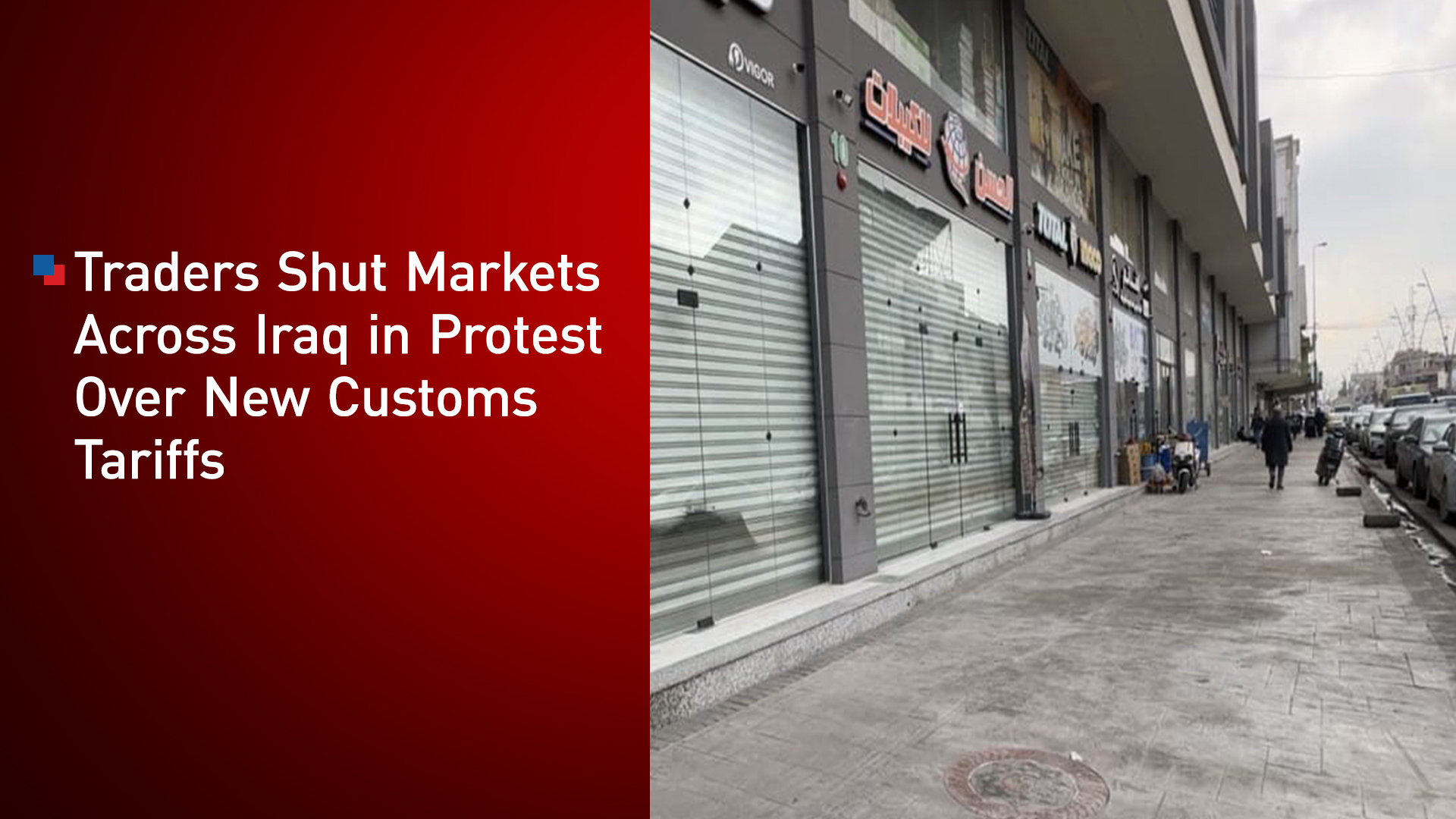
ERBIL (Kurdistan24) — Markets across several major Iraqi cities came to a standstill on Monday, as traders and shop owners continued days-long protests and strikes against newly imposed federal customs tariffs and taxes, shuttering shops and staging demonstrations in Baghdad, Mosul, Kirkuk, and Basra amid warnings of soaring prices, collapsing trade, and mounting social unrest.
In Baghdad, Kirkuk, and Mosul, merchants lowered metal shutters, closed warehouses, and abandoned their shops in protest of the government’s latest customs and tax decisions. Demonstrators warned that the measures threaten livelihoods, weaken purchasing power, and risk triggering broader social unrest.
According to Kurdistan24 correspondent Darman Baadri in Mosul, most shops in the city center were closed, bringing buying and selling to a near standstill—an unusual scene in a city where traders typically begin work early in the morning. Merchants said the disruption reflects growing anger over the rapid rise in commodity prices in recent days.
One disgruntled shop owner told Kurdistan24 that prices have surged dramatically, describing the situation as “unacceptable,” particularly as many Iraqis continue to suffer from delayed salaries and declining incomes. “The financial burden on citizens no longer allows for decisions like this,” he said.
Residents echoed those concerns, warning that rising prices are hitting low-income families hardest. A Mosul resident said the cost of basic necessities—from food items to transportation and taxi fares—has increased sharply, placing additional strain on already vulnerable households.
Rashid al-Saeedi, a member of the administrative council of the Baghdad Chamber of Commerce, warned that protests could expand significantly in the coming days. He said traders have given the federal government a 48-hour deadline to reverse the decision, cautioning that demonstrations could escalate and draw in workers and public employees if authorities fail to respond.
“If the government wants to address the financial crisis, it should begin by tackling corruption and waste,” al-Saeedi said, criticizing what he described as tens of thousands of “ghost employees” receiving salaries across state institutions. He warned that failure to act could push the protests toward instability.
Traders in Mosul said the cost of importing a single shipping container has jumped from around five million dinars to as much as 60 million dinars, a rise they say is impossible to absorb. Many warned they would be forced to suspend business operations until the government reviews the policy.
The unrest has been particularly pronounced in Basra, Iraq’s main commercial gateway. Markets across the province announced a general strike on Sunday, turning one of the country’s busiest trading hubs into what merchants described as a “city of silence.”
Wholesalers said customs fees per container arriving through Basra’s ports have risen from three million dinars to as high as 35 million dinars. “This is a disaster,” one trader said, warning that goods would have to be sold at several times their normal prices.
Shop owners reported being forced to send workers home, while others said their goods remain stranded at Umm Qasr Port due to new procedures and fees. Signs posted on shuttered shops declared a general strike in protest of what merchants called “unfair decisions” that place the burden of revenue generation on the poor.
The Iraqi Traders Association has called for a nationwide strike for an indefinite period, demanding the immediate release of stalled containers at Umm Qasr and the reversal of the new customs tariffs. The association warned that continued delays and rising costs could cause widespread business closures and the collapse of thousands of jobs.
The traders’ protests come amid growing public anger over broader austerity measures, including a controversial government decision to reduce or suspend allowances for teachers and civil servants. That move has already triggered demonstrations in several provinces, particularly in Kirkuk, where educators accused the government of shifting the cost of fiscal mismanagement onto ordinary workers.
Critics argue that instead of confronting entrenched corruption, militia-controlled border crossings, and billions of dollars lost annually through smuggling and mismanagement, the government has chosen policies that directly impact citizens’ livelihoods.
Despite Iraq’s vast oil wealth, repeated corruption scandals and weak financial oversight have undermined public trust. Observers warn that unless meaningful dialogue and policy adjustments take place, continued market closures and protests could further strain Iraq’s fragile economy and deepen the crisis of confidence between citizens and the state.
Traders and protesters alike insist their demands are clear: reverse the customs decision, protect purchasing power, and pursue financial reform that begins with accountability—not austerity imposed on ordinary Iraqis.