Trump Threatens to Block Opening of Canada–US Bridge Amid Renewed Trade Tensions
Trump argued that the United States should own “at least half” of the bridge, claiming Canada controls both sides of the project and used “virtually” no US-made products in its construction.
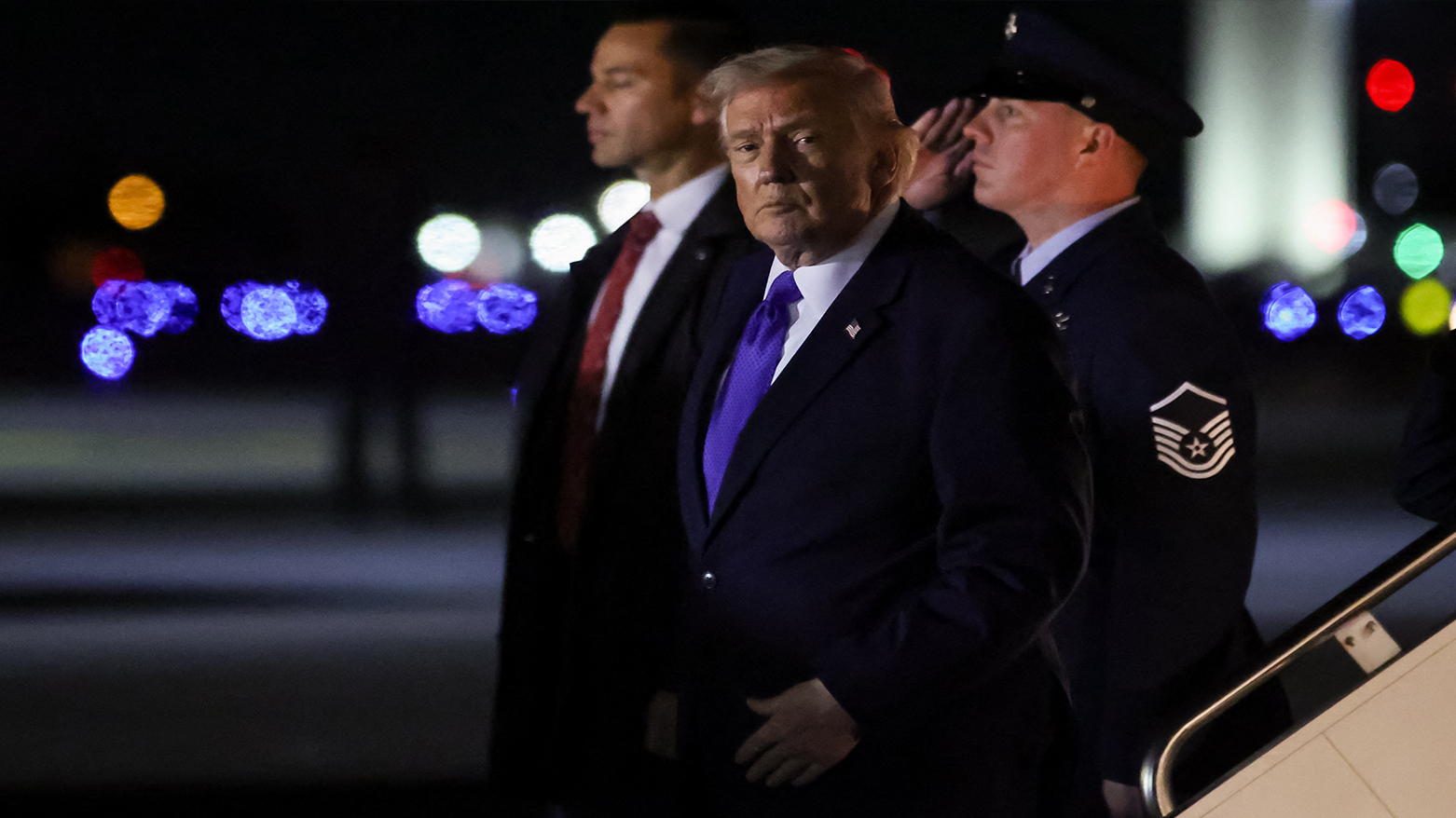
ERBIL (Kurdistan24) — US President Donald Trump on Monday threatened to halt the opening of a major new bridge linking the United States and Canada, escalating tensions with Ottawa and reviving rhetoric that has strained bilateral relations since his return to office in January 2025.
In a post on his Truth Social platform, Trump said he would not allow the Gordie Howe International Bridge—currently under construction between Windsor, Ontario, and Detroit, Michigan—to open unless the United States receives what he called “full compensation” and Canada shows Washington “the Fairness and Respect that we deserve.”
Trump argued that the United States should own “at least half” of the bridge, claiming Canada controls both sides of the project and used “virtually” no US-made products in its construction. “We will start negotiations, IMMEDIATELY,” he wrote.
The $4.7-billion bridge, named after the late Canadian-born National Hockey League legend Gordie Howe, has been under construction since 2018 and is scheduled to open later this year.
According to the Windsor-Detroit Bridge Authority, the project was financed entirely by Canada and will be jointly owned by the Canadian government and the US state of Michigan, with revenues intended to recoup Canada’s upfront investment over time.
The Gordie Howe International Bridge is one of the most significant cross-border infrastructure projects in North America, designed to ease congestion at the existing Ambassador Bridge and strengthen one of the world’s busiest trade corridors.
Roughly a quarter of all Canada–US trade by value passes through the Windsor–Detroit gateway, making the bridge critical for automotive supply chains, manufacturing, and regional logistics.
Trump’s remarks, however, reframed the project as a symbol of what he portrays as an unequal economic relationship with Canada. The president has repeatedly accused Ottawa of benefiting disproportionately from trade with the United States, a theme that has underpinned his broader “America First” approach to allies.
Trump also lashed out at Canadian Prime Minister Mark Carney, accusing him of seeking closer ties with Beijing. “Prime Minister (Mark) Carney wants to make a deal with China—which will eat Canada alive. We’ll just get the leftovers! I don’t think so,” Trump wrote.
Washington recently threatened to impose tariffs of up to 100 percent on certain Canadian goods after Carney visited Beijing last month and announced a preliminary trade understanding with China.
Trump further amplified unsubstantiated claims, including an assertion that Beijing would “terminate ALL Ice Hockey being played in Canada,” remarks that drew ridicule but underscored his confrontational tone.
Since returning to office, Trump has repeatedly clashed with Canada over trade, defense spending, and foreign policy alignment. Earlier this year, he went as far as suggesting that Canada should be annexed as the 51st US state—comments he has largely walked back in recent months, but which left a deep imprint on diplomatic relations.
For his part, Carney has warned of broader global consequences. Speaking at the World Economic Forum in Davos last month, the Canadian prime minister said the US-led system of global governance was undergoing “a rupture,” a thinly veiled reference to Trump’s disruptive approach, and urged mid-level powers to cooperate more closely to preserve stability.
As construction on the Gordie Howe International Bridge nears completion, Trump’s threat to block its opening injects new uncertainty into a project long viewed as a cornerstone of Canada–US economic integration, and highlights how political disputes are increasingly spilling over into critical cross-border infrastructure.