US Pushes for ‘Dramatic Increase’ in Venezuela Oil Output Amid Thaw in Ties
Energy Secretary Wright Signals End of Embargo as Washington and Caracas Seek Long-Term Energy Partnership.
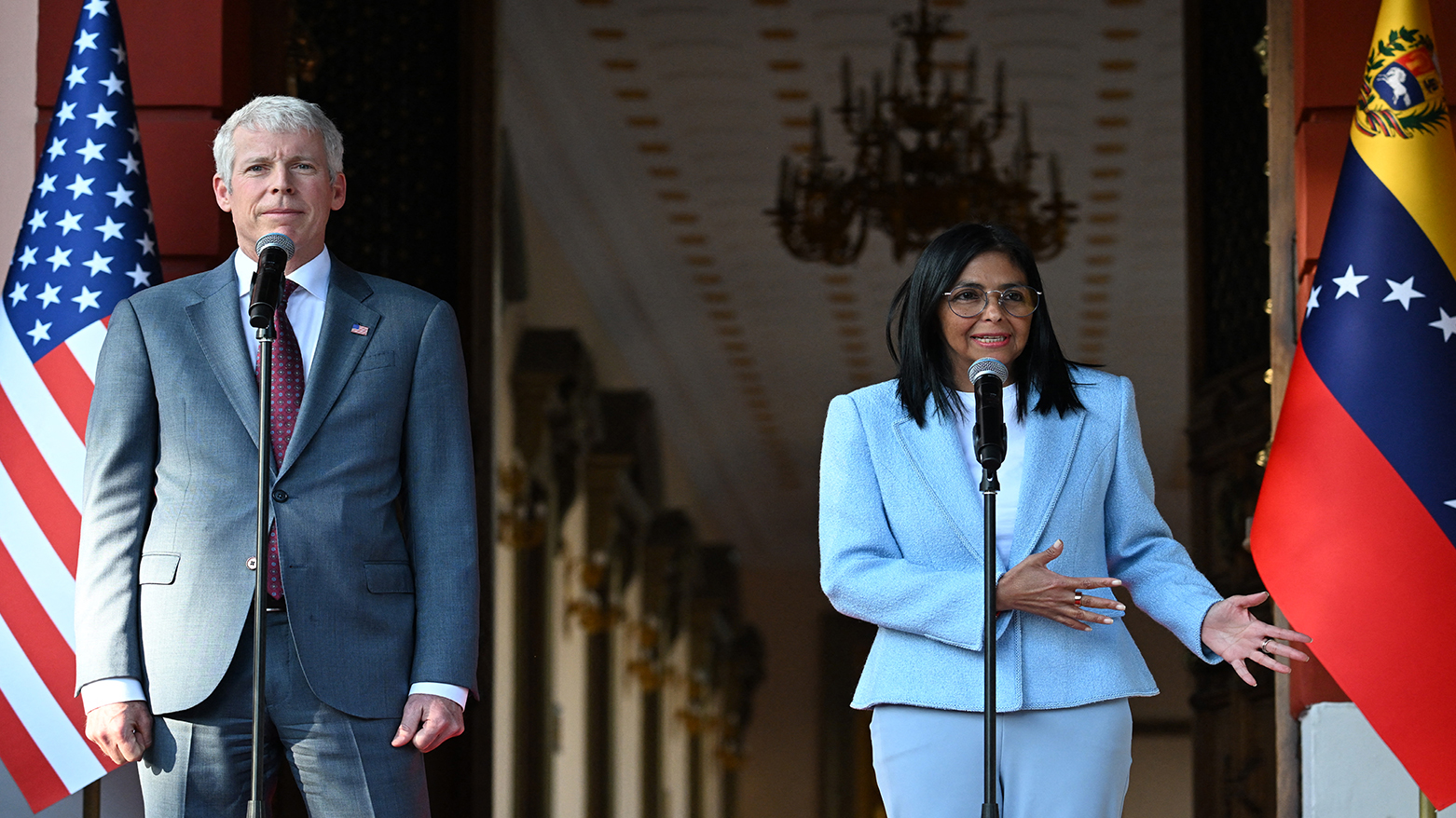
ERBIL (Kurdistan24) — The United States is pushing for a “dramatic increase” in Venezuela’s oil output, signaling a major shift in bilateral relations as Washington moves to re-engage with the oil-rich South American nation.
US Energy Secretary Chris Wright pledged on Wednesday to help drive a substantial expansion in Venezuela’s energy production, describing the effort as part of a broader strategy to “make the Americas great again.”
His remarks came during a visit to Caracas, where he met interim leader Delcy Rodriguez, marking the highest-level US visit since American special forces ousted socialist leader Nicolas Maduro on January 3.
Following talks with Rodriguez, who succeeded Maduro and has established a cooperative relationship with US President Donald Trump, Wright described US-Venezuelan relations as being “at a pivot in history.”
“I believe we will see an absolutely dramatic turn in the trajectory of this nation, in the state of the relationship between Venezuela and the United States, and in the business conditions in the hemisphere for commerce and trade,” Wright told reporters.
In earlier discussions with Rodriguez and senior oil executives, Wright emphasized that President Trump was “passionately committed” to transforming relations between the two former adversaries. Rodriguez, in turn, expressed support for a “long-term productive partnership” that would be “beneficial to both countries.”
Trump approved Rodriguez’s replacement of Maduro on the condition that her government grant the United States access to Venezuela’s vast oil reserves and take steps to ease state repression.
Venezuela holds the world’s largest proven oil reserves, totaling more than 303 billion barrels—roughly one-fifth of global reserves, according to OPEC. Despite this resource base, years of underinvestment, operational mismanagement, and US sanctions have severely constrained output. In 2024, Venezuela accounted for only about one percent of global crude production.
Wright announced that the US oil embargo imposed in 2019 was “essentially over,” clearing the way for renewed commercial engagement. Last month, the United States conducted its first sale of Venezuelan crude since the sanctions were eased, generating $500 million in revenue for Caracas.
The Trump administration is encouraging major US oil companies to re-enter Venezuela and rapidly rebuild the country’s degraded energy infrastructure, with the aim of boosting production by millions of barrels per day. Under the proposed framework, Washington and Caracas would share profits from expanded output.
Wright called for a sweeping increase not only in oil production but also in natural gas and electricity generation, arguing that expanded energy activity would improve employment prospects, wages, and overall living standards in Venezuela. He noted that discussions with Rodriguez addressed both “tremendous opportunities” and significant operational and political challenges.
Participants in Wednesday’s meetings included the president of Venezuela’s state oil company PDVSA, Venezuela’s diplomatic representative to the United States, and the US chargé d’affaires in Caracas.
Rodriguez said the renewed dialogue offered an opportunity for the two countries “to address their historical differences in a mature manner.”
The diplomatic and economic thaw follows a prolonged rupture in relations. Caracas severed ties with Washington in 2019 after the United States refused to recognize Maduro’s contested election victory.
Since Maduro’s removal, Rodriguez has introduced a series of reforms, including opening the previously nationalized oil sector to private investment. Lawmakers are also expected to consider a landmark bill that would grant amnesty to political prisoners, a move widely viewed as part of efforts to stabilize the political environment and attract foreign capital.
On the US side, sanctions relief has allowed American firms to resume cooperation with PDVSA and Venezuelan authorities. However, significant obstacles remain. Political instability, security risks, and the need for substantial capital expenditures to rehabilitate aging infrastructure continue to weigh on investor confidence.
Venezuela produced approximately 1.2 million barrels per day (bpd) in 2025—an improvement from a historic low of around 360,000 bpd in 2020—but still well below the 3.0 million bpd it was producing roughly 25 years ago.
Rodriguez’s government is targeting an additional 18 percent increase in output this year, a goal that will hinge on sustained foreign investment and operational recovery across the energy sector.