US Official Reveals Operation That Prevented Catastrophic ISIS Prison Break in Syria
A senior US intelligence official told Fox News that nearly 6,000 ISIS detainees were moved from Syria to Iraq in a multi-agency operation that prevented a potential mass prison break.
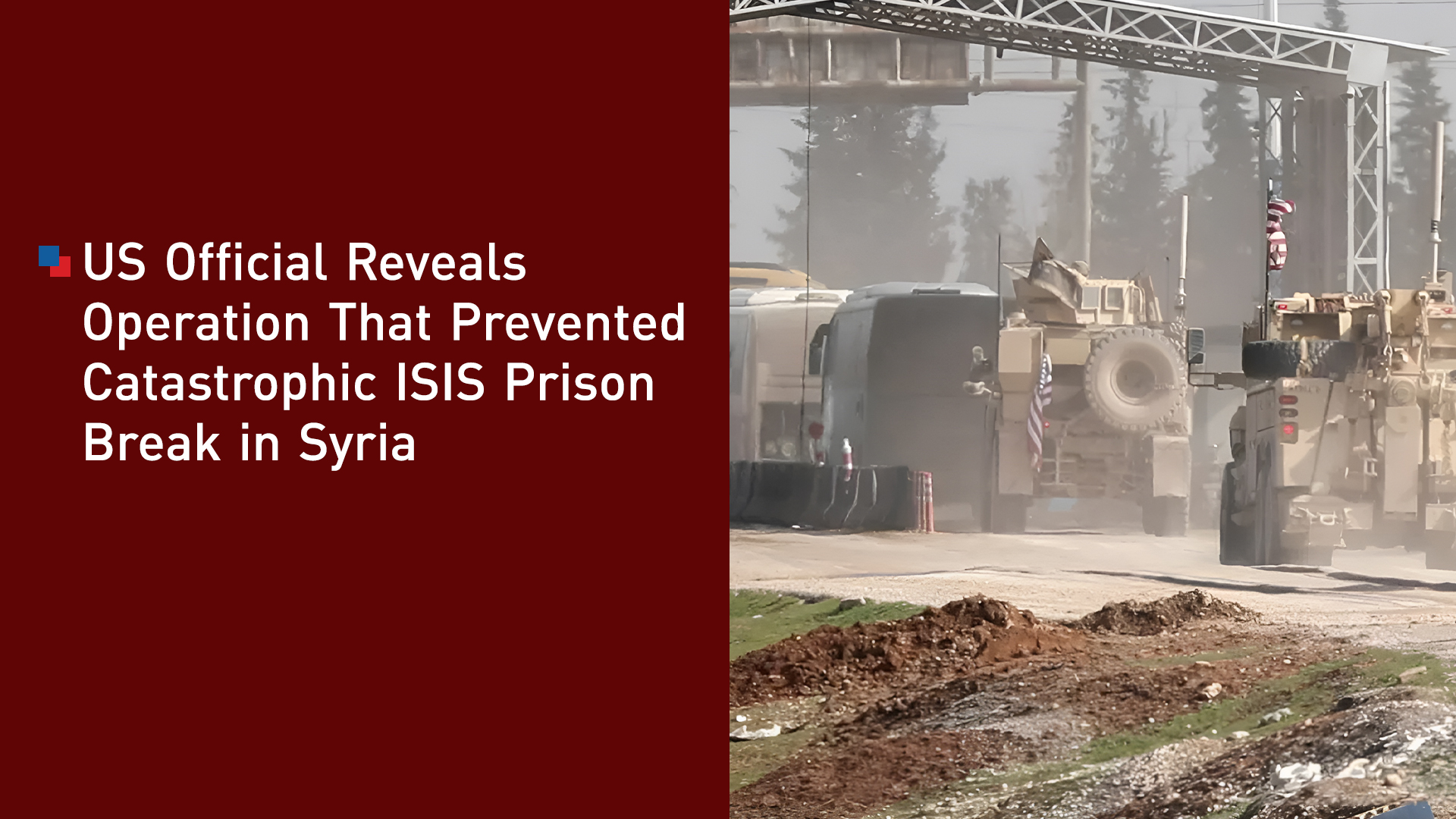
ERBIL (Kurdistan24) - A prison break that officials say could have reshaped the region overnight was narrowly averted, as nearly 6,000 ISIS detainees held in northern Syria were transferred out of harm’s way in a rapid, coordinated operation led by US agencies.
In an exclusive interview with Fox News Digital, a senior US intelligence official described how a behind-the-scenes operation prevented what he called the potential “instant reconstitution of ISIS.”
Nearly 6,000 ISIS detainees, described by the official as “the worst of the worst,” were being held in northern Syria under the guard of the Kurdish-led Syrian Democratic Forces (SDF). Clashes and instability were threatening the SDF’s ability to secure the prisons, raising fears that the collapse of detention facilities could allow thousands of militants to escape.
“If these 6,000 or so got out and returned to the battlefield, that would basically be the instant reconstitution of ISIS,” the senior intelligence official told Fox News Digital.
The risk had been building for months. In late October, Director of National Intelligence Tulsi Gabbard began assessing that Syria’s transition could tip into disorder, creating conditions for a catastrophic jailbreak.
The Office of the Director of National Intelligence (ODNI) dispatched the official to Syria and Iraq to begin early discussions with both the SDF and the Iraqi government about removing what he repeatedly described as the most dangerous detainees before events overtook them.
Fears intensified in early January as fighting erupted in Aleppo and began spreading eastward. “We saw this severe crisis situation,” the official said.
According to the source, the ODNI oversaw daily coordination calls across agencies as the situation escalated. Secretary of State Marco Rubio was “managing the day to day” on policy considerations, while the ODNI led a working group keeping United States Central Command (CENTCOM), diplomats, and intelligence officials aligned on preventing nearly 6,000 ISIS fighters from slipping into the fog of war.
The Iraqi government, the official said, recognized the stakes. Baghdad feared that if thousands of detainees escaped, they could spill across the border and revive a threat Iraq still remembers vividly. Leaders understood that a massive breakout could force Iraq back into a “2014 ISIS is on our border situation once more.”
The US Embassy in Baghdad played a pivotal diplomatic role in facilitating what became a major logistical undertaking.
CENTCOM surged resources to execute the transfer, including helicopters and other assets. “Thanks to the efforts… moving in helicopters, moving in more resources, and then just logistically making this happen, we were able to get these nearly 6000 out in the course of just a few weeks,” the official said.
Ultimately, detainees were transported into Iraq, where they are now held at a facility near Baghdad International Airport under Iraqi authority.
The next phase focuses on identification and accountability. Federal Bureau of Investigation (FBI) teams are enrolling detainees biometrically, while US and Iraqi officials assess what intelligence can be declassified for potential prosecutions.
“What they were asking us for, basically, is giving them as much intelligence and information that we have on these individuals,” the official said. “So right now, the priority is on biometrically identifying these individuals.”
The State Department is also conducting outreach to countries of origin, urging them to take responsibility for their nationals among the detainees. “State Department is doing outreach right now and encouraging all these different countries to come and pick up their fighters,” he said.
While the transfer focused strictly on ISIS fighters, families held in camps such as al-Hol camp were not included in the operation. According to the official, the SDF and the Syrian government reached an understanding that Damascus would assume control of al-Hol, which holds thousands of ISIS-affiliated women and children.
“As you can see from social media, the al-Hol camp is pretty much being emptied out,” the official said, adding that it “appears the Syrian government has decided to let them go free,” which he described as “very concerning.”
Counterterrorism officials have long viewed the fate of families in such camps as one of the most complex unresolved elements of the ISIS detention system, particularly as many children have grown up in the camps and are now approaching fighting age.
For now, intelligence agencies are closely tracking developments after what the official described as a rapid operation that prevented thousands of experienced ISIS militants from reentering the battlefield simultaneously.
“This is a rare good news story coming out of Syria,” the official concluded.
US officials say the operation averted a crisis that could have reignited ISIS overnight, even as unresolved challenges surrounding detainee families continue to cast uncertainty over Syria’s fragile security landscape.