Iran Tells U.N. It Will Not Initiate War, Warns of Decisive Response to Any U.S. Military Aggression
Iran told the U.N. it will not start a war but will respond decisively to any U.S. military aggression, citing recent threats and regional deployments.
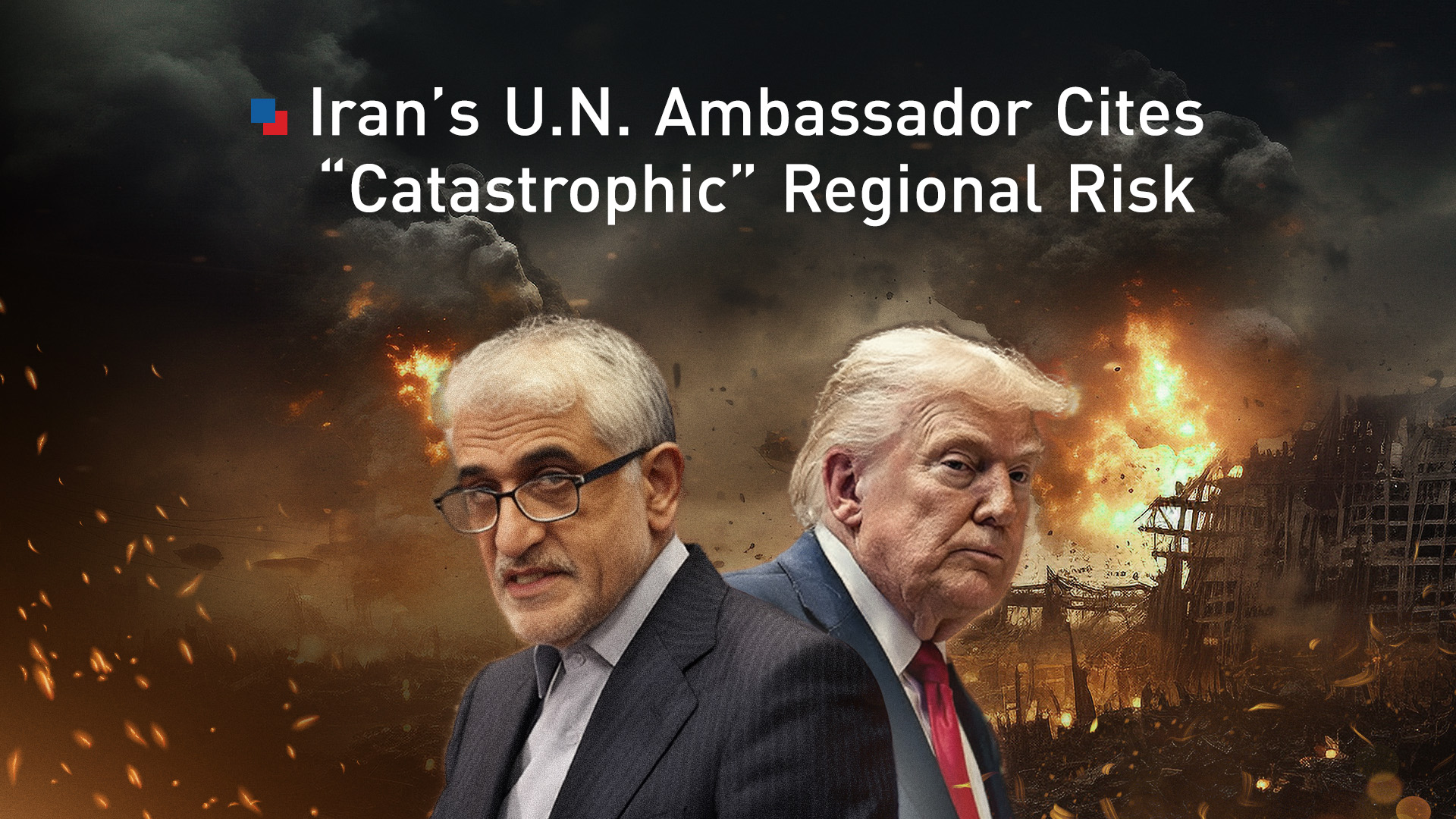
ERBIL (Kurdistan24) - Iran’s ambassador to the United Nations said Tehran “will not initiate any war” but will respond “decisively, proportionately, and within the framework of its inherent right to self-defense” if subjected to military aggression, according to a letter sent Thursday to the U.N. Secretary-General and the Security Council.
According to Islamic Republic News Agency, Amir Saeid Iravani, Iran’s Ambassador and Permanent Representative to the United Nations, transmitted the letter following what he described as “continued threats by United States officials to resort to force,” including recent public comments by U.S. President Donald Trump regarding the use of the Diego Garcia base to conduct a potential military attack against the Islamic Republic of Iran.
In the letter addressed to António Guterres and James Kariuki, the rotating president of the Security Council, Iravani said the threats “constitute a flagrant violation of the United Nations Charter and international law, and carry the risk of plunging the region into a new cycle of crisis and instability.”
Specifically, the letter referred to a social media message dated February 18, 2026, in which the U.S. president stated: “Should Iran decide not to make a Deal, it may be necessary for the United States to use Diego Garcia, and the Airfield located in Fairford, in order to eradicate a potential attack by a highly unstable and dangerous Regime.”
Iravani wrote that, given what he described as the “fragile and unstable situation” in the region and the “continuous movement and deployment of military equipment and hardware by the United States,” such statements “cannot be dismissed as mere rhetoric” and indicate “a real danger of military aggression.”
He stated that Iran “has repeatedly declared at the highest levels that it neither seeks tension nor desires war. Iran will also not initiate any war.” However, he added that should Iran be subjected to military aggression, it would respond “decisively, proportionately, and within the framework of its inherent right to self-defense according to Article 51 of the UN Charter.”
The ambassador further warned that, in such circumstances, “all bases, facilities, and assets of the hostile force in the region will be considered legitimate targets,” adding that “the full and direct responsibility for any unpredictable and uncontrollable consequences will rest with the United States of America.”
The letter called on the Secretary-General and members of the Security Council, within the framework of their responsibilities under the U.N. Charter, to “fully employ all your powers and good offices” to ensure that the United States “immediately ends its illegal threats to use force” and abides by its obligations under Article 2(4) of the Charter.
Iravani also said Iran has participated in nuclear talks with the United States “with seriousness and good faith” and with a “constructive approach,” seeking what he described as a “mutually acceptable, result-oriented solution” consistent with the rights of member states of the Treaty on the Non-Proliferation of Nuclear Weapons.
The letter concluded with a request that the correspondence be distributed as a document of the Security Council.
The statement from Tehran follows reports in recent days detailing a significant U.S. military buildup in the Middle East. According to The Wall Street Journal, the U.S. military has deployed scores of combat aircraft across the region and is positioning a second aircraft carrier within range of Iran.
The newspaper reported that dozens of jet fighters and support aircraft have flown from the United States and Europe to bases in Jordan and Saudi Arabia, citing flight-tracking data. It said the United States has deployed F-22 and F-35 aircraft, EA-18G jamming planes, and long-range bombers capable of flying nonstop missions over Iran with the support of aerial refueling.
The report added that the U.S. Navy has 13 ships in the region, including the aircraft carrier USS Abraham Lincoln and nine destroyers capable of intercepting ballistic missiles or launching Tomahawk cruise missiles. The aircraft carrier USS Gerald R. Ford is also en route to the region.
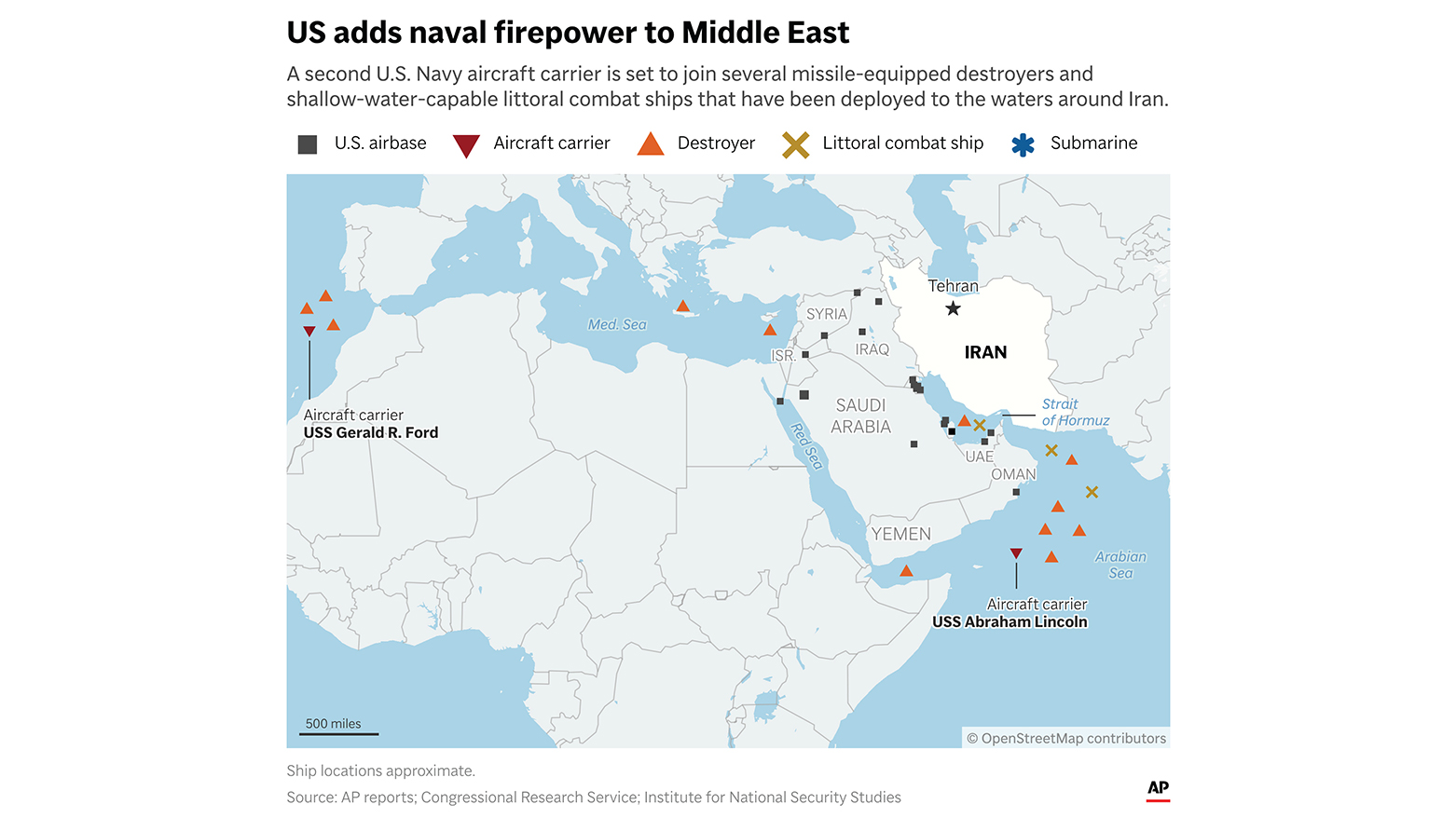
The Journal described the buildup as the largest concentration of U.S. air power in the Middle East since the 2003 invasion of Iraq.
Separately, The Washington Post reported that the Trump administration “appears ready to launch an extended military assault on Iran,” citing current and former U.S. officials. The report said the Pentagon has been assembling a strike force for weeks and that the arrival of the USS Gerald R. Ford and accompanying warships would make an attack possible within days.
The Washington Post reported that President Trump, speaking at an event in Washington, said: “Maybe we’re going to make a deal. Maybe not,” and added that developments could become clear within “10 to 15 days.”
The newspaper also reported that Trump’s top national security advisors met in the Situation Room to discuss Iran and that U.S. forces deployed to the region are expected to be fully in place by mid-March, according to a U.S. official familiar with the issue.
The Washington Post further noted that the military buildup coincides with recent meetings between U.S. and Iranian officials aimed at negotiating changes to Tehran’s nuclear program. White House press secretary Karoline Leavitt was quoted as saying that the two sides had “made a little bit of progress” but were still “very far apart on some issues.”
In his letter, Iravani emphasized that the Security Council “must act immediately and before it is too late” and must not allow “the threat to use force and the commission of acts of aggression to be normalized, legitimized, or viewed as an acceptable political norm.”
He reiterated that Iran does not seek war but would exercise its right to self-defense under Article 51 of the U.N. Charter if attacked.