Eastern Kurdistan Villages Adopt Kurdish-Language Signage
The expansion of Kurdish-language street and alley signage continues to advance in Eastern Kurdistan, with Chalane village at the forefront of the initiative.
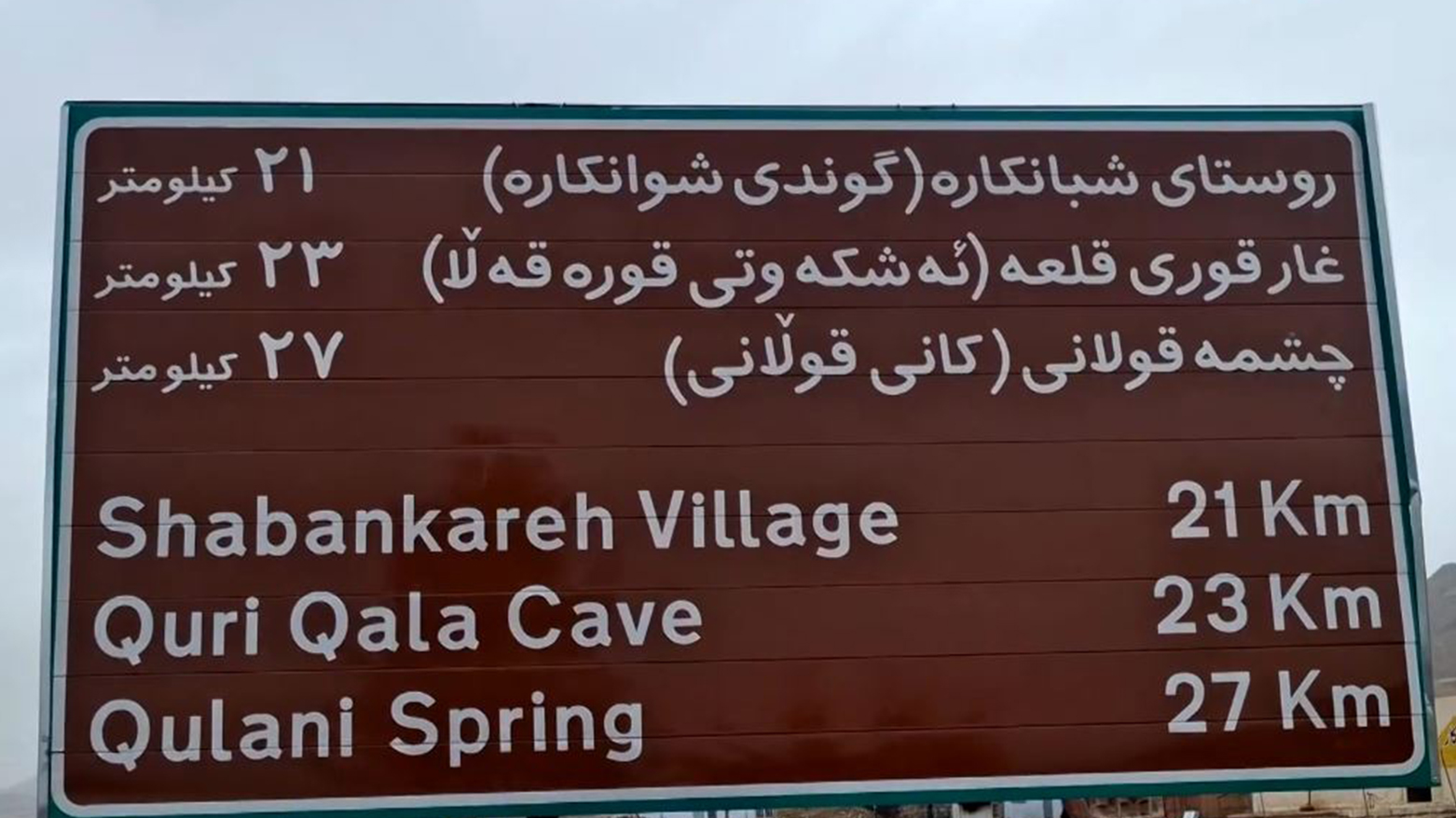
ERBIL (Kurdistan24) - Cities and villages across Eastern Kurdistan (Northwestern Iran) are increasingly incorporating the Kurdish language into public signage, marking a visible expansion of cultural identity in both urban and rural areas. Municipal authorities and local communities have begun naming streets and alleys in Kurdish, while explanatory signs have been installed to guide residents and visitors.
The village of Chalane (or çlanê in Kurdish), part of Ravansar city in Kermanshah province, became the first rural locality in the province to implement the project. Local authorities and residents collaboratively named all the alleys in Kurdish and installed corresponding signs.
Osman Valizadeh, who has served as the village head (Mukhtar) for 12 years, expressed support for the initiative, encouraging other villages to adopt similar measures.
Valizadeh said, “My call to all villages is to use the Kurdish language at least in naming their alleys. We are Kurds, and using our mother tongue is a natural matter that does not conflict with our respect for other languages; rather, it is an embodiment of our identity.”
Chalane , located within the historical Hawraman region, has a settlement history dating to before the Sassanid Empire. The village, with roughly 60 houses and around 200 residents, is a frequent tourist destination during the spring and summer seasons. Residents widely welcomed the decision to use Kurdish in public signage.
Local community members emphasized that the selection of names drew from natural and cultural landmarks.
Mohammad Amin Alikhani, a village resident, said, “In the naming process, we relied on natural and heritage landmarks linked to our memory. There are alleys named after ancient springs such as Kanî Tawg, Kanî Piyawan [Men’s Spring], Kanî Jinan [Women’s Spring], Kanî Hamî. We also gave the name Nizar to one of the mountain slopes shaded by waterfalls where little sunlight reaches, which is a Kurdish term expressing the nature of the place.”
Beyond Chalane , Kermanshah province has recently implemented Kurdish-language traffic guidance on highways connecting cities, supplementing the existing Persian signs. The Department of Roads and Transport introduced these bilingual signs quietly, but citizens reported broad approval, citing enhanced visibility of Kurdish heritage and cultural identity in public spaces.
Officials in several municipal councils had already initiated similar programs in urban areas years ago, gradually normalizing Kurdish language presence in official signage. The recent extension to rural villages represents a widening of the effort to integrate the language into daily life, reinforcing local identity and community engagement.
The signage initiative aligns with a broader trend among Eastern Kurdistan communities to preserve linguistic and cultural heritage. Villagers and officials have highlighted that these efforts coexist with respect for other languages, emphasizing identity reinforcement without exclusion.
Community leaders have also underscored the importance of visible language markers for cultural continuity and tourism.
Chalane’s status as a historical village with tourist appeal has amplified the perceived value of Kurdish-language signage, both for local residents and visitors. Residents involved in the project noted that linking place names to historical and natural features strengthens collective memory and fosters a sense of rootedness.
In addition to cultural and social considerations, practical elements informed the signage choices. Alley and street names reflect geographic features, water sources, and shaded mountain slopes, providing functional orientation alongside cultural expression. This dual purpose has been cited by villagers as enhancing everyday navigation while reinforcing heritage.
The Department of Roads and Transport in Kermanshah province said in a release that the bilingual highway signage aimed to support local communities’ language use and accessibility for Kurdish-speaking residents and travelers. Officials emphasized that the initiative was conducted as part of routine infrastructure updates, without formal publicity campaigns.
While the initiative began in cities, its adoption in villages like Chalane illustrates growing local engagement in cultural preservation. Residents and village authorities expressed hope that similar measures will spread to other provinces across Eastern Kurdistan, extending the visibility of the Kurdish language in public spaces throughout the region.
Local leaders and municipal councils continue to encourage neighboring villages to implement comparable projects, noting that these efforts foster community participation and reinforce identity. The program also underscores the collaboration between residents and local authorities in shaping shared public spaces.
The installation of Kurdish-language signage, both in urban highways and rural alleys, reflects a broader commitment to linguistic diversity in Eastern Kurdistan. Residents, officials, and travelers have responded positively, indicating the initiative has met with general acceptance and appreciation across local populations.
The village of Chalane remains the first rural example in Kermanshah province of fully adopting Kurdish signage for alleys and streets. Officials and residents said they hope this initiative serves as a model for other villages in the province and the wider Eastern Kurdistan region.
The project marks a notable step in the public use of Kurdish, combining cultural preservation, practical orientation, and community involvement in local governance and daily life.
Kurdistan24's reporter Kamil Bokani contributed to this report.