Iran Declares EU Naval and Air Forces ‘Terrorist’ in Retaliation for IRGC Blacklisting
Tehran Invokes 2019 Reciprocity Law After European States Label Part of Its Armed Forces a Terrorist Entity
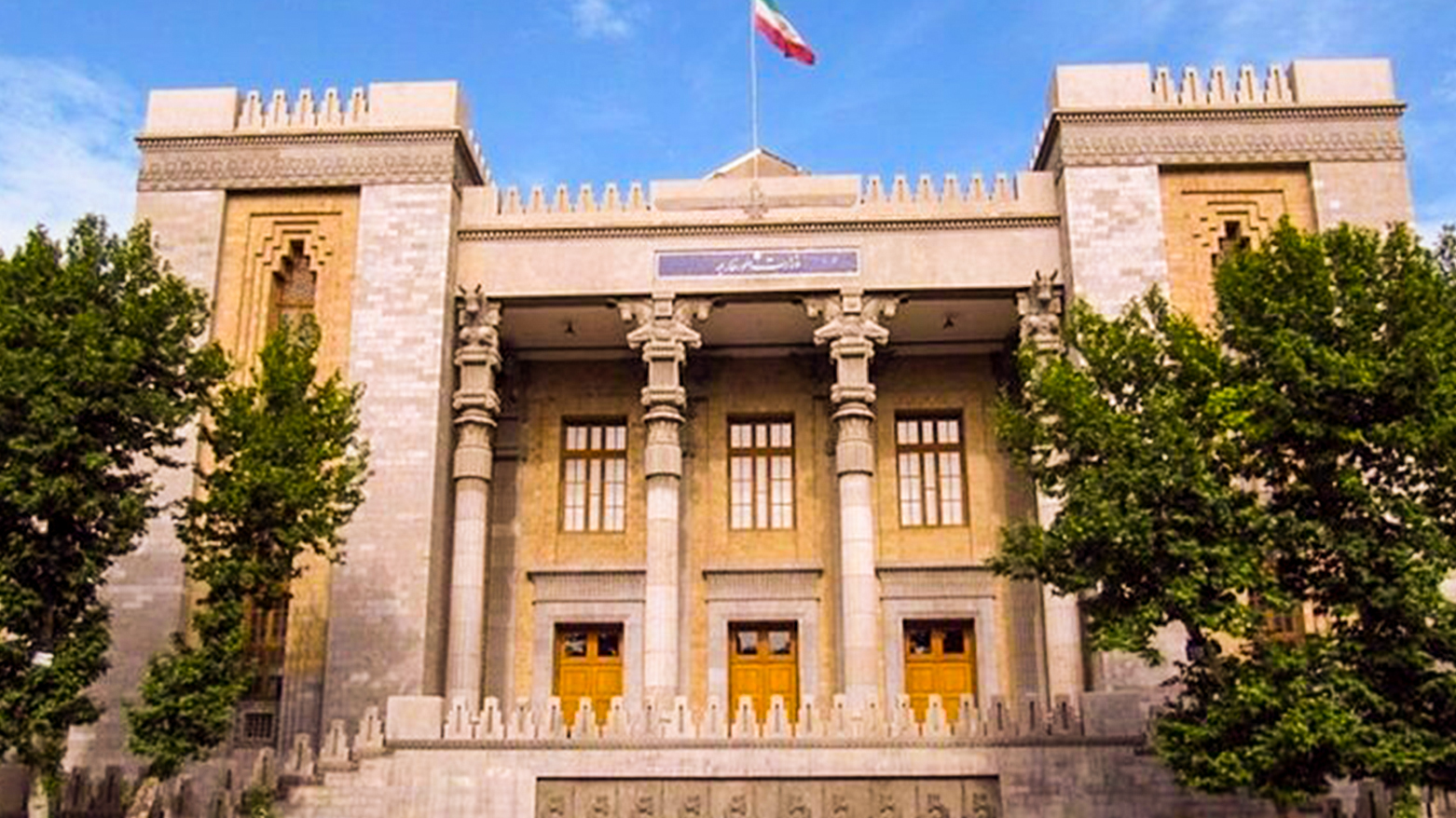
ERBIL (Kurdistan24) — Iran’s Foreign Ministry announced reciprocal measures against European Union member states after what it described as an “illegal and unjustifiable” decision by the bloc to designate a part of Iran’s armed forces as a terrorist organization.
In a statement issued late on Saturday, the ministry said the move came in response to a Feb. 19 decision by EU member states to blacklist the Islamic Revolutionary Guard Corps (IRGC), which Tehran describes as one of the principal pillars of the country’s official armed forces.
The statement argued that the EU’s decision contravenes the fundamental principles of the United Nations Charter and international law. Invoking the principle of reciprocity, Tehran said it would apply Article 7 of its 2019 “Law on Reciprocal Action in Response to the Designation of the Islamic Revolution Guard Corps as a Terrorist Organization by the US.”
Under that legislation, passed after the United States Department of State designated the IRGC as a Foreign Terrorist Organization in 2019, Iran is mandated to take reciprocal measures against countries that “in any way follow or support” Washington’s designation.
As a result, the Iranian government announced that the naval and air forces of all European Union member states are now considered subject to the 2019 law and its provisions, including Article 4. Within that framework, Tehran declared them “terrorist organizations.”
The IRGC, established after Iran’s 1979 Islamic Revolution, operates alongside the country’s conventional armed forces and wields significant military, economic, and political influence. Western governments have long accused the corps of supporting militant groups across the Middle East and of involvement in activities destabilizing the region.
The United States’ 2019 designation marked the first time Washington formally labeled part of another country’s official military as a terrorist organization. Tehran responded at the time by designating US Central Command (CENTCOM) as a terrorist entity.
Statement Regarding the Reciprocal Action in Response to the Illegal Decision of the #EU Member States to Label a Part of the Armed Forces of the Islamic Republic of Iran
— Foreign Ministry, Islamic Republic of Iran (@IRIMFA_EN) February 21, 2026
February 21, 2026
The Ministry of Foreign Affairs of the Islamic Republic of Iran, in response to the… https://t.co/oFEGDxSPxd
In recent years, tensions between Iran and European capitals have intensified over a range of issues, including Iran’s ballistic missile program, its regional activities, alleged drone transfers, and the stalled negotiations to revive the 2015 nuclear agreement, formally known as the Joint Comprehensive Plan of Action (JCPOA).
European powers—France, Germany, and the United Kingdom—were key signatories to the accord alongside Russia, China, and the United States.
While the European Union has imposed multiple rounds of sanctions on Iranian officials and entities, formally designating the IRGC as a terrorist organization represents a significant escalation, as it directly targets an official branch of Iran’s armed forces rather than individuals or affiliated groups.
Tehran’s reciprocal designation of EU naval and air forces is largely symbolic in practical terms but signals a further deterioration in diplomatic relations. Analysts note that the move could complicate maritime and aerial interactions in sensitive regions, including the Persian Gulf and surrounding waterways, where European forces periodically operate as part of international security missions.
The latest exchange underscores the widening rift between Iran and Europe at a time of heightened geopolitical volatility, with both sides now engaging in increasingly confrontational legal and diplomatic measures.