Arab and Islamic Countries Condemn U.S. Ambassador to Israel Over Remarks on West Bank
Arab and Islamic states, plus the GCC, Arab League, and OIC, condemned U.S. Ambassador Mike Huckabee’s remarks suggesting Israel could control Arab territories, calling them violations of international law and threats to regional sovereignty and stability.
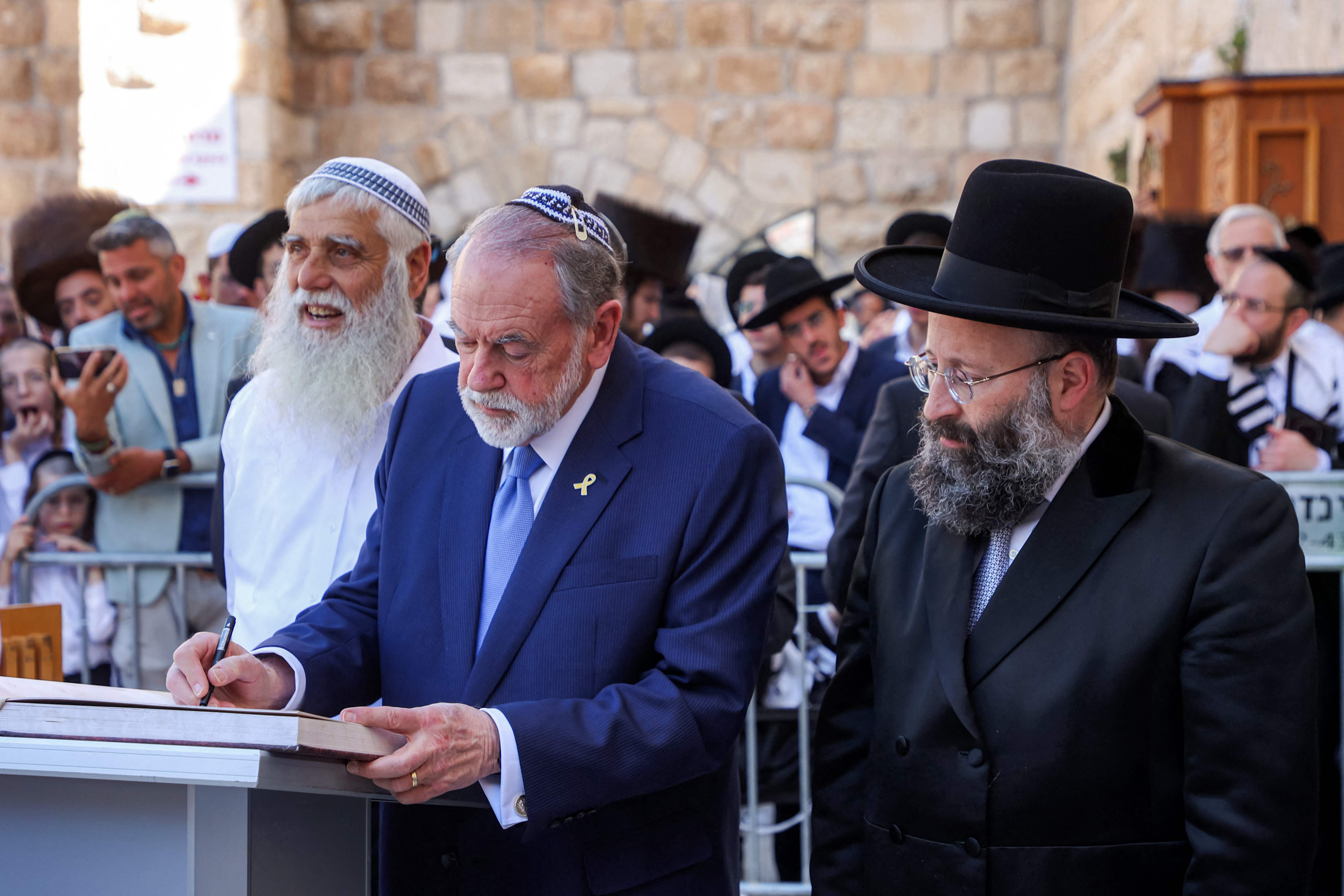
ERBIL (Kurdistan24) - Fourteen Arab and Islamic countries, along with the secretariats of the Gulf Cooperation Council, the League of Arab States, and the Organization of Islamic Cooperation, issued coordinated statements on Feb. 21 and 22 condemning remarks by the United States Ambassador to Israel indicating that it would be acceptable for Israel to exercise control over territories belonging to Arab states, including the occupied West Bank. Iraq separately issued its own statement condemning the comments.
In a statement released in Doha on Feb. 21, the Ministry of Foreign Affairs of the State of Qatar said the foreign ministries of Qatar, Egypt, Jordan, the United Arab Emirates, Indonesia, Pakistan, Türkiye, Saudi Arabia, Kuwait, Oman, Bahrain, Lebanon, Syria, and Palestine, together with the secretariats of the three regional organizations, expressed “strong condemnation and profound concern” regarding the ambassador’s statements.
A parallel statement issued on Feb. 22 by the Ministry of Foreign Affairs of Saudi Arabia reiterated the same position and listed the same countries and organizations as signatories.
According to the joint statements, the ambassador indicated that it would be acceptable for Israel to exercise control over territories belonging to Arab states, including the occupied West Bank. The ministries said such remarks constitute “a flagrant violation of the principles of international law and the Charter of the United Nations,” and described them as posing “a grave threat to the security and stability of the region.”
They affirmed their countries’ “categorical rejection” of what they described as “dangerous and inflammatory remarks.”
The statements further said the ambassador’s comments directly contradict the vision put forward by U.S. President Donald J. Trump, as well as the Comprehensive Plan to End the Gaza Conflict. According to the statements, both frameworks are based on containing escalation and creating a political horizon for a comprehensive settlement that ensures the Palestinian people have their own independent state.
The ministries underscored that the plan is grounded in promoting tolerance and peaceful coexistence, and said that remarks seeking to legitimize control over the lands of others undermine these objectives, fuel tensions, and constitute incitement rather than advancing peace.
They reaffirmed that Israel has “no sovereignty whatsoever” over the Occupied Palestinian Territory or any other occupied Arab lands. The signatories reiterated their firm rejection of any attempts to annex the West Bank or to separate it from the Gaza Strip, and expressed strong opposition to the expansion of settlement activities in the Occupied Palestinian Territory.
The joint statements also expressed categorical rejection of any threat to the sovereignty of Arab states and warned that the continuation of what they described as Israel’s expansionist policies and unlawful measures would inflame violence and conflict in the region and undermine prospects for peace. They called for an end to what they termed “incendiary statements.”
In a separate press statement dated Feb. 21, the Ministry of Foreign Affairs of the Republic of Iraq expressed “strong condemnation and profound denunciation” of the ambassador’s remarks, which it said included suggestions that the Israeli entity’s control over the entire Middle East could be considered acceptable.
The Iraqi ministry stated that such comments constitute “a serious transgression” and are inconsistent with the principles of international law and the Charter of the United Nations. It said the remarks represent “an infringement upon the sovereignty, independence, and territorial integrity of States,” and carry negative implications for the security and stability of the region.
According to the Iraqi statement, Baghdad reaffirmed its steadfast position in support of the sovereignty of states and its rejection of policies or practices based on domination or the imposition of a fait accompli. The ministry stressed the necessity of respecting the rules of international law in a manner that contributes to consolidating regional peace and security.
U.S. Ambassador to Israel Mike Huckabee made the comments during an appearance on the podcast of commentator Tucker Carlson.
In an episode released Friday, Carlson asked about a biblical verse sometimes interpreted as saying that Israel is entitled to land between the Nile River in Egypt and the Euphrates in Syria and Iraq. In response, Huckabee said, “It would be fine if they took it all.” When pressed, he added that Israel was “not asking to take all of that,” and described his earlier comment as “somewhat of a hyperbolic statement.”
Several Arab countries issued individual responses in addition to the joint statements. Saudi Arabia described the remarks as “reckless” and “irresponsible,” while Jordan said they amounted to “an assault on the sovereignty of the countries of the region.”
Kuwait described the comments as a “flagrant violation of the principles of international law,” and Oman said they “threatened the prospects for peace” and stability in the region. Egypt’s foreign ministry reaffirmed “that Israel has no sovereignty over the occupied Palestinian territory or any other Arab lands.”
The Palestinian Authority said on X that the ambassador’s words “contradict U.S. President Donald Trump’s rejection of (Israel) annexing the West Bank.”
On Saturday, Huckabee published two posts on X clarifying his position on other topics discussed in the interview, but did not address his remark about the biblical verse.
The speaker of the Israeli parliament, Amir Ohana, praised Huckabee on X for his general pro-Israel stance in the interview and accused Carlson of “falsehoods and manipulations.”
The coordinated statements by the 14 countries and three regional organizations, along with Iraq’s separate declaration, centered on condemning the ambassador’s remarks and reaffirming their positions on sovereignty, international law, and Palestinian self-determination.