U.S. Envoy Says Trump 'Curious' Why Iran Has Not Yielded Under Military Pressure
U.S. Special Envoy Steve Witkoff said Trump remains curious why Iran has not met American demands to abandon nuclear ambitions, underscoring the stalemate in ongoing negotiations.
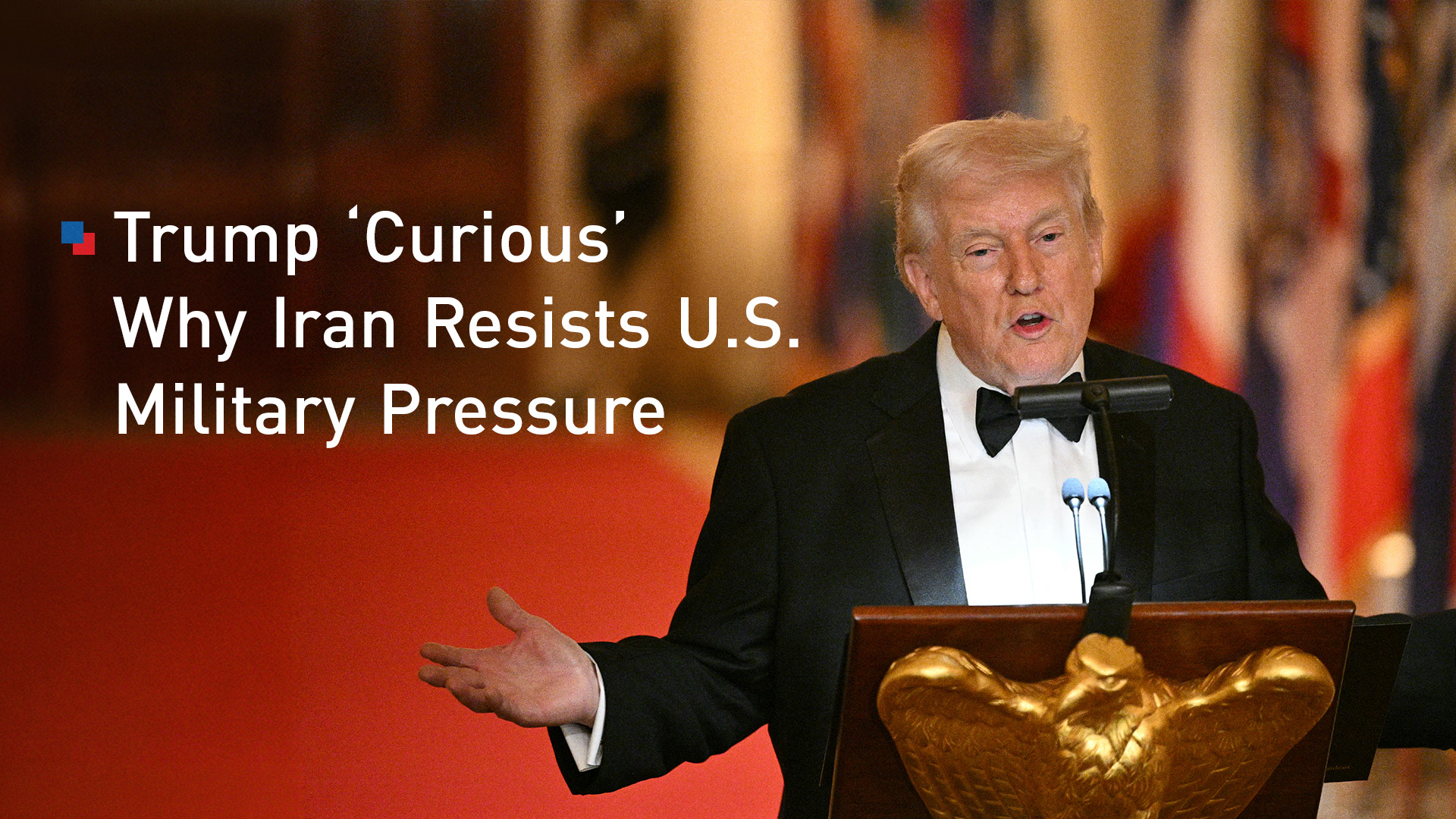
ERBIL (Kurdistan24) - U.S. Special Envoy Steve Witkoff said Thursday that President Donald Trump is “curious” about why Iran has not complied with American demands to abandon its nuclear weapons ambitions, highlighting the continued stalemate in negotiations over Tehran’s nuclear program. Speaking in an interview with Fox News, Witkoff described the president as frustrated by what he characterized as Tehran’s resistance despite extensive U.S. military presence in the region.
“The president asked me that this morning, and he's—I don't want to use the word frustrated. It's almost because he understands he's got plenty of alternatives. But it's curious. He's curious as to why they haven't—I don't want to use the word capitulated, but why they haven't capitulated. Why, under this sort of pressure, with the amount of sea power, naval power that we have over there, why they haven't come to us and said, we profess that we don't want a weapon, so here's what we're prepared to do. And yet it's hard to sort of get them to that place,” Witkoff said.
Witkoff’s remarks came amid a week of U.S.-Iran talks in Geneva, where negotiators pressed Tehran to dismantle its nuclear program.
The Trump administration has set strict red lines, including zero enrichment of uranium and the return of nuclear material, emphasizing that Iran’s reported enrichment levels—approaching 60 percent—could enable industrial-grade bomb-making.
Iran’s leadership, however, has rejected the notion of abandoning its nuclear ambitions, asserting its right to maintain a civilian nuclear program.
President Masoud Pezeshkian said Saturday that Iran would “never bow and we will not surrender,” reaffirming the country’s commitment to resist external pressure while emphasizing domestic reform and unity. Pezeshkian highlighted economic challenges, including shortages and sanctions, but underscored that cohesion and collective determination would enable Iran to withstand external pressures.
During the Geneva discussions, U.S. officials, including Witkoff and Jared Kushner, asked Iranian negotiators to submit a detailed plan addressing all U.S. concerns regarding the nuclear program.
Iranian Foreign Minister Abbas Araghchi indicated that Tehran’s proposal would be finalized within days, emphasizing that any plan would ensure the nuclear program remains peaceful and would include confidence-building measures in exchange for sanctions relief. Araghchi denied that Iran had been asked to agree to zero enrichment, stating instead that the discussions focused on guaranteeing the program’s peaceful nature.
A senior U.S. official told Axios that the administration is prepared to consider a proposal allowing “small, token enrichment” if it demonstrates no path to a nuclear weapon.
The official emphasized that any such offer must be comprehensive and persuasive to skeptics within the U.S. government and the region. “President Trump will be ready to accept a deal that would be substantive and that he can sell politically at home. If the Iranians want to prevent an attack they should give us an offer we can't refuse. The Iranians keep missing the window. If they play games there won't be a lot of patience,” the official said.
While diplomatic channels remain active, the United States has also conducted significant military preparations. Two aircraft carriers and hundreds of warplanes have been deployed in proximity to Iran, and Trump has been presented with multiple military options, including targeting high-ranking officials within the regime.
Some advisers advocate patience to allow the U.S. military buildup to increase leverage, while others encourage decisive action. One senior adviser told Axios that Trump “hasn't decided to strike yet… He might never do it. He might wake up tomorrow and say, 'That's it.'” Another senior adviser noted that the president is keeping all options open and could authorize an attack “at any moment.”
According to Axios, Senator Lindsey Graham (R-S.C.), a close ally of Trump, has expressed concern that several advisers are urging the president not to conduct a strike. Graham told Axios that he believes the president should ignore those voices, emphasizing the potential for “historic change” in Iran and warning that opposition to decisive action is growing louder.
Graham recently visited the Middle East and met with leaders from Israel, the UAE, and Saudi Arabia to discuss Iran, and he said he understands concerns over major military operations given past entanglements. “However, the voices who counsel against getting entangled seem to ignore the consequences of letting evil go unchecked,” Graham said. He added that Trump will be held responsible for any decisions on Iran, and noted that history will record where he stood on the issue.
Iran’s officials have consistently framed any potential U.S. strike as a threat to national sovereignty. Ambassador Amir Saeid Iravani told the United Nations that Tehran “will not initiate any war” but would respond decisively and proportionately if subjected to military aggression. Iravani specifically cited the potential targeting of foreign bases in the region, warning that such sites would be considered legitimate targets if attacked.
U.S. lawmakers are simultaneously considering measures to limit unilateral action.
A bipartisan resolution in the Senate, filed by Senators Tim Kaine and Rand Paul, seeks to prevent the president from launching a military strike without congressional authorization. Similar efforts are underway in the House of Representatives.
Under the U.S. Constitution, Congress holds the authority to declare war, though presidents may conduct limited operations for national security purposes. Previous war powers resolutions have largely failed due to narrow Republican majorities.
International responses have further complicated potential military action. Reports indicate that U.K. Prime Minister Keir Starmer declined a U.S. request to use British air bases for potential strikes, citing international law concerns.
The British government emphasized its support for ongoing political processes between Washington and Tehran while refraining from commenting on operational matters. Russia has also remained engaged diplomatically, with Foreign Minister Sergey Lavrov speaking with Araghchi to reiterate support for a solution respecting Iran’s rights under the Nuclear Non-Proliferation Treaty.
Domestic pressures in Iran add an additional layer of complexity. Large-scale protests have occurred in recent months, with opposition groups claiming tens of thousands of casualties. Iranian authorities, including Araghchi, have disputed these figures, reporting 3,117 deaths during unrest from late December to early January. The administration has described the protests as initially peaceful but subsequently involving armed elements.
Despite these tensions, Witkoff emphasized that the president’s strategy remains one of firm red lines combined with a willingness to consider diplomatic solutions if Tehran presents a credible plan. He highlighted that U.S. military presence in the region, along with pressure from internal dissent, is intended to compel Iran to engage constructively in negotiations.
The Trump administration’s stance reflects a combination of deterrence, readiness for military action, and openness to narrowly defined diplomatic proposals.
The U.S. continues to signal that any Iranian plan must conclusively eliminate the possibility of weaponization while meeting stringent verification standards. Both sides are engaged in an ongoing process of exchanging proposals, with mediators from Oman and Qatar facilitating efforts to produce an agreement acceptable to Gulf states and Israel.
Negotiations are ongoing in Geneva, and both U.S. and Iranian officials have indicated that the window for constructive engagement is limited. Any proposed settlement would need to satisfy U.S. security requirements while providing Tehran assurances that its civilian nuclear program could continue under strict international supervision.