Syrian Druze Leaders Request Secession From Damascus Government
Sheikh Fadi Badriya said the Druze community has requested secession from the Damascus government to protect its safety and dignity, reflecting ongoing humanitarian and security concerns in southern Syria.
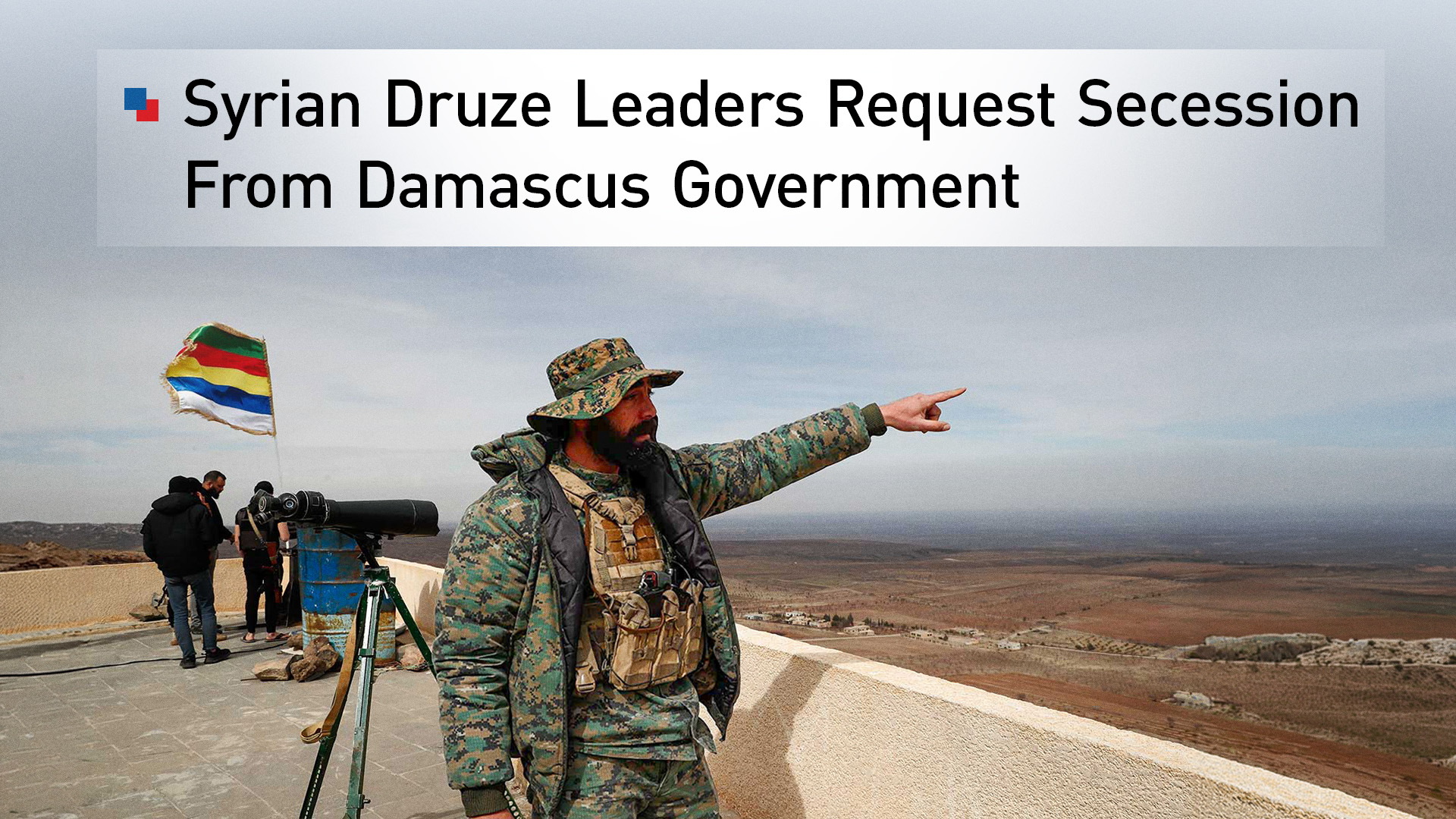
ERBIL (Kurdistan24) - Sheikh Fadi Badriya, a prominent Druze leader, said on Sunday that the Druze community in Syria has formally requested secession from the Damascus government, citing continued threats to their safety and a lack of reconciliation efforts. Speaking exclusively, Badriya asserted that the current administration, led by "al-Jolani" [al-Sharaa], has undermined Syria’s sovereignty and failed to protect minority populations.
“The current government is making no effort toward reconciliation or the reunification of Syria; on the contrary, some of those within the joints of the army and the government are still thinking about massacring the Druze,” Badriya said.
He emphasized that the Druze cannot continue to live under a government “whose only trade and profession is lying” and that the community has demanded secession to safeguard its dignity. “If it is not achieved through peace, we are prepared for war to obtain our rights, and we will not compromise in any way,” he added.
Badriya also addressed international relations, noting a cooperative relationship with the United States.
“Our relationship with America is very good. We warned America early on that bringing Jolani to power was a major mistake. Now, we have asked America and Israel to support our demands for secession and to assist the Druze of Sweida in achieving their rights,” he said.
He indicated that the Sweida region, where the Druze are concentrated, is currently calm, though surrounding areas remain unstable. The Druze leader also called for the return of all displaced persons to their ancestral homes.
The request for secession follows ongoing security and humanitarian concerns in Druze-majority areas of southern Syria.
Sheikh Mowafaq Tarif, the spiritual leader of the Druze in Israel, said in an interview with AFP that the community remains at risk seven months after clashes erupted between Druze fighters and Sunni Bedouin tribes last July. Tarif reported that Druze areas are still “completely encircled,” with restrictions on humanitarian aid deliveries and limited access to essential services.
Tarif said more than 120,000 residents remain displaced, dozens of villages remain under outside control, and hundreds of Druze are being held captive, though these figures could not be independently verified.
He also called for expanded freedom of movement for Druze across the region, including access to holy sites in neighboring countries and greater work opportunities, as economic hardship continues.
Violence last year reportedly resulted in significant casualties.
The Syrian Observatory for Human Rights reported that more than 2,000 people were killed, including hundreds of Druze civilians. The United Nations Office for the Coordination of Humanitarian Affairs estimated that approximately 187,000 people were displaced. Despite a ceasefire reached last summer, access to the Druze-majority province of Sweida remains limited, according to Tarif.
Tensions between the Druze and the Damascus government are compounded by perceptions of political marginalization and persistent security threats. Sheikh Badriya accused the authorities of targeting all ethnicities and ideologies and highlighted efforts by the community to document abuses.
“Yes, after these things happened and were imposed on us, we were forced to take a choice based on their prior calculations—knowing that the Druze value their dignity highly. If they want to destroy Syria, they use the dignity of the Druze as a convenient excuse. When they attacked us this way, we demanded separation,” he said.
Badriya detailed that the Druze community coordinated with U.S. political channels and received assurances from Israel through U.S. mediation to prevent attacks against Druze populations in southern Syria.
“We made our request to the United States, and the guarantor was Israel through the U.S. There is no direct link with Israel; rather, through the United States, Israel provided a guarantee not to attack the Druze in the South,” he said.
Local Druze authorities continue to coordinate humanitarian and administrative efforts from neighboring areas. Sheikh Tarif said operations rooms established in Julis are providing assistance for displaced Syrians and monitoring conditions within Druze-majority areas.
These initiatives aim to alleviate displacement and support the return of residents to their communities.
The clashes between Druze fighters and Sunni Bedouin tribes, along with government interventions, contributed to a protracted humanitarian crisis. Observers and monitors accused government-backed forces of siding against Druze factions during the fighting.
According to the sources, despite military and ceasefire efforts, villages remain under outside control, hundreds of civilians are reportedly detained, and humanitarian aid delivery continues to face significant restrictions.
Badriya stressed that the community’s demand for secession is non-negotiable.
“We do not harmonize with this environment that struck Islam and the reality of Islam and killed in the name of Islam. For us, regarding this oppressive group in power—there is no forgiveness, no handshakes, and no reconciliation,” he said.
He described the community’s steadfastness as its primary means of defense, emphasizing that the Druze intend to govern themselves in a manner that preserves dignity.
He also appealed to international actors to recognize the humanitarian and security challenges faced by the Druze. Badriya noted that engagement with U.S. officials has helped present the community’s grievances and illustrate the scale of the crisis beyond simplistic narratives.
“A prominent figure in Congress spoke with us personally and emailed us because they were interested. They told us literally that they hadn’t seen these big concerns and many problems in this light before,” he said.
Efforts by the Druze community to secure international guarantees are situated within broader regional dynamics, including recent Israeli-Syrian discussions under U.S. facilitation to establish an intelligence-sharing mechanism. While Sweida itself remains stable, surrounding areas’ instability underlines the continuing challenges for the Druze population, as well as the importance of external engagement to prevent further escalation.
The combination of displacement, restricted access, and ongoing security threats underscores the precarious situation of the Druze in southern Syria. Sheikh Badriya’s public demand for secession marks a formal assertion of the community’s intent to achieve self-governance in response to perceived threats from the Damascus government and regional instability.