North Korea Re-elects Kim Jong Un as Party Chief, Highlights Nuclear Advancements at Congress
North Korea’s ruling party has re-elected Kim Jong Un as general secretary at its national congress, highlighting nuclear advancements and military pledges of loyalty, according to state media.
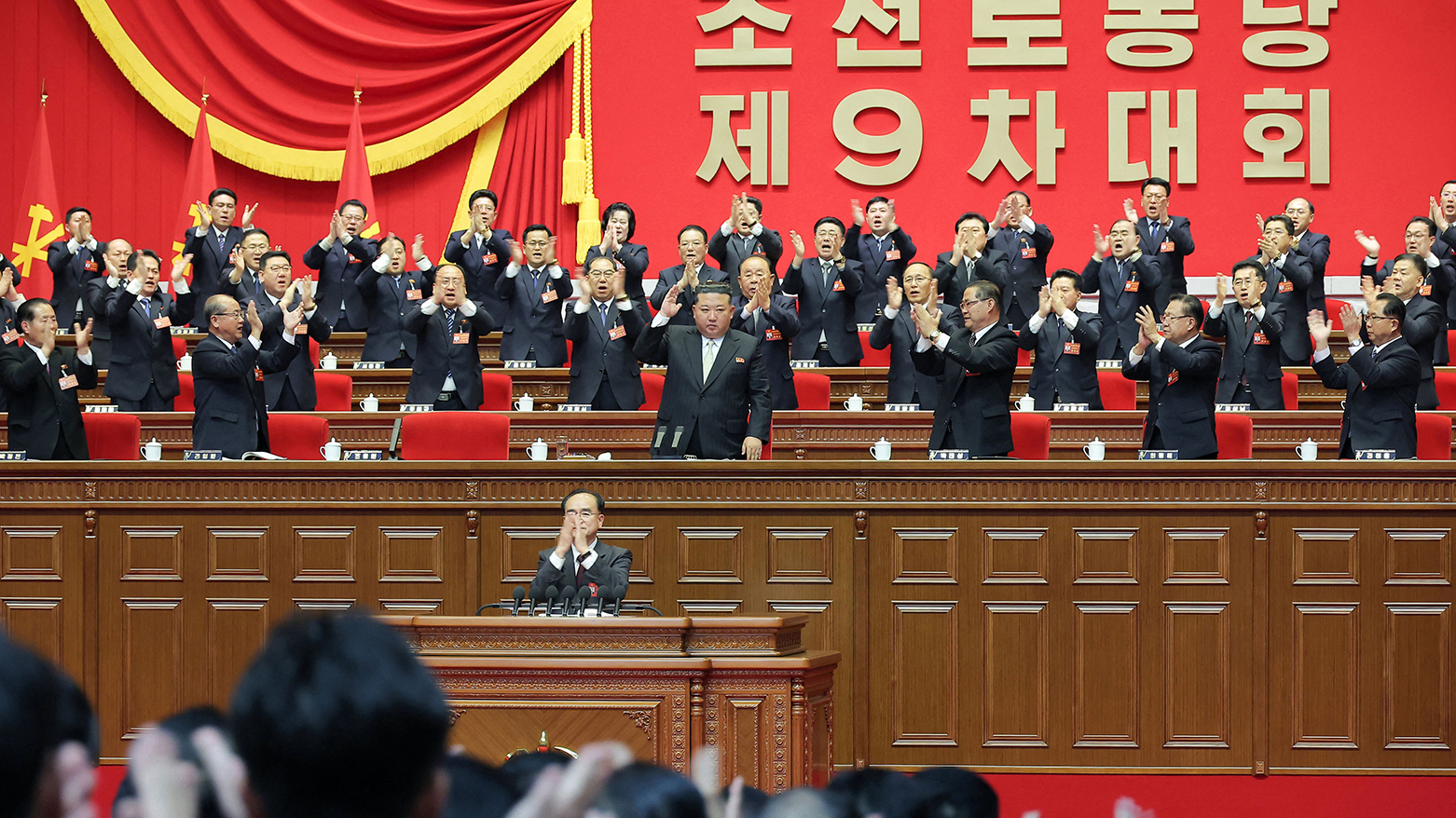
ERBIL (Kurdistan24) - North Korea’s ruling Workers’ Party has re-elected Kim Jong Un as general secretary during a rare national congress in Pyongyang, while touting advances in the country’s nuclear capabilities, state media reported Monday.
According to the Korean Central News Agency (KCNA), thousands of party elites gathered in the capital for the once-in-five-years congress, which directs state policy on issues ranging from diplomacy to war planning. Delegates on Sunday endorsed Kim’s continued leadership as general secretary, the top post in the ruling party.
KCNA reported that senior military officials made a “pledge of loyalty” to Kim during the session, and delegates rubber-stamped his re-election. The congress singled out Kim’s efforts to strengthen national defense, particularly through what it described as radical improvements to North Korea’s nuclear forces.
“He has energetically led the work to turn the Korean People’s Army, the pivot of national defence and pillar of safeguarding peace, into an elite and powerful army,” a party statement carried by KCNA said.
“And thus (he has) built the revolutionary armed forces capable of coping with any threat of aggression on their own initiative and fully prepared for any form of war,” the statement added.
The congress is widely viewed as a central forum for outlining national priorities and consolidating leadership within the party. It is only the ninth time the Workers’ Party has convened such a congress during the decades-long rule of the Kim family. The gathering was shelved for years under Kim’s father, Kim Jong Il, before being revived in 2016.
State media coverage indicated that the congress placed emphasis on nuclear development as a cornerstone of national defense. Under Kim’s leadership, North Korea’s nuclear arsenal has undergone significant changes, according to AFP. The report noted that more than eight years have passed since the country’s last nuclear test, which triggered a man-made earthquake beneath the northern Hamyong mountains.
Since then, Pyongyang’s atomic scientists have worked to develop portable warheads capable of being mounted on long-range missiles, according to AFP. In the days leading up to the congress, Kim unveiled a battery of large nuclear-capable rocket launchers, state media reported.
Photographs released by state media showed dozens of launch vehicles arranged in rows on the plaza of Pyongyang’s House of Culture. The images formed part of the broader messaging surrounding the congress, which highlighted military readiness and technological capability.
The congress also drew international reactions. China’s President Xi Jinping hailed what he described as a “new chapter” in relations with North Korea following Kim’s re-election, according to AFP. The report noted that Kim had appeared alongside Xi and Russian President Vladimir Putin at a military parade in Beijing last year, a display described as a reflection of Kim’s elevated international profile.
The Workers’ Party congress offers one of the few public glimpses into North Korea’s internal political processes. Analysts closely monitor the proceedings, including seating arrangements and public appearances, for indications of shifts within the leadership hierarchy.
Particular attention has focused on the presence of Kim’s teenage daughter, Ju Ae. According to Seoul’s national intelligence service, Ju Ae has emerged as a potential heir apparent. Observers are examining official photographs and reports to determine her visibility and positioning during the congress.
At the previous party congress five years ago, Kim declared that the United States was his country’s “biggest enemy,” according to AFP. There is interest in whether the current congress will signal any adjustment to that stance.
US President Donald Trump intensified efforts to engage Kim during a tour of Asia last year, stating he was “100 percent” open to a meeting, according to AFP. However, Kim has largely refrained from resuming top-level diplomatic dialogue, the report said.
The current congress is expected to span several days. AFP reported that Kim is anticipated to outline the next phase of North Korea’s nuclear weapons program during the gathering, though specific details have not yet been disclosed in state media coverage.
The re-election of Kim as general secretary reaffirms his position at the apex of North Korea’s political structure. The Workers’ Party directs national policy, and its congress serves as the principal venue for articulating strategic objectives.
KCNA’s coverage emphasized loyalty within the armed forces and the party’s commitment to strengthening defense capabilities. The statements carried by state media framed nuclear advancements as central to safeguarding national sovereignty and preparing for potential conflict.
The scale of the congress, including the attendance of thousands of delegates in Pyongyang, underscores its institutional significance within North Korea’s political calendar. The event occurs once every five years and is regarded as a formal mechanism for endorsing leadership and policy direction.
China’s public message following Kim’s re-election signals continued diplomatic engagement between Beijing and Pyongyang. AFP reported that Xi’s remarks described the bilateral relationship as entering a new phase.
North Korea’s last nuclear test took place more than eight years ago, according to AFP. Since then, the country has focused on advancing its weapons technology, including the development of long-range delivery systems and portable warheads.
The unveiling of new nuclear-capable rocket launchers shortly before the congress aligns with the party’s emphasis on military readiness. State media descriptions characterized the equipment as part of broader efforts to enhance national defense.
Kim’s re-election as general secretary was presented by KCNA as unanimous, with delegates endorsing his leadership and military officials pledging loyalty. The party’s statement credited him with strengthening the armed forces and building capabilities to address “any threat of aggression.”