Trump Denies Reports of Military Dissent Over Iran, Says Decision Rests Solely With Him
U.S. President Defends General Daniel Caine, Signals Preference for Deal but Warns Tehran of ‘Very Bad Day’ if Talks Fail
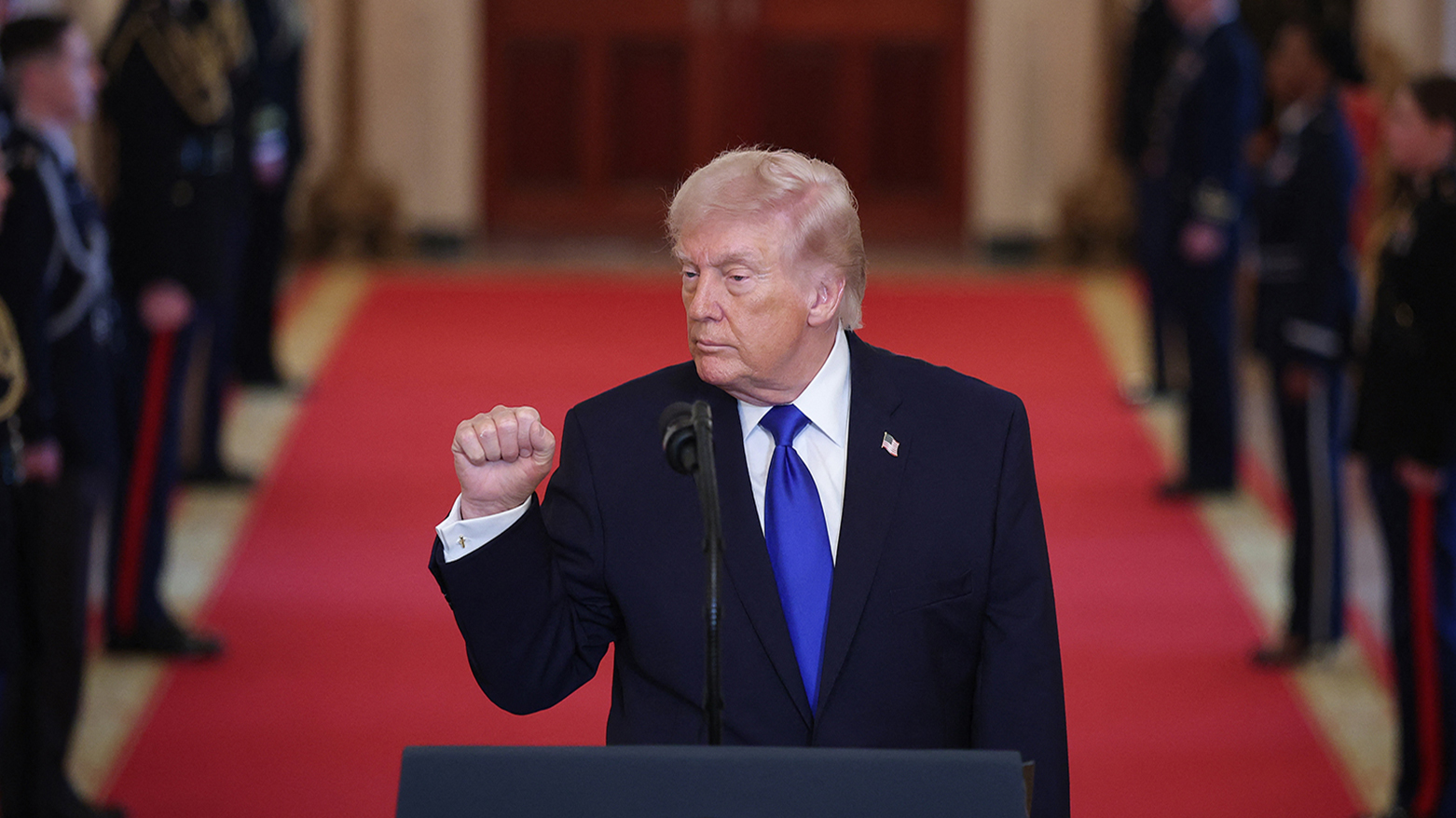
ERBIL (Kurdistan24) — U.S. President Donald Trump late Monday dismissed media reports suggesting internal military opposition to potential military action against Iran, insisting that the ultimate decision rests with him and defending a senior commander he described as fully aligned with his administration’s posture.
In a statement posted on his social media platform Truth Social, Trump rejected what he called “Fake News Media” claims that General Daniel Caine—whom he referred to as “Razin”—opposes going to war with Iran.
“The story does not attribute this vast wealth of knowledge to anyone, and is 100% incorrect,” Trump wrote, adding that while Caine, “like all of us,” would prefer to avoid war, he believes that if a military decision is made, it would be “something easily won.”
Trump asserted that Caine has deep familiarity with Iran due to his leadership of an operation dubbed “Midnight Hammer,” which the president described as an attack targeting Iran’s nuclear development infrastructure.
According to Trump, the facilities were “blown to smithereens by our Great B-2 Bombers,” referring to the long-range stealth aircraft operated by the U.S. Air Force.
Trump emphasized that he alone would determine whether the United States undertakes military action against Iran.
“I am the one who makes the decision,” he wrote, reiterating his preference for reaching a negotiated agreement rather than escalating to open conflict. However, he warned that if no deal is achieved, “it will be a very bad day for that Country and, very sadly, its people.”
Trump’s firm remarks came in response to a report by Axios published Monday, which said General Dan Caine, Chairman of the Joint Chiefs of Staff, had cautioned President Donald Trump that a military strike on Iran could carry significant risks, including the possibility of a prolonged and costly conflict.
Citing multiple sources familiar with internal deliberations, the report described divisions within the administration, with some officials advocating diplomacy while others favor military action. Vice President JD Vance has reportedly voiced concerns about the complexity and risks of a campaign, while Secretary of State Marco Rubio has not taken a firm public position.
Trump’s envoys, including Jared Kushner and Steve Witkoff, are expected to meet Iranian Foreign Minister Abbas Araghchi in Geneva again in what is viewed as a last diplomatic push before any potential escalation.
According to Axios, no final decision has been made, with one senior administration official stressing that all options remain under review and that the ultimate authority lies with the president.
The remarks also come amid heightened tensions between Washington and Tehran over Iran’s nuclear program, regional militia activity, and maritime security in the Gulf. Recent diplomatic contacts in Geneva have sought to revive a framework for de-escalation following the collapse of earlier nuclear understandings.
Hostility between the United States and Iran has persisted since the 1979 Islamic Revolution, with periodic escalations over sanctions, proxy conflicts, and nuclear development.
In 2018, during his first term, Trump withdrew the United States from the Joint Comprehensive Plan of Action—the landmark 2015 nuclear agreement negotiated under former President Barack Obama.
The withdrawal triggered a reimposition of sweeping U.S. sanctions under what Trump termed a “maximum pressure” campaign, prompting Iran to gradually scale back its compliance with nuclear restrictions.
Subsequent administrations have attempted indirect negotiations aimed at restoring or replacing the accord, but talks have faced repeated setbacks over enrichment levels, inspection mechanisms, and sanctions relief.
Military tensions have also periodically flared. In 2020, a U.S. drone strike ordered by Trump killed Iranian General Qasem Soleimani in Baghdad, pushing the two countries to the brink of open conflict. Since then, Iraq and the wider region have remained sensitive arenas for U.S.–Iran competition, including through armed groups aligned with Tehran.
Trump’s latest comments suggest that while he publicly favors diplomacy, his administration continues to frame military action as a viable and potentially decisive option. The reference to strategic bombers underscores the emphasis on U.S. long-range strike capability and air superiority.
As diplomatic channels in Europe attempt to maintain momentum, Trump’s statement signals that Washington’s posture remains contingent on the outcome of negotiations, while leaving little ambiguity about the potential consequences should talks collapse.