Second U.S. Convoy Begins Withdrawal From Qasrak Base in Northeastern Syria
The withdrawal from Qasrak is underway, with U.S. forces moving equipment to Iraq and the SDF taking over Tal Beydar base as part of the Syrian government agreement.
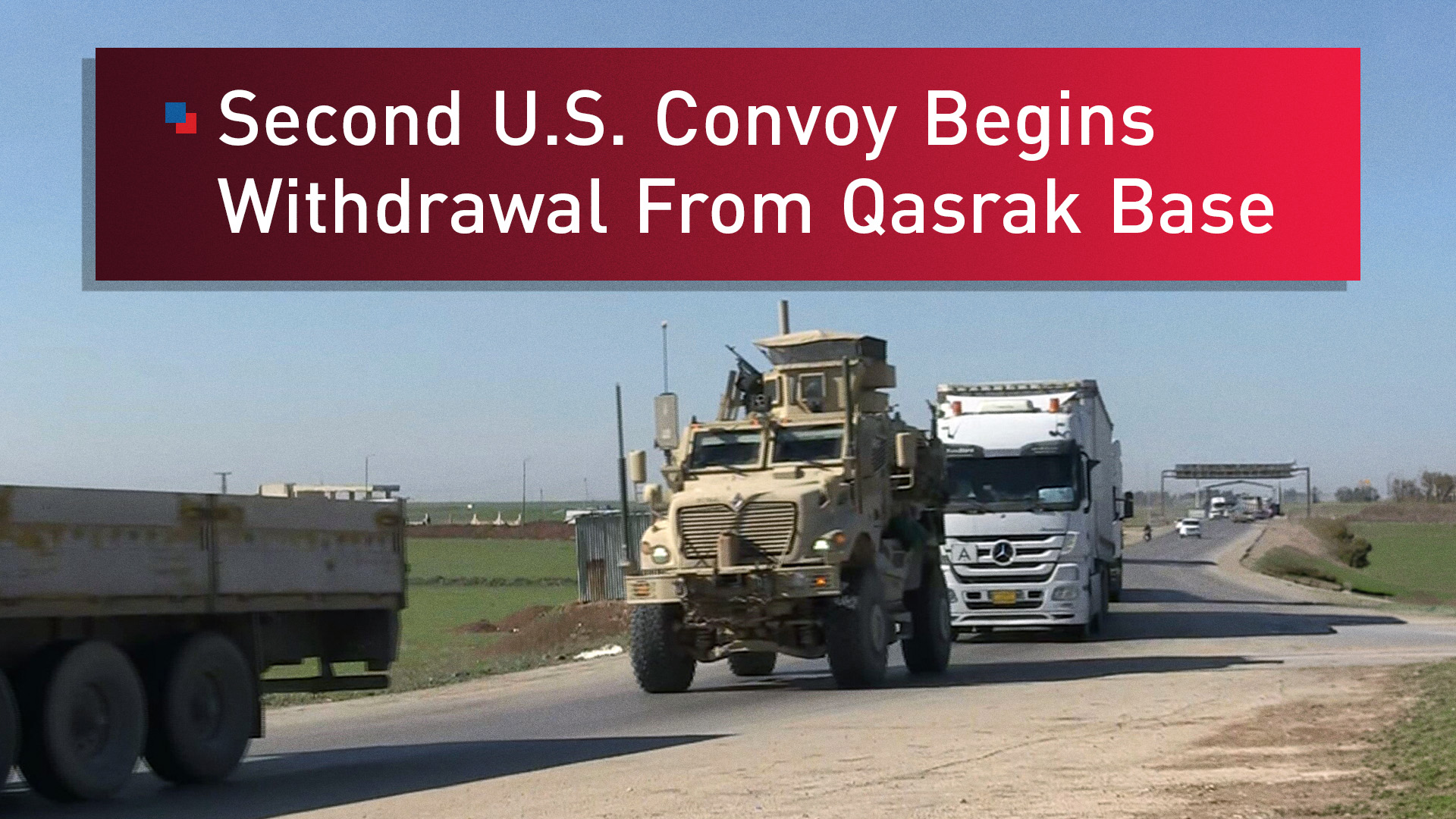
ERBIL (Kurdistan24) - The second convoy of U.S. forces has begun withdrawing from the Qasrak base in northeastern Syria, with the process expected to continue over several days, officials said. The withdrawal follows an agreement between the Syrian government and the Syrian Democratic Forces (SDF) on local area management, which has now entered its implementation phase.
According to information from Kurdistan24’s correspondent in Western Kurdistan (Rojava), the Qasrak withdrawal will take approximately 15 days due to the base’s size and the volume of military equipment stationed there. U.S. forces will maintain operations at the “Kharab al-Jir” base, located between Til Kochar and Rimelan, after the completion of the drawdown.
Dozens of U.S. military vehicles, including armored units and trucks carrying equipment, departed Qasrak heading toward the Iraqi border. “Apache” attack helicopters were observed accompanying the convoy to provide aerial protection and monitor the route, according to field reports.
Simultaneously, the SDF announced that the “Tal Beydar” base near Qasrak, previously vacated by U.S. forces, will be transferred to SDF control and designated as the headquarters for one of their brigades. The handover is part of the broader implementation of the agreement with the Syrian government regarding local governance and security arrangements in Kurdish-majority areas.
The Qasrak base has been one of the largest U.S. military installations in Rojava. U.S. forces had previously withdrawn from the Shaddadi base in Hasakah province, partially demolishing the facility before transferring the remaining infrastructure to the Syrian government. These movements follow statements by former U.S. President Donald Trump declaring that American troops would no longer maintain a presence on Syrian soil.
Background reporting indicates that the redeployment of forces from Qasrak to the Kurdistan Region of Iraq has already begun. Approximately 100 vehicles and associated personnel have been moved from the base, according to sources familiar with the operation. The transfer involved crossing the Al-Waleed border gate, where armored vehicles and personnel loaded military equipment in preparation for redeployment to northern Iraq.
The Syrian Observatory for Human Rights (SOHR) told Kurdistan24 that the movement appears to have been conducted unilaterally by U.S. forces, without formal announcements regarding the scale or purpose of the operation. It remains uncertain whether the redeployment constitutes a permanent repositioning or a temporary logistical rotation.
U.S. military presence in northeastern Syria has been ongoing since 2014, primarily to support the SDF in counter-ISIS operations. The forces have operated multiple bases in Hasakah and surrounding areas, providing training, intelligence, and logistical support to local units. The Kurdistan Region of Iraq has served as a strategic hub for U.S. operations in northern Iraq and Syria, enabling the rapid movement of troops and materiel across borders.
Officials emphasized that transfers such as the one from Qasrak are not unprecedented, though they reflect evolving operational priorities and regional security dynamics. The movements occur in parallel with continued SDF discussions with Damascus regarding governance, education, and security arrangements in Kurdish-majority areas, highlighting the complex interplay between international military operations and local administrative negotiations.
The redeployment from Qasrak involves a multi-stage logistical operation. Military sources reported that the base houses a significant volume of equipment, including armored vehicles, transport trucks, and other strategic assets, all of which require careful coordination during relocation. U.S. personnel have systematically loaded and secured equipment for transport to the Kurdistan Region, ensuring operational continuity while reducing the on-site footprint.
The handover of Tal Beydar base to the SDF represents a consolidation of local control as part of the agreement with the Syrian government. Under the terms of the implementation phase, some areas will be managed jointly or under government authority, while SDF forces are stationed in other designated sectors. The process formalizes prior arrangements for local security and administrative oversight, providing the SDF with a dedicated headquarters in Tal Beydar.
Observers noted that U.S. military withdrawals in Syria have typically been accompanied by careful coordination with both local forces and regional partners to minimize security risks. The Qasrak withdrawal aligns with prior patterns, including the drawdown from Shaddadi and subsequent transfer of the site to Syrian authorities.
The redeployment and local handovers are part of broader operational adjustments in northeastern Syria, influenced by regional security considerations and evolving diplomatic arrangements between the Syrian government and the SDF. These changes are intended to maintain stability while adjusting the footprint of international forces in the region.
The second convoy of U.S. forces is actively withdrawing from the Qasrak base in northeastern Syria over a multi-day operation, with armored convoys escorted by helicopters transporting equipment toward the Iraqi border, while the SDF assumes control of Tal Beydar as a new headquarters.