13 Killed in Deadly Traffic Accident in Anbar, Including Eight Iraqi Soldiers
Crash on Fallujah–Ramadi Highway Leaves Multiple Casualties Near Saqlawiyah
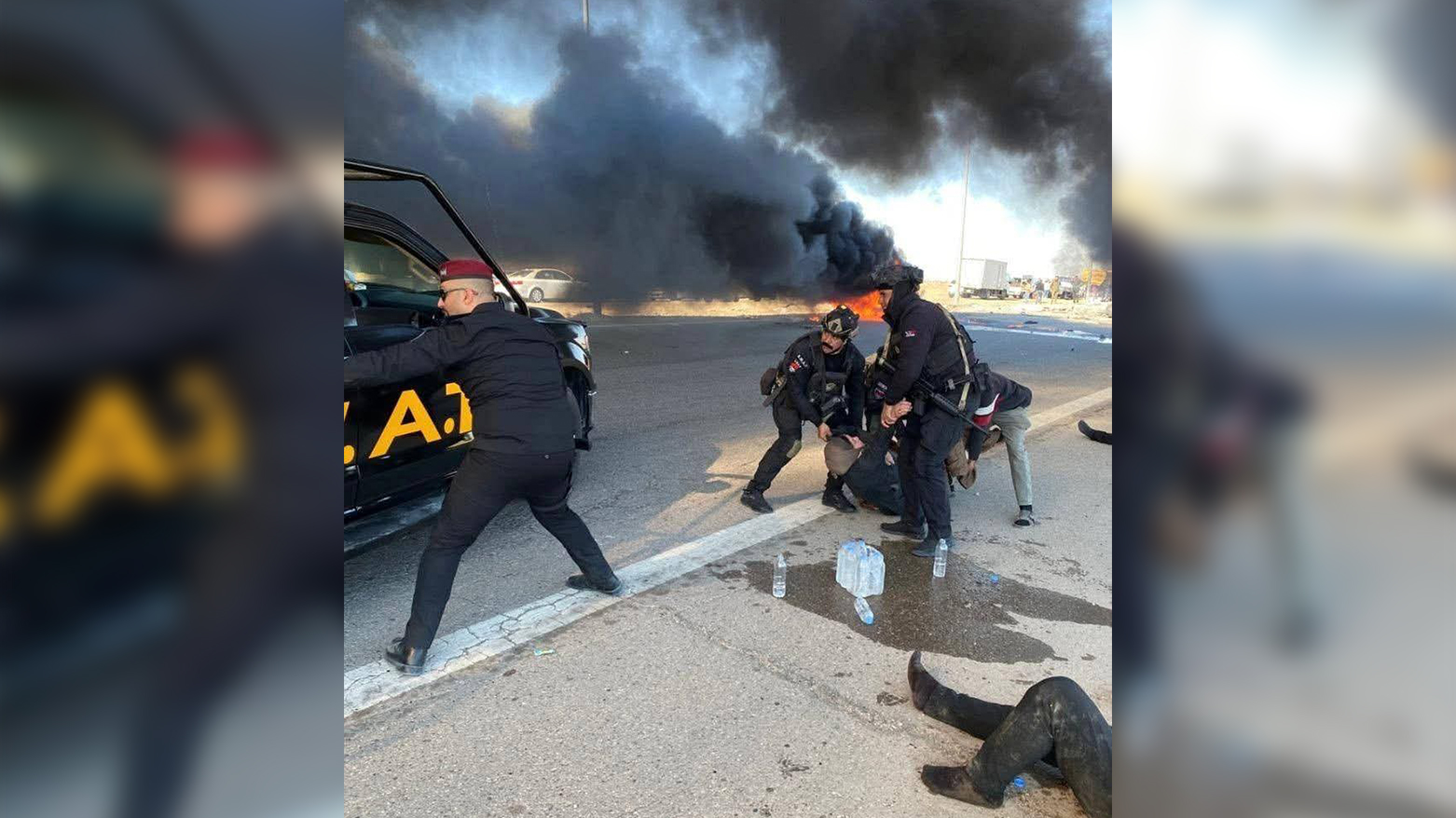
ERBIL (Kurdistan24) — At least 13 people were killed and several others injured in a severe traffic accident in Anbar Governorate on Wednesday morning, including eight soldiers from the Iraqi Army.
Omar Hikmat Mohammadi, head of Saqlawiyah sub-district, told Kurdistan24 that the deadly crash occurred early in the morning on the main highway connecting Fallujah and Ramadi.
“The accident happened near the Saqlawiyah area,” Mohammadi said, describing it as a serious collision that resulted in 13 fatalities and left several others wounded.
In a separate statement, Iraq’s Ministry of Defense confirmed that eight of those killed were Iraqi soldiers affiliated with the 27th Brigade of the 7th Division.
Videos circulated on social media showed vehicles engulfed in flames due to the severity of the crash. Security personnel were seen attempting to rescue victims from the wreckage and transport the injured to nearby hospitals.
Authorities have not yet released details regarding the exact cause of the accident, and an investigation is expected to determine the circumstances surrounding the incident.
Iraq continues to face a persistent road safety crisis driven by structural deficiencies in infrastructure, weak enforcement of traffic regulations, and limited public adherence to road safety standards.
Fatal traffic accidents are reported regularly across multiple provinces, underscoring systemic challenges that extend beyond isolated incidents.
A primary factor is the poor condition of road networks in many parts of the country. Highways and intercity roads often suffer from inadequate maintenance, damaged asphalt surfaces, insufficient lighting, missing guardrails, and poorly marked lanes.
In some areas, roads lack clear signage or warning systems, increasing risks, particularly at night or during adverse weather conditions. Rapid urban expansion and increased vehicle ownership have further strained infrastructure that was not originally designed to accommodate current traffic volumes.
In addition, enforcement of traffic laws remains inconsistent. Speed limits, vehicle safety inspections, and regulations governing heavy transport are frequently disregarded, while monitoring mechanisms such as speed cameras and routine patrols are very limited in scope.
Overloaded trucks, unlicensed drivers, and vehicles lacking basic safety compliance continue to operate on public roads in the Iraqi provinces. The absence of systematic penalties and sustained oversight contributes to a culture of impunity.
Equally significant is the limited public awareness regarding road safety practices. Experts argue that insufficient driver education, inadequate licensing procedures, and weak integration of traffic safety into school curricula have contributed to risky behaviors.
Common violations include excessive speeding, failure to use seat belts, distracted driving, and unsafe overtaking on high-speed highways.
The cumulative effect of deteriorating infrastructure, weak institutional enforcement, and gaps in civic awareness has resulted in a high annual toll of traffic-related deaths and injuries.
Road accidents in Iraq are frequently described by analysts as a “silent crisis,” claiming thousands of lives each year and placing heavy burdens on families, healthcare systems, and state resources.
Without comprehensive reform — including infrastructure investment, stricter enforcement mechanisms, modernization of traffic management systems, and sustained public education campaigns — road fatalities are likely to remain a recurring and tragic feature of Iraq’s public safety landscape.
By contrast, authorities and traffic specialists often highlight the Kurdistan Region as demonstrating comparatively stronger road governance and infrastructure management. Major highways are generally better maintained, traffic regulations are more consistently enforced, and public safety campaigns have placed greater emphasis on driver awareness and compliance.
The presence of organized traffic monitoring systems, clearer road signage, and stricter penalties for violations has contributed to a more disciplined driving culture and comparatively lower accident rates relative to many other parts of Iraq.