Türkiye Prepares Legislative Framework to Formalize PKK Disarmament and Reintegration
A proposed Turkish bill could determine what happens after disarmament. As Kurdistan24 correspondent Abdulsalam Tutunchi reports, the plan goes beyond weapons, outlining who can return, under what conditions, and at what political cost.
ERBIL (Kurdistan24) - The Turkish government is finalizing a comprehensive legislative bill designed to formally launch a "Türkiye Without Terrorism" process, establishing a rigid legal framework for the disarmament and reintegration of Kurdistan Workers' Party (PKK) members.
According to reporting by Kurdistan24 correspondent Abdulsalam Tutunchi, the draft is expected to be submitted to the Turkish Parliament before the July 15 summer recess, marking a significant potential shift in Ankara's decades-long conflict with the armed group.
The proposed legislation, which currently consists of eight or nine articles, aims to clearly define the legal status of individuals who surrender their weapons to the state.
Citing the pro-government newspaper Türkiye, Tutunchi reports that the bill establishes a strict legal distinction between active militants implicated in violent crimes and non-combatant organizational members who did not participate in armed hostilities.
By differentiating between combatants and rank-and-file members, Ankara hopes to streamline the legal processing of those willing to disarm, creating an institutional mechanism that mitigates the security risks associated with mass surrenders.
Reintegration Hurdles and Political Bans
For those deemed eligible, the draft law opens a one-year window for PKK members to return to Türkiye and benefit from its legal provisions. However, the reintegration process comes with severe structural limitations.
Tutunchi notes that the Turkish government has firmly rejected demands from the pro-Kurdish Peoples' Equality and Democracy Party (DEM Party) to ease barriers to political participation.
Under the proposed framework, returnees will be subjected to rigorous judicial supervision and face a mandatory five-year ban on all political activities.
Furthermore, during the initial phase of the rollout, repatriation will be exclusively permitted for individuals without prior criminal records, allowing the state to tightly control the demographic of returning members.
Security Assessments and Backchannel Diplomacy
The scale of the proposed disarmament is substantial. Security assessments cited in Tutunchi's reporting estimate the current PKK force at 8,000 to 10,000 militants, overseen by approximately 200 high-ranking cadres.
Turkish officials anticipate that the majority of these senior leaders will bypass the domestic reintegration process, opting instead for relocation to a third country to avoid domestic prosecution.
The drafting of the bill follows intensive, high-level backchannel negotiations.
Tutunchi revealed that Turkish security delegations conducted critical meetings at both the İmralı island prison and the Qandil mountains prior to the recent holiday period.
Following these complex discussions, the PKK reportedly submitted a detailed roadmap and timeline for the disarmament process.
The ruling Justice and Development Party (AKP) and government officials are now in the final stages of evaluating these terms before officially presenting the legislation to the Speaker of Parliament.
A Legacy of Conflict Nears a Legal Turning Point
This legislative push builds upon historic milestones achieved over the past year.
In May 2025, during its 12th Congress, the PKK issued a landmark declaration announcing its decision to dissolve its organizational structure and officially end its armed struggle.
This was followed by a pivotal video message from imprisoned leader Abdullah Öcalan on July 9, 2025, endorsing the disarmament initiative.
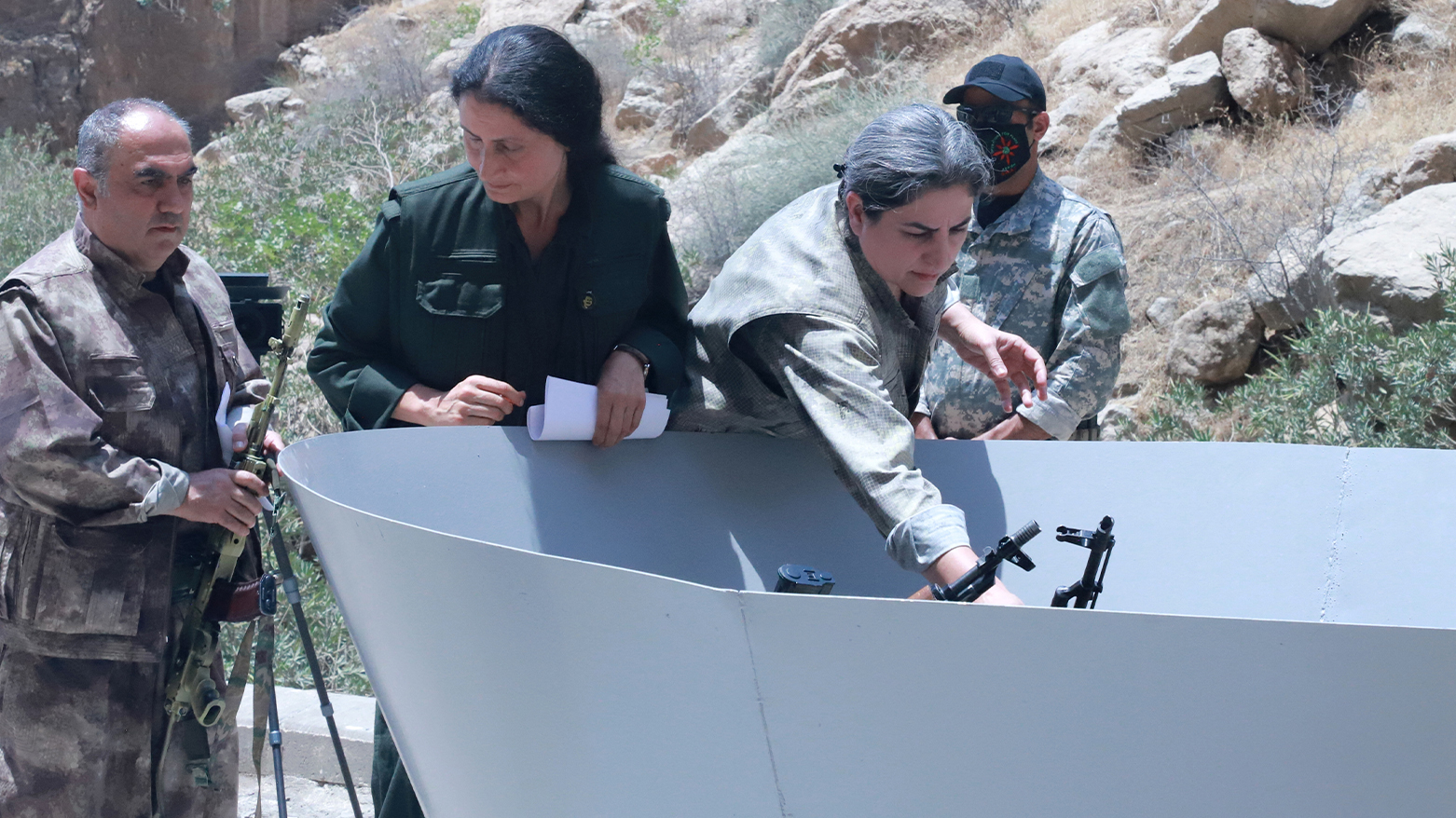
The process materialized symbolically during a ceremony at Jasana Cave in Sulaimani's Surdash district, where 30 militants read a disarmament manifesto and burned their weaponry.
Within Türkiye's broader geopolitical and security strategy, the bill represents a highly structured legal attempt to cement regional stability and permanently close a chapter of domestic conflict.
By pushing to submit the draft before the parliamentary recess, the AKP signals the urgency of capitalizing on recent diplomatic momentum.
As the legislation advances toward the parliamentary floor, it will face intense scrutiny, testing the political viability of a formalized peace process in a deeply polarized national landscape.
|
Summary A proposed bill aims to solidify the "Türkiye Without Terrorism" initiative, establishing legal pathways for militant surrender while imposing strict political bans on returnees. Kurdistan24 correspondent Abdulsalam Tutunchi reports Türkiye is drafting an 8-to-9-article bill for a "Türkiye Without Terrorism" framework. The legislation outlines PKK disarmament and reintegration, imposing a five-year political ban on returnees and rejecting demands for political rights. |