Rubio Insisted SDF Commander Attend Munich Meeting With Syrian Foreign Minister: Al-Monitor
U.S. Secretary of State Marco Rubio’s insistence that SDF Commander Mazloum Abdi attend the Munich meeting came amid mounting congressional scrutiny of Syria’s leadership and ongoing uncertainty over the future of U.S. engagement in northeast Syria.
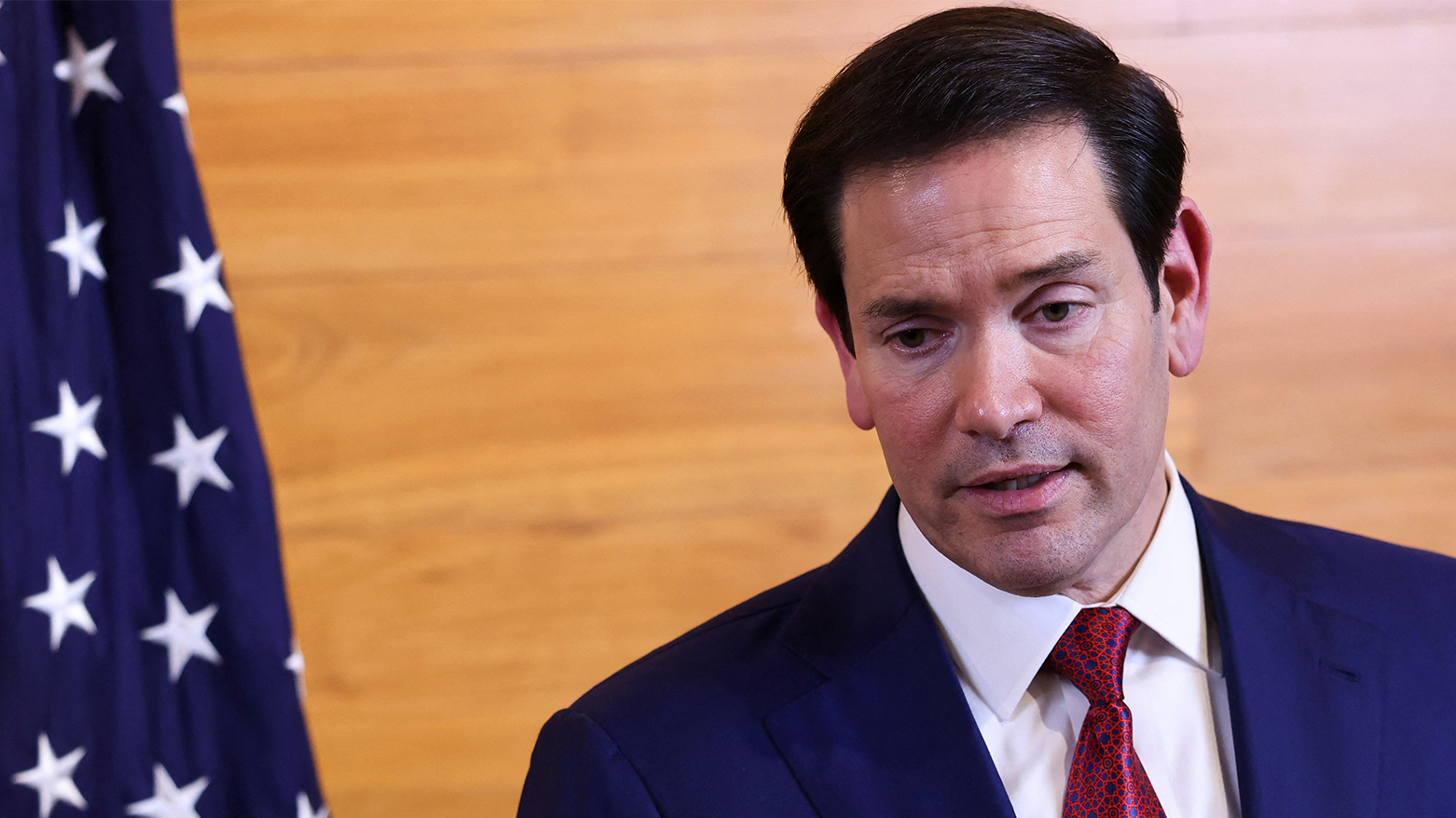
ERBIL (Kurdistan24) - U.S. Secretary of State Marco Rubio told Syrian Foreign Minister Asaad al-Shibani that a Feb. 13 meeting on the sidelines of the Munich Security Conference would not take place unless Syrian Democratic Forces (SDF) commander Mazlum Abdi was included, according to sources with direct knowledge of the deliberations cited by Al-Monitor.
The meeting occurred in Munich after Rubio made clear that Abdi , the commander in chief of the Kurdish-led SDF, had to be present as part of the Syrian delegation.
According to Al-Monitor, Rubio informed Shibani that without the Kurdish military leader’s participation, the meeting would be canceled. Syria’s interim president, Ahmed al-Sharaa, authorized his foreign minister to comply, the report said.
Photographs from the meeting show Abdi seated to Shibani’s right and nearly across from Rubio. Elham Ahmad, described as the Syrian Kurds’ de facto foreign minister, was also present. The encounter drew widespread attention among Kurdish communities, with many describing it as a significant moment in their campaign for international recognition.
US Secretary of State Marco Rubio met Syrian FM Asaad al-Shaibani and SDF Commander Mazloum Abdi in Munich.
— Kurdistan 24 English (@K24English) February 13, 2026
Read More: https://t.co/pAAr5w9UMa pic.twitter.com/Y0gkFUniyt
Tom Barrack, the Trump administration’s envoy for Syria, shared a photo from the meeting on X, writing: “A picture is worth a thousand words. A new beginning.”
However, sources briefing Al-Monitor said Rubio’s insistence on SDF Commander Mazloum Abdi’s inclusion was aimed primarily at addressing concerns in the U.S. Congress rather than signaling a fundamental shift in U.S. policy toward the SDF.
According to the report, dissatisfaction has been growing in Congress over Sharaa’s handling of Syria’s ethnic and religious minorities.
Al-Monitor reported that prolonged bouts of violence last year killed more than 2,000 Alawites and Druze, prompting military intervention by Israel in support of the Druze community. Despite those concerns, Congress voted to remove its most restrictive sanctions on Syria to give Sharaa an opportunity to stabilize the country, the report said.
Tensions escalated further after Syrian government forces launched an assault last month against the SDF, described in the report as the Pentagon’s Kurdish allies.
Nadine Maenza, co-chair of the International Religious Freedom Roundtable and a former member of the U.S. Commission on International Religious Freedom, told Al-Monitor that the operation marked a “tipping point.”
“After Syrian security forces were already complicit in crimes against Alawite and Druze communities, the emergence of videos showing those forces committing Islamic State-style atrocities, beheading Kurdish fighters, including women, and executing Kurdish families set off alarms on Capitol Hill,” Maenza said, according to the report. The videos have not been independently verified.
The violence began on Jan. 6 in two majority-Kurdish neighborhoods of Aleppo, with both sides accusing the other of initiating the clashes, the report said. As a result of the fighting, the SDF lost more than 80% of the territory it had controlled, including oil-rich areas in the predominantly Arab province of Deir ez-Zor.
A U.S.-brokered truce for Aleppo was announced on Jan. 9, but Syrian government forces ignored it and advanced eastward toward Kurdish-majority areas, crossing ceasefire lines demarcated by the Euphrates River, according to Al-Monitor.
Maenza told the outlet that reports indicating some perpetrators were wearing ISIS patches heightened fears about the potential consequences of further advances into Kurdish-majority areas that also include Yazidis, Christians, and other vulnerable communities.
She added that there were parallel concerns that ISIS detention facilities and the al-Hol camp, which houses family members of ISIS suspects, could be opened, potentially releasing fighters and networks back into the region.
According to the report, alleged ISIS fighters subsequently broke out of detention facilities during the clashes, while thousands fled al-Hol and remain unaccounted for.
Several SDF officials interviewed by Al-Monitor said U.S. Central Command appeared either unable or unwilling to intervene during the escalation. In response, members of Congress moved to increase pressure on the Syrian government.
Sen. Lindsey Graham declared on X that he would do “everything in my power to revive the Caesar Act sanctions, making them even more bone-crushing.” On Jan. 29, Graham and Sen. Richard Blumenthal introduced the Save the Kurds Act, which, if passed, would impose new punitive economic and other measures on Syria, according to the report.
Al-Monitor reported that a day earlier, Graham was present when President Donald Trump called Sharaa for the second time in a week, urging him to grant the SDF more favorable terms than those outlined in a Jan. 18 agreement brokered by Barrack. That earlier accord, described as having strong backing from Türkiye, called for near total capitulation by the Kurdish administration to Damascus.
A subsequent agreement announced on Jan. 30 did not mention autonomy, a central Kurdish demand, but allowed the SDF to retain four brigades rather than being fully integrated into the national army, as stipulated in the Jan. 18 accord, according to the report. It also provided that Syrian government forces would not enter Kurdish-majority towns and villages.
Graham was also reportedly on a Jan. 28 call between Central Command commander Brad Cooper and SDF Commander Mazloum Abdi, during which U.S. officials urged the SDF leader to accept the new arrangement. According to the sources cited, Abdi subsequently agreed.
The State Department did not respond to Al-Monitor’s request for comment.
The congressional pressure continued. On Feb. 10, the House Foreign Relations Committee held a hearing on Syria chaired by Rep. Brian Mast. In his opening remarks, Mast said Sharaa “does not have a blank check” from the United States and that Washington was dissatisfied with his progress. “Recent actions against Druze, Kurds and Alawites are all steps in the wrong direction,” Mast said, according to the report.
Maenza, who testified at the hearing, told Al-Monitor that she was struck by the level of bipartisan unity among lawmakers on Syria.
A regional official speaking on background told Al-Monitor that Rubio’s meeting with SDF Commander Abdi sent a message to Congress that the administration was attentive to its concerns, and to Sharaa that U.S. officials were monitoring developments closely.
Despite that show of support, the report noted that U.S. backing for the SDF may not be permanent. While bipartisan support was rooted in the Kurds’ role in combating ISIS, Syria has formally joined the U.S.-led coalition against the group, shifting some focus toward Syria’s national army.
Al-Monitor reported that U.S. forces continue to withdraw from bases in northeast Syria, with some redeploying to the Kurdistan Region of Iraq, increasing the likelihood of a broader U.S. exit. U.S. officials have not publicly addressed such speculation.
Alan Makovsky, a senior fellow at the Center for American Progress, told Al-Monitor that a full withdrawal could risk an ISIS resurgence or increased Iranian arms-smuggling, developments that would be seen as a setback for U.S. interests.
Barrack, in a series of posts on X in January, wrote that the SDF’s role had “largely expired,” according to the report.
Abdi’s recent remarks have also drawn attention. In an interview with PBS aired Feb. 23, he said that if the Jan. 29 agreement were to collapse, the SDF would continue fighting. “I don't want or wish for something like this to happen, but if the deal collapses, we will persist in our fight until the very end. It is absolutely impossible for us to give up on the Kurdish regions,” SDF Commander Mazloum Abdi said through an interpreter.
Analysts cited by Al-Monitor cautioned that while the Kurds have influential supporters in Congress, sustained backing cannot be assumed in every crisis.