Trump Warns Iran War Could Extend Beyond a Month as Drones Strike U.S. Embassy in Riyadh
Gulf tensions escalate with retaliatory missile and drone attacks, threats to Strait of Hormuz, and rising regional casualties
ERBIL (Kurdistan24) — U.S. President Donald Trump warned that the ongoing war with Iran could last longer than initially projected, as Tehran intensified retaliatory strikes across the Gulf, including a drone attack on the U.S. embassy in Riyadh.
Speaking at the White House, Trump said the conflict — which began Saturday following joint U.S.-Israeli strikes that killed Iran’s supreme leader, Ayatollah Ali Khamenei — was progressing “substantially” ahead of schedule but could extend beyond initial estimates.
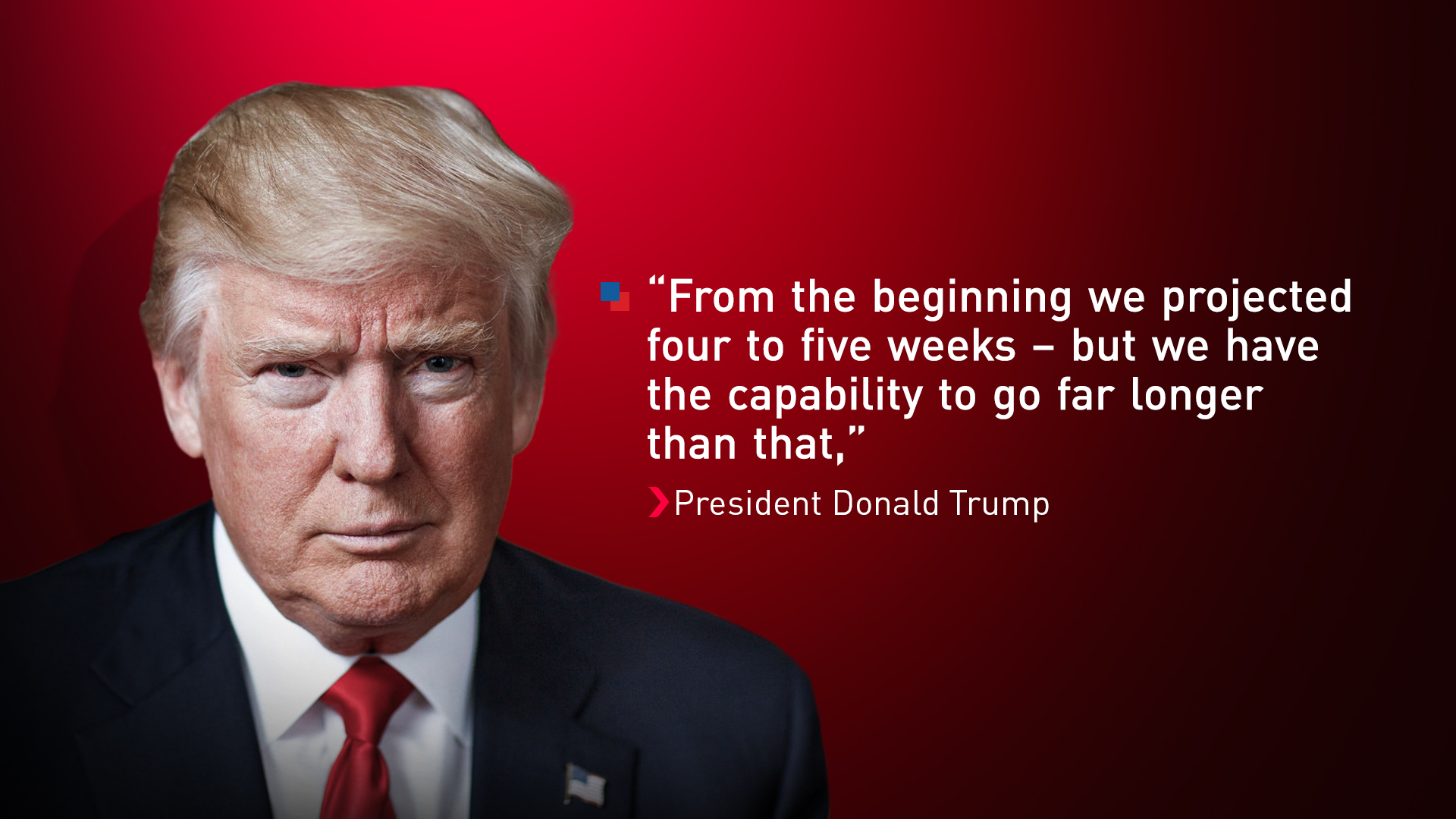
“From the beginning, we projected four to five weeks, but we have the capability to go far longer than that,” Trump said, emphasizing that Washington was prepared for a prolonged campaign.
Embassy Attack in Riyadh
Two drones struck the United States Embassy Riyadh early Tuesday, sparking a limited fire and causing minor material damage, according to Saudi defense officials. The embassy later confirmed the attack and announced it would close for the day.
“Avoid the embassy until further notice due to an attack on the facility,” the statement said, urging American citizens in Riyadh, Jeddah, and Dhahran to “shelter in place.”
Saudi Arabia’s defense ministry said air defenses intercepted additional drones targeting Riyadh’s diplomatic quarter. Witnesses reported seeing smoke rising from the area and fire engines stationed outside the compound.
Regional Escalation
The attack on the embassy came shortly after Washington urged Americans to leave Middle Eastern nations from Egypt eastward. The U.S. State Department also ordered non-emergency staff and their families to depart Bahrain, Jordan, and Iraq.
New explosions shook Tehran overnight as fighter jets flew over the Iranian capital. The Pentagon said it had achieved air superiority over Iran, which has been ruled by Islamic clerics since 1979.
Tehran expanded its retaliation by launching missile and drone salvos across the Gulf. In Qatar, authorities said two ballistic missiles were intercepted, while the UAE reported responding to a barrage of missiles fired from Iran.
Saudi officials said eight drones were intercepted near Riyadh and Al-Kharj. Meanwhile, Kuwait’s U.S. embassy was reportedly damaged by multiple drones, according to diplomatic sources.
Strait of Hormuz Threat
Iran also threatened to disrupt global energy markets. A senior Revolutionary Guards commander warned that Tehran would target vessels attempting to transit the Strait of Hormuz — a strategic chokepoint through which roughly 20 percent of the world’s seaborne oil passes.
The threat raised fresh concerns about global oil supply disruptions, particularly after Qatar’s state-run energy firm temporarily halted liquefied natural gas production due to the escalating conflict.
Objectives and Limits
For the first time since the war began, Trump outlined the campaign’s objectives: dismantling Iran’s missile capabilities, neutralizing its navy, destroying its nuclear program, and ending its support for armed groups across the region. He notably stopped short of calling for regime change, despite earlier urging Iranians to rise up against their government.
In an interview with Fox News, Israeli Prime Minister Benjamin Netanyahu said joint operations with the United States would continue but would not become “an endless war.”
“It may take some time, but it’s not going to take years,” Netanyahu said.
Debate Over “Imminent Threat”
U.S. Secretary of State Marco Rubio said Washington acted preemptively after learning that Israel was preparing to strike Iran and assessing that Tehran would likely retaliate against American forces.
“The imminent threat was that we knew that if Iran was attacked — and we believed they would be attacked — that they would immediately come after us,” Rubio told reporters.
Iranian Foreign Minister Seyed Abbas Araghchi rejected the claim, stating there had been no Iranian threat to the United States and accusing Washington of entering “a war of choice.”
Rising Casualties
The conflict has expanded beyond Iran and the Gulf. Israel carried out fresh strikes in Lebanon after Iran-backed Hezbollah launched rockets and drones toward Israeli territory. Lebanese authorities said at least 52 people were killed in the strikes.
Across the region, casualties continue to mount. United States Central Command confirmed that six U.S. military personnel have been killed since the war began. Iranian media reported hundreds of casualties inside the country, while the U.S.-based Human Rights Activists News Agency (HRANA) said 101 people had been killed in Iran by the third day of fighting, including 85 civilians.
Residents in Tehran were seen preparing to leave the capital amid the bombardment. Some expressed fear, while others voiced hope that the conflict could mark a turning point in Iran’s political future.
As retaliatory strikes continue and regional air defenses remain on high alert, the widening war threatens to draw in additional states, deepening instability across the Middle East, and raising global economic concerns.