Australian ISIS-Affiliated Families Face Uncertain Deportation from Syria
ISIS-linked families awaiting deportation highlight unresolved global repatriation policies and ongoing security risks for Iraq and the region.
ERBIL (Kurdistan 24) — The case of several Australian women and children linked to ISIS awaiting deportation from Syria reflects a broader and deeply contested international dilemma: how governments handle citizens associated with extremist groups after the collapse of the so-called caliphate.
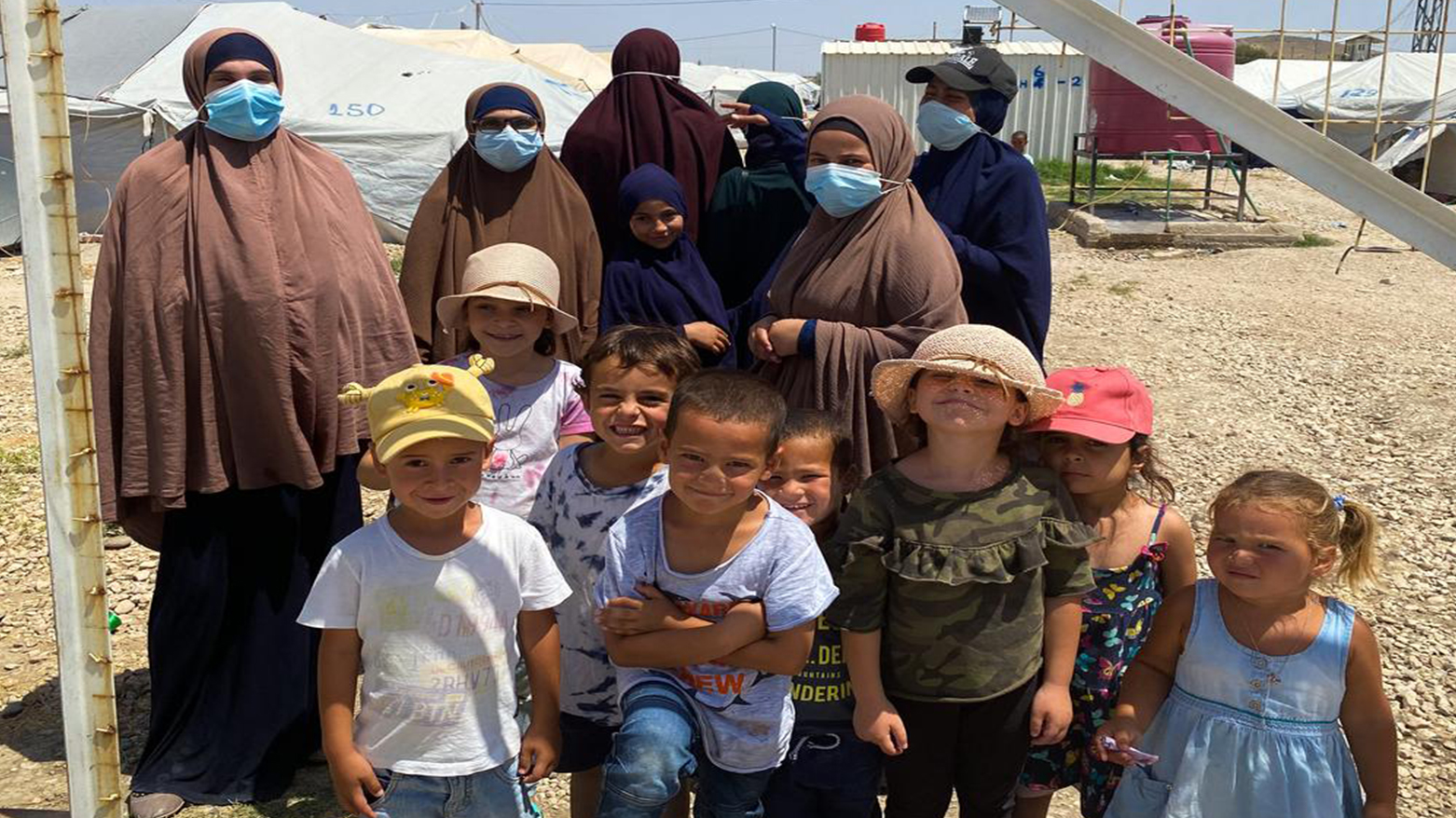
According to a report published by The Australian on Monday, four Australian women described as ISIS brides and nine children from the same family were transferred from the al-Roj camp in northeastern Syria to Damascus over the weekend, where they now await possible deportation.
The group, transported on Friday and arriving early Saturday through a coordinated Syrian-Kurdish operation, includes individuals believed to be Kawsar Abbas, her daughters Zahra and Zeinab, and other relatives, including Sydney-linked family members.
Their situation remains uncertain, particularly in light of Australia’s official stance. An Australian government spokesman told The Australian that the government “is not and will not repatriate people from Syria,” while confirming that authorities are monitoring the situation closely.
“People in this cohort need to know that if they have committed a crime, and if they return to Australia, they will be met with the full force of the law,” the spokesman added.
The report also indicates that the group may remain in Damascus only briefly before Syrian authorities attempt to deport them, though their final destination remains unclear.
At least seven additional Australian women and 14 children are still believed to be in al-Roj camp, underscoring that the issue extends beyond a single case.
Opposition figures in Australia have taken a hard line. Opposition Leader Angus Taylor said in remarks broadcast on ABC’s Insiders on Monday, that the government should do “everything it possibly can” to prevent their return, reflecting domestic political pressure surrounding the issue.
The case is part of a wider international challenge that has persisted since the territorial defeat of ISIS in 2019. Following the collapse of the group’s control in Syria and Iraq, tens of thousands of fighters and their families were detained by Kurdish-led authorities, primarily in camps such as al-Roj and al-Hol.
According to Kurdistan24 and AFP reporting from mid-February 2026, dozens of Australian citizens had previously been released from such camps, marking a rare coordinated effort between Kurdish authorities (In north eastern Syria) and international actors.
This issue is directly linked to Iraq’s security environment. ISIS originally expanded from Iraq into Syria in 2014, establishing a cross-border “caliphate” centered around Mosul. Despite its territorial defeat in 2019, the group continues to operate as an insurgent network, particularly in disputed territories and rural areas of Iraq.
In parallel, Iraq has already faced the complex legal and security consequences of repatriation. Over recent years, Iraqi authorities have received large numbers of suspected ISIS members transferred from Syria. Many of them were tried in Baghdad under counterterrorism laws, with courts issuing hundreds of convictions, including death sentences and long-term imprisonment. These trials were part of Baghdad’s effort to assert legal control over ISIS-linked individuals, but they have also drawn international attention over due process and humanitarian concerns.
The continued presence of ISIS-affiliated families in detention camps poses long-term risks for both Syria and Iraq. Security officials have repeatedly warned that overcrowded camps with limited governance could become breeding grounds for radicalization, especially among younger generations raised in extremist environments.
Unresolved repatriation policies may further complicate regional stability. If individuals are not reintegrated, prosecuted, or relocated through structured processes, they risk becoming part of underground networks or contributing to the re-emergence of militant activity.
For Iraq and the wider region, the threat is multidimensional:
* Security risk: Potential resurgence of ISIS cells supported by transnational networks
* Radicalization: Camps serving as incubators for future extremist ideologies
* Cross-border instability: Movement between Syria and Iraq, enabling regrouping of militants
* Political strain: Disagreements between governments over responsibility for detainees
Globally, responses to repatriation have varied significantly. Countries like Russia and Kazakhstan have actively repatriated citizens, while many Western governments (including Australia) have adopted more restrictive approaches, citing legal, security, and political concerns.
The scale of the issue is substantial. At the height of ISIS’s power in 2014–2019, more than 50,000 foreign nationals traveled to join the group, leaving behind a complex legacy of detained families and unresolved citizenship questions.
Legal ambiguity remains a key challenge. Many detainees have been held for years without formal charges, while their countries of origin face difficult decisions over prosecution, reintegration, or denial of return.
The fate of the Australian families in Damascus illustrates the ongoing global struggle to address the aftermath of ISIS, where humanitarian concerns, national security risks, and political pressures continue to collide.