Trump Says US-UK Relationship ‘Not Like It Used to Be’ Amid Iran War Dispute
Transatlantic tensions rise after Starmer initially refused use of British bases for U.S.-Israeli strikes on Iran
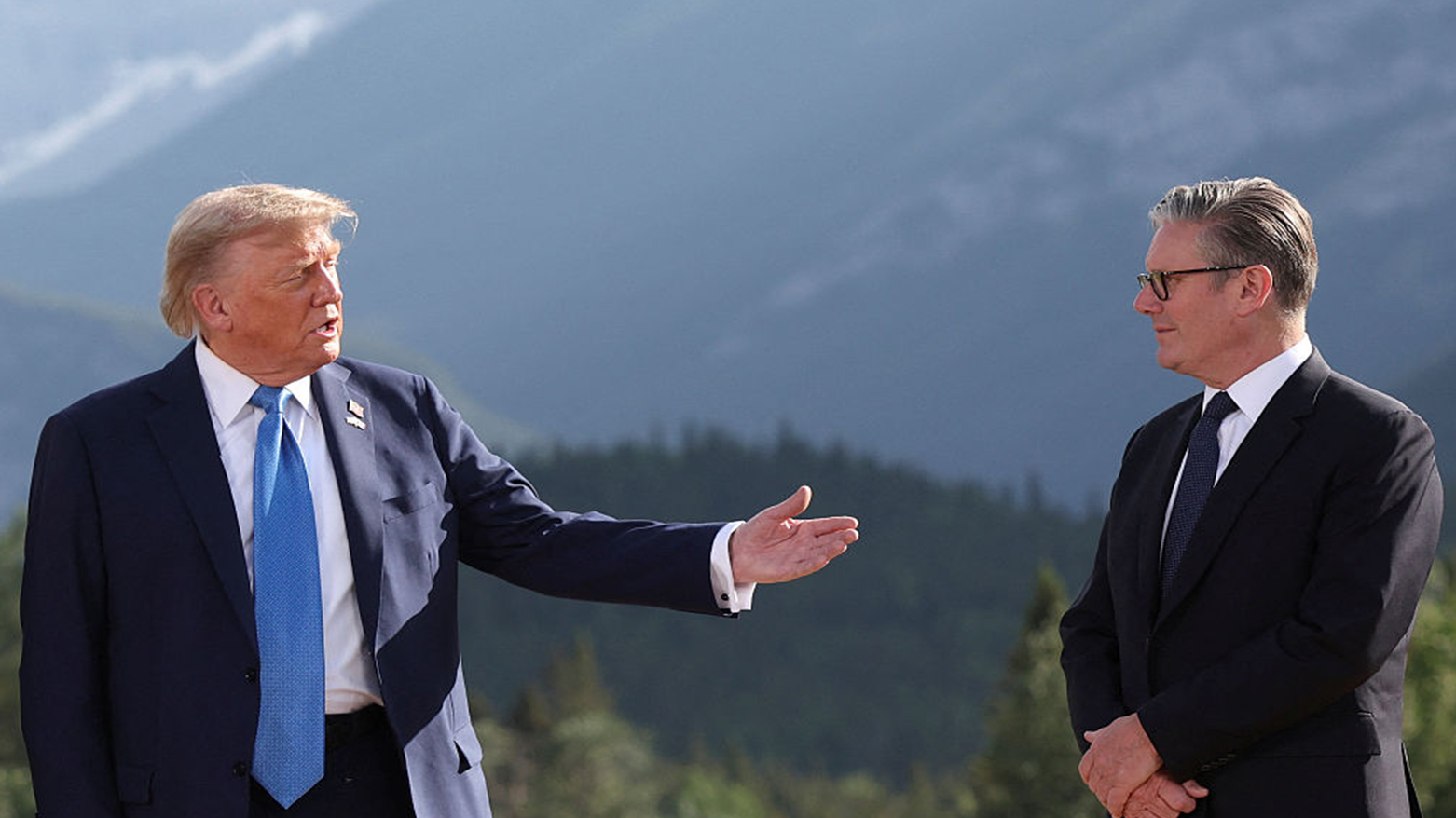
ERBIL (Kurdistan24) — U.S. President Donald Trump on Tuesday said the historic relationship between the United States and the United Kingdom is “not like it used to be,” amid a growing transatlantic rift over U.S.-Israeli military strikes against Iran.
In an interview with British newspaper The Sun, Trump expressed disappointment with British Prime Minister Keir Starmer following his initial refusal to allow the United States to use UK military bases in operations linked to the war with Iran.
“This was the most solid relationship of all. And now we have very strong relationships with other countries in Europe,” Trump said, singling out France and Germany. “It’s very sad to see that the relationship is obviously not what it was.”
Speaking in a telephone interview from the White House on Monday evening, Trump added that Starmer “has not been helpful,” saying, “I never thought I’d see that from the UK. We love the UK.”
The comments follow similar criticism voiced by Trump in an interview with The Daily Telegraph, where he described Starmer’s stance as “very disappointing.”
Although Trump later acknowledged Starmer’s subsequent decision to permit the use of British bases for what was described as a limited defensive purpose, he said the approval “took far too much time.”
The dispute comes at a politically sensitive moment in Britain, where military involvement in the Middle East remains controversial following former Prime Minister Tony Blair’s support for the U.S.-led Freedom Operation of Iraq in 2003 — a decision widely criticized in hindsight.
Defending his position before Parliament on Monday, Starmer stressed that his priority is Britain’s national interest. “President Trump has expressed his disagreement with our decision not to get involved in the initial strikes, but it is my duty to judge what is in Britain’s national interest,” he said. “That is what I have done, and I stand by it.”
After initially declining involvement, Starmer announced on Sunday that he had approved a U.S. request to use British military bases for a “specific and limited defensive purpose,” following Iranian missile launches that London said put British interests and citizens at risk.
Downing Street clarified that the decision was made in response to evolving security conditions, not as an endorsement of offensive operations. Starmer also emphasized that British bases in Cyprus, including the Akrotiri air force base, are not being used by U.S. bombers in strikes against Iran.
The Akrotiri base was struck early Monday by an unmanned Iranian drone that hit the runway. Starmer said the attack was not linked to Britain’s later decision regarding base access and that the drone was believed to have been launched prior to the announcement.
The prime minister accused Iran of becoming “more reckless and more dangerous,” alleging that Tehran is targeting not only military installations but also economic infrastructure in the region, with little regard for civilian casualties.
The diplomatic strain highlights a rare public divergence between Washington and London, long regarded as the cornerstone of the so-called “special relationship,” as the U.S.-Israeli war with Iran reshapes alliances and calculations across Europe and the Middle East.