Israel Launches Broad-Scale Strikes on Tehran as Middle East War Intensifies
Explosions rock Tehran and Gulf cities amid rising casualties, humanitarian crisis, and surging oil prices
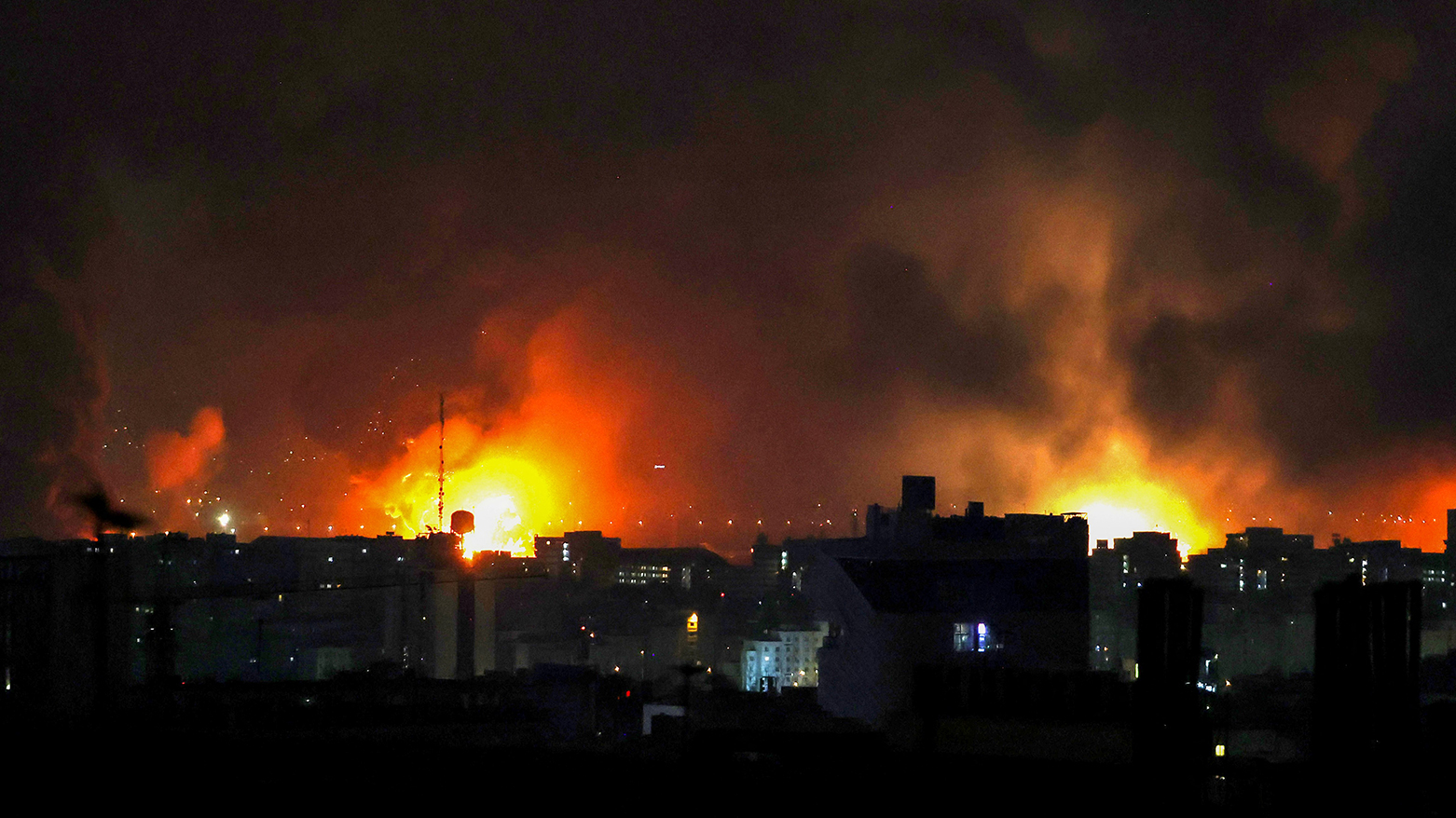
ERBIL (Kurdistan24) — Israel announced a new wave of “broad-scale” strikes on Tehran on Saturday as the escalating Middle East war entered its second week, sending crude oil prices soaring on fears of global supply disruptions.
The US-Israeli bombing campaign that began on Feb. 28 has prompted retaliatory Iranian missile and drone attacks against Israel and U.S. allies across the region. President Donald Trump reiterated Friday that only “unconditional” Iranian surrender would end the conflict.
Early Saturday, air raid alerts and explosions were reported above Jerusalem and Gulf cities, including Dubai, Manama, and near Riyadh, where Saudi air defenses intercepted a ballistic missile targeting Prince Sultan Air Base, home to U.S. military personnel.
Israel’s military announced the “broad-scale wave of strikes” on government sites in Tehran. AFP journalists reported fires and smoke rising from Mehrabad International Airport after it was hit. Explosions were also heard in several parts of the Iranian capital, according to state television.
The widening war has reached Lebanon, Cyprus, Türkiye, Azerbaijan, and even Sri Lanka, where U.S. forces fired a torpedo that sank an Iranian warship. Across the region, hundreds of people have been killed, homes destroyed, and critical infrastructure damaged.
Crude oil prices surged as tensions over the Strait of Hormuz—through which nearly 20 percent of global oil and LNG passes—threaten energy exports. West Texas Intermediate climbed more than 12 percent to over $90 per barrel, marking its largest weekly gain on record.
The U.S. government has warned the war could last weeks, with Trump stating that major defense firms will quadruple production of advanced weaponry. U.S. Central Command said over 3,000 Iranian targets have been struck in the past week.
While Iran has launched missile and drone attacks across the Middle East, U.S. rivals China and Russia have largely stayed out of the conflict. Defense Secretary Pete Hegseth said the U.S. is “not concerned” about reports that Russia is providing intelligence to Iran, adding, “We’re tracking everything.”
Renewed Israeli air strikes on Tehran came a day after intensified attacks on Lebanon, targeting Hezbollah-controlled southern Beirut suburbs and Baalbeck. Russian President Vladimir Putin called for an “immediate” ceasefire, but Trump ruled out negotiations, stating that there would be no deal with Iran except “UNCONDITIONAL SURRENDER.”
Trump also promised to support rebuilding Iran’s economy if Tehran appoints a leader “acceptable” to the United States after the killing of Supreme Leader Ayatollah Ali Khamenei. Iran’s UN ambassador rejected any U.S. role in the succession, emphasizing that leadership selection will follow constitutional procedures.
The human toll of the war has been severe. Six U.S. service members have died, and Lebanon has reported at least 217 fatalities from Israeli air strikes. Over 300,000 people have been displaced, and three UN peacekeepers were wounded in southern Lebanon.
Iranian authorities reported 926 deaths from U.S. and Israeli strikes, while at least 10 people have been killed in Israel. Thirteen people have been killed across the Gulf, including an 11-year-old girl, Elena Abdullah Hussein, in Kuwait.
In Iran’s Isfahan province, Israeli and U.S. strikes killed at least eight people on Saturday and severely damaged around 80 homes, including in the cities of Isfahan, Lenjan, and Borkhar.
The conflict shows no signs of abating, with widespread destruction in Tehran, Gulf cities, and across the region raising fears of a prolonged humanitarian and economic crisis.